
Bernardino de Sahagún: compiler of the Florentine Codex and Nahua ethnographer
16th‑century Franciscan missionary and scholar who recorded Aztec (Nahua) language, beliefs and customs in the Florentine Codex, a foundational source for Mesoamerican studies.
Bernardino de Sahagún was a 16th‑century Franciscan missionary and scholar who became one of the earliest systematic collectors of indigenous knowledge in the Americas. He was born in 1499 and died on October 23, 1590. As a member of the Franciscan order he worked among the peoples commonly called Aztec (Nahua) in what is now central Mexico, producing one of the most important documentary survivals of pre‑Columbian culture.
Image gallery
5 Images
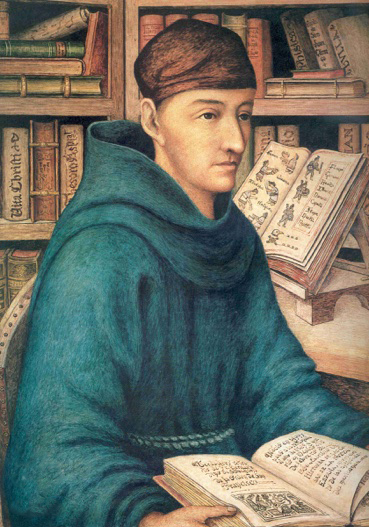


Overview and major work
Sahagún is best known for compiling the Historia general de las cosas de Nueva España, widely referred to as the Florentine Codex. This multivolume work gathers texts in both Spanish and Nahuatl accompanied by numerous indigenous illustrations. Organized by topic, it covers cosmology, deities, rituals, social organization, natural history, and the impact of the Spanish conquest. The codex preserves native testimony and descriptions that would otherwise have been lost during the colonial period.
Methods and collaborators
Rather than relying purely on European sources, Sahagún trained and worked closely with Nahua informants, scribes and artists who supplied oral histories, songs, lists, and pictorial material. He compiled responses to systematic questionnaires, compared multiple accounts, and produced bilingual entries. Scholars often regard his approach as an early form of ethnography because of its emphasis on native voices and structured data collection.
Contents and characteristics
- Structure: arranged into thematic 'books' covering religion, rites of passage, cosmology, daily life and natural history.
- Bilingual text: parallel Spanish explanations and Nahuatl glosses or transcriptions.
- Illustrations: drawings executed by indigenous painters that accompany many entries.
- Sources: extensive use of informants, ritual specialists and community memory.
The work is notable both for its scope and for the attempt to preserve indigenous categories of knowledge rather than merely translating them into European terms.
Legacy and significance
Historians, linguists, anthropologists and art historians rely on Sahagún’s collections for information about Nahua language, religion, calendar systems, medicinal plants and social institutions. His work has been subject to critical scrutiny for its missionary context and editorial choices, but it remains indispensable as a primary source created near the time of contact. Copies and translations of the Florentine Codex have made its contents available to modern readers, and research continues to reassess the collaboration between Sahagún and his indigenous contributors.
Because of its unusual combination of fieldwork, bilingual recording and visual documentation, Sahagún’s project is often cited as an early episode in the development of ethnography and as a bridge between pre‑Columbian knowledge and later scholarship.
Related articles
Author
AlegsaOnline.com Bernardino de Sahagún: compiler of the Florentine Codex and Nahua ethnographer Leandro Alegsa
URL: https://en.alegsaonline.com/art/10815