
Whistle: instrument and act of producing sound by forcing air
A whistle is a device or the act of producing a clear tone by directing a stream of gas, used for signaling, music, sports, and safety. Covers operation, types, history, and common uses.
Overview
A whistle is either a small device that produces a clear, often high-pitched tone when air passes through it, or the human action of producing a similar sound by shaping the lips and directing breath. A whistle's sound results from the interaction of an airstream with a resonant cavity and edge, and it is commonly used for signaling and musical purposes. For general information on the produced sound see sound, and for the vocal technique see whistling.
Image gallery
5 Images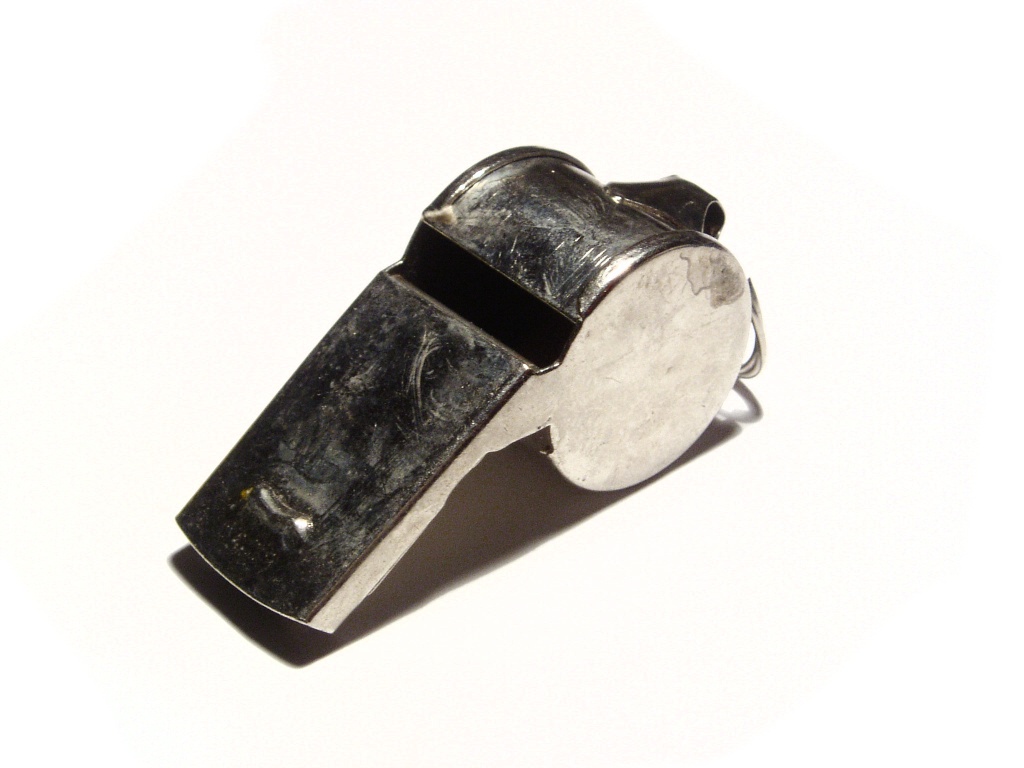


How a whistle works
Most mechanical whistles convert the kinetic energy of a moving gas into organized acoustic energy. Common elements include a mouthpiece, a narrow airway or fipple that accelerates the airflow, and a chamber or opening where pressure fluctuations form standing waves. Variations in shape, chamber size, and openings change pitch and timbre. Some designs include a small loose pellet called a "pea" to create trills, while others rely on steady airflow for a pure tone.
Types and notable forms
- Pea whistle: produces a warbling sound; often used by referees and police historically.
- Pealess whistle: simpler, more reliable for outdoor use and modern safety equipment.
- Flute-like whistles: tin whistle and slide whistle used in music.
- Whistle toys and emergency whistles: compact devices designed for attention getting.
History and development
Whistles have ancient roots as signaling tools, evolving from simple reed or bone devices to metal and molded plastic models used today. Over time, refinements improved reliability and loudness for maritime, military, and sporting uses. The technology also influenced musical instruments that use the same aerodynamic principles.
Uses, importance, and distinctions
Whistles serve practical roles in safety, law enforcement, sports officiating, navigation, and outdoor survival, as well as in music and entertainment. Distinct from human whistling, mechanical whistles provide consistent volume and tone; human whistling allows expressive control but requires skill. When selecting a whistle, considerations include loudness, tone stability, ease of use, and resistance to clogging or freezing in cold conditions.
Related articles
Author
AlegsaOnline.com Whistle: instrument and act of producing sound by forcing air Leandro Alegsa
URL: https://en.alegsaonline.com/art/107775