
Wheelchair rugby (quad rugby)
Wheelchair rugby is a full-contact team sport for athletes with impairments affecting all four limbs. Played internationally and at the Paralympics, it combines speed, strategy and specialized equipment.
Overview
Wheelchair rugby is a mixed-gender full-contact team sport designed for people whose impairments affect both the upper and lower limbs. It is contested in many countries around the world and has an organized international structure; teams from more than two dozen nations compete at regional and global events (participating countries). Participants are athletes with physical impairments who meet the sport's eligibility criteria (classification). The game is part of the Summer Paralympic programme (Paralympics) and is often referred to in the United States as "quad rugby" (quad rugby).
Image gallery
8 Images


Rules and play
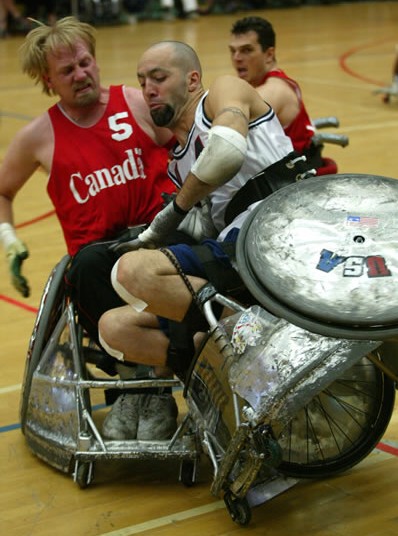
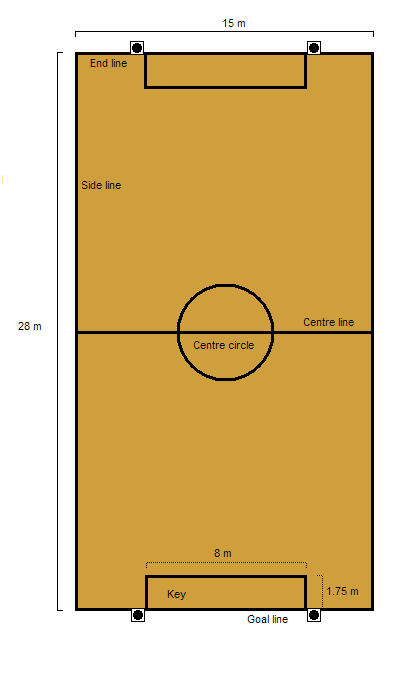
Matches are played on a hard indoor court with teams attempting to carry or pass the ball across the opposing team’s goal line. Play is fast and physical: contact between wheelchairs is permitted and often tactical. Teams field a set number of players at once and may substitute during the match. Possession changes, turnovers and strategic blocking are central to the flow of the game. Matches are divided into timed periods and officials enforce contact, traveling and possession rules to keep play safe and competitive.
Equipment and classification
Players use highly specialized sports wheelchairs built for durability, speed and protection; chairs may include reinforced frames, bumpers and angled wheels for stability. Protective gear such as gloves and straps is common. A classification system assesses each athlete’s functional ability and assigns them a value used to ensure balanced team composition: teams must follow a cap on the total classification value for the players on court, which promotes inclusion across a range of impairments.
History and development
Wheelchair rugby developed in North America in the late 1970s as a competitive, contact sport for people with greater levels of impairment than some other wheelchair sports accommodated. Early informal games evolved into organized clubs and national bodies. The sport attracted wider attention through international tournaments and media exposure; it later gained inclusion in the Paralympic programme, which helped standardize rules and increase global participation.
Competition and significance
International championships, regional leagues and Paralympic competitions showcase the sport’s speed, tactical depth and teamwork. Because it is mixed-gender and emphasizes functional ability over gender, wheelchair rugby provides high-performance opportunities to a broad range of athletes. Its appeal to spectators comes from dramatic collisions, rapid transitions and clear scoring objectives, which together create a dynamic and strategic team sport that has grown steadily in profile and participation.
Notable features
- High-contact, strategic team play on an indoor court.
- Specialized wheelchairs and adaptive equipment.
- Classification system to balance teams and enable fair competition.
- Governed internationally with Paralympic representation.
Related articles
Author
AlegsaOnline.com Wheelchair rugby (quad rugby) Leandro Alegsa
URL: https://en.alegsaonline.com/art/107717