
Wheel Gymnastics (Rhönrad): Overview, History, and Disciplines
Wheel gymnastics (Rhönrad) is a gymnastics discipline performed inside a large rolling wheel. This article explains the apparatus, main exercise categories, history, training, safety, and competitive aspects.
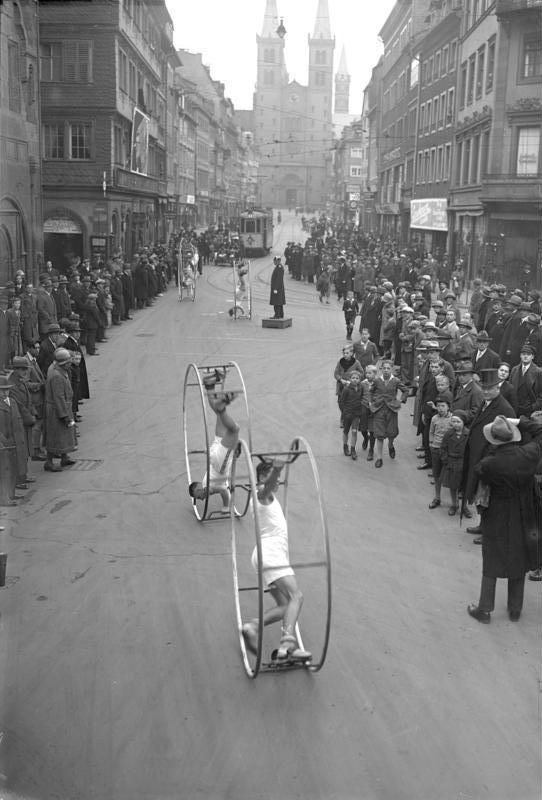
Wheel gymnastics is a form of acrobatic sport performed using a large cylindrical apparatus called the Rhönrad, gym wheel, or German wheel. Athletes stand, balance and manoeuvre inside the wheel as it rolls, pivots and spins across a surface. The discipline blends elements of artistic, acrobatic and apparatus gymnastics with dynamic rolling movements and static balances. For general context see wheel gymnastics.
Image gallery
8 Images



Apparatus and basic characteristics
The Rhönrad consists of two parallel metal hoops connected by a number of crossbars and handles. Wheels are made in different diameters to suit the athlete's height and are built for strength, stability and a smooth rolling action. Typical components include grip handles and support bars that permit a gymnast to hang, stand or pivot while the wheel rotates. Equipment design influences the types of moves that can be performed and how the wheel responds to a performer’s weight and momentum.
History and development
The wheel originated in Germany in the early 20th century and is often associated with inventor Otto Feick. From a folk invention it developed into a formal gymnastic discipline with clubs, national associations and international contests. Wheel gymnastics spread from its German roots to other European countries and beyond, gaining recognition through exhibitions, circus performance and organised competition.
Main disciplines and examples
- Straight line: The wheel rolls in a straight path while athletes perform balances, handstands, and acrobatic sequences along the length of the wheel.
- Spiral: The wheel tilts and rolls in a curved or spiralling motion, requiring control of centrifugal forces and precise body positioning.
- Vault: The gymnast runs, mounts or jumps onto the wheel and executes vaulting elements while the wheel rotates or rebounds.
Training, safety and competition
Training focuses on strength, coordination, spatial awareness and wheel-specific technique. Coaches teach safe mounting, controlled rolling, and dismounts to reduce injury risk. Protective mats, progressive drills and spotters are commonly used during learning phases. Competitions judge routines on difficulty, execution, creativity and composition; the sport is presented at national and international levels with organized championships and exhibitions.
Uses and notable facts
Wheel gymnastics serves both competitive and performance roles. Beyond sport events it appears in theatrical and circus contexts because of its visual impact. It remains particularly popular in Germany and some European countries, and continues to inspire hybrids with contemporary dance and acrobatics. For further reading about its origins and modern practice see resources from governing bodies and historical accounts in Germany: origin and history.
Related articles
Author
AlegsaOnline.com Wheel Gymnastics (Rhönrad): Overview, History, and Disciplines Leandro Alegsa
URL: https://en.alegsaonline.com/art/107708
Sources
- rhoenrad.com : International Wheel Gymnastic Federation