
Wembley Stadium (1923–2003): the original Empire Stadium
Historic London sports arena opened in 1923 as the Empire Stadium, noted for its twin towers, major football finals, the 1923 'White Horse' match and concerts including Live Aid; demolished 2003.
Wembley Stadium, originally opened in 1923 as the Empire Stadium, was one of the United Kingdom's best known sporting and entertainment venues. Located in the Wembley district of north-west London, the stadium became an enduring landmark thanks to its twin towers at the main entrance and its role hosting high-profile football matches, national team fixtures and large-scale concerts.
Image gallery
9 Images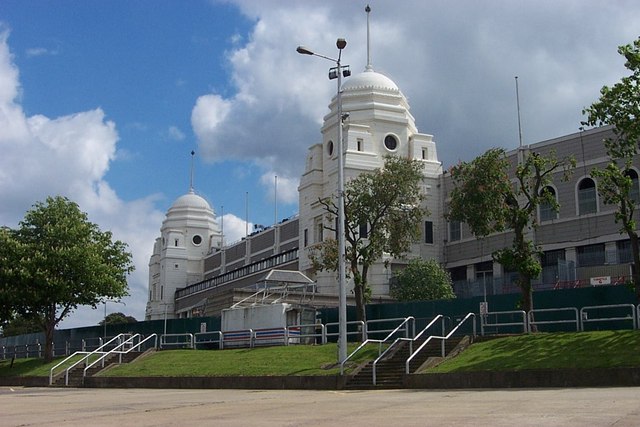




Design and characteristics
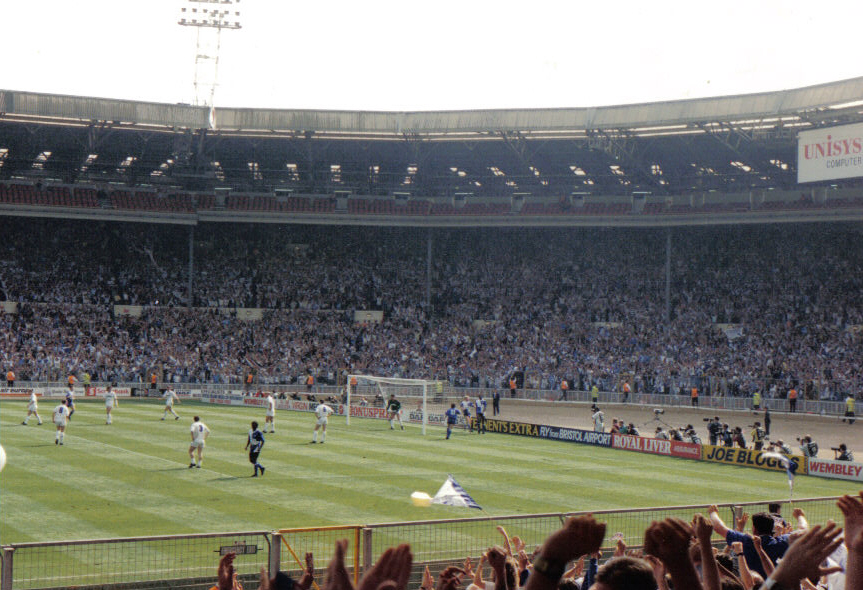
The original stadium was built with a large bowl of terraced and seated accommodation arranged around a grass pitch. Its most recognisable architectural feature was a pair of brick towers flanking the primary entrance, which gave the venue a distinctive profile that appeared on posters and programmes for decades. At its peak the stadium could accommodate crowds numbering over one hundred thousand, making it suitable for major national and international fixtures.
History and development
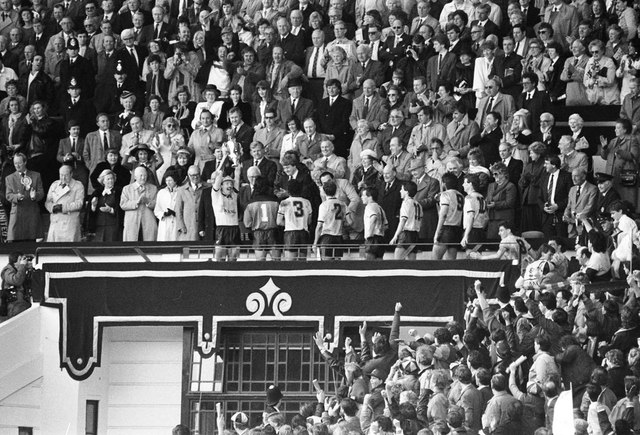
Constructed for the British Empire Exhibition, the facility opened in 1923 and was immediately used for football and public events. One of the earliest and most famous moments was the chaotic 1923 FA Cup Final, often called the "White Horse" final because a mounted police officer helped to control enormous crowds that spilled onto the pitch. Over the following decades the stadium hosted domestic cup finals, international internationals and tournament matches, remaining central to English football culture throughout the 20th century.
Uses and notable events
Wembley was the regular venue for the FA Cup final and many England national team matches. It also staged important international events such as the 1966 FIFA World Cup final and served as a concert arena for global artists. Music and charity events of huge public interest took place there, most famously the Live Aid concert held in 1985, which was broadcast worldwide. The stadium's versatility made it a focal point for both sport and popular culture.
Major categories of events at the stadium included:
- Domestic football cup finals and high-profile league matches
- England international fixtures and important tournament games
- Large-scale concerts, charity shows and public gatherings
By the late 20th century the aging structure no longer met modern standards for spectator comfort, safety and broadcast requirements. Wembley closed to the public in 2000 and was demolished in 2003. A new stadium was constructed on the same site and now stands as its successor; information about the replacement venue can be found via the new Wembley resources.
Although the original stadium no longer exists, its memory endures in sporting history, popular culture and the familiar image of the twin towers. It remains celebrated for its defining role in English football and for hosting events that reached a global audience.
Related articles
Author
AlegsaOnline.com Wembley Stadium (1923–2003): the original Empire Stadium Leandro Alegsa
URL: https://en.alegsaonline.com/art/107250