
Weekday
A weekday is any day of the seven-day week that is not part of the weekend, commonly used to structure work, school, business hours and legal calendars.
Overview
A weekday is one of the days in a seven-day week that is normally set aside for regular work, schooling and routine services. In many societies the working portion of the week is distinct from the weekend, and the term "weekday" typically refers to those days when most offices, schools and institutions operate.
Image gallery
1 Image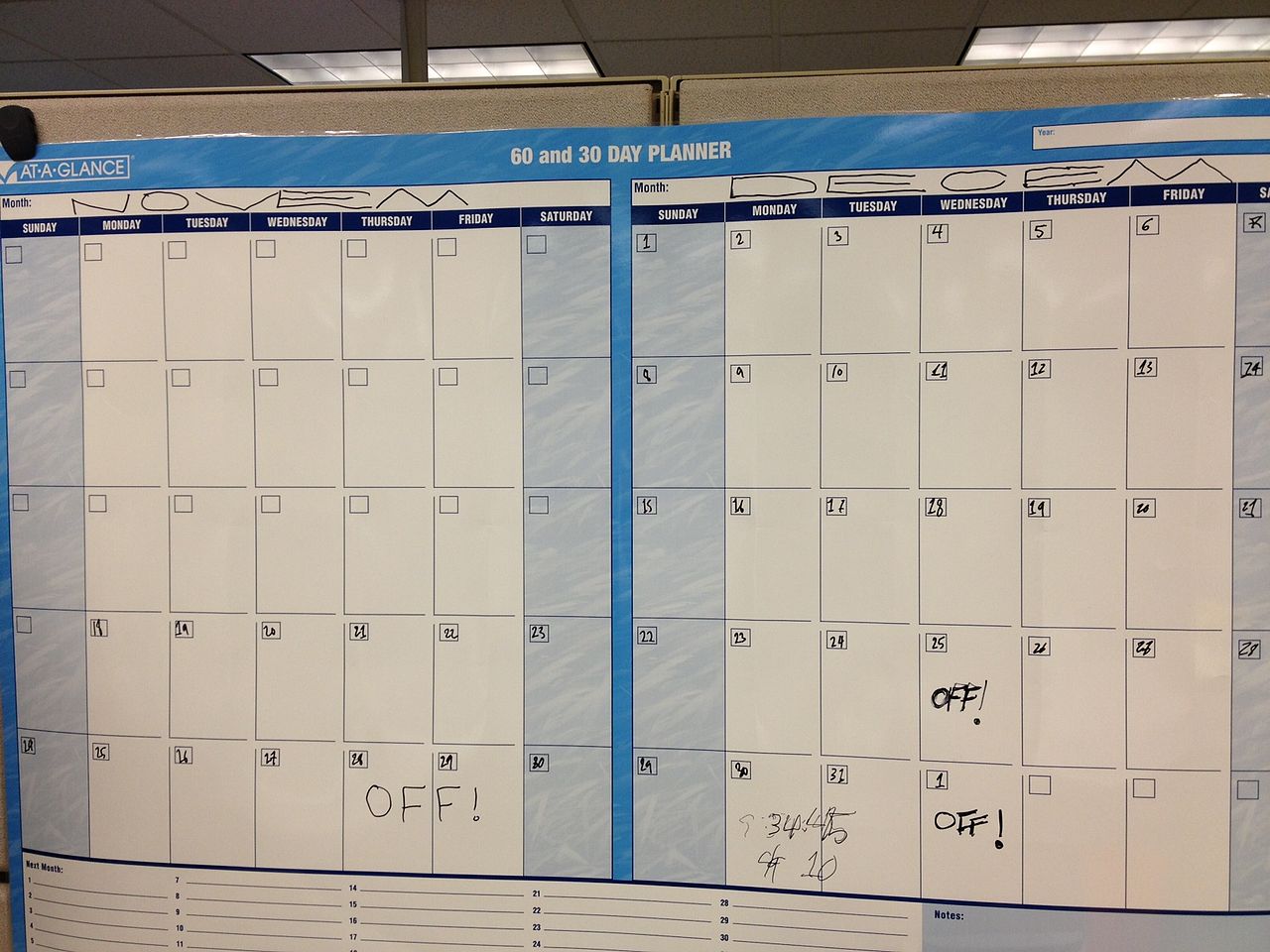
Names of the weekdays
The set of five days most commonly called weekdays are:
Weekend days
The remaining two days, typically used for rest, worship, recreation or family time, are Saturday and Sunday. How the weekend is observed varies: in many countries both Saturday and Sunday are non-working days, while in others the weekend falls on different combinations such as Friday and Saturday.
History and cultural variation
The modern seven-day sequence has roots in ancient calendars and religious traditions. Names for specific days come from a mix of planetary, Roman and Norse influences in European languages, and other traditions exist elsewhere. International standards such as ISO 8601 treat Monday as the first day of the week, but calendars and customs differ by country and culture.
Uses and legal meaning
Weekdays shape business hours, school timetables, banking and public administration. Legal definitions often distinguish "weekday" from "business day" or "working day" when determining deadlines, notice periods and operating schedules; public holidays can convert a typical weekday into a non-working day for official purposes.
Distinctions and notable facts
Not all jobs follow a Monday-to-Friday pattern: shift work, retail, emergency services and hospitality may use different cycles. Some countries have legislated shorter or longer working weeks at various times, and the social meaning of weekdays and weekends continues to evolve with changing labor practices and cultural norms.
Author
AlegsaOnline.com Weekday Leandro Alegsa
URL: https://en.alegsaonline.com/art/107117
Sources
- merriam-webster.com : "Weekday - Merriam-Webster Dictionary"