
Watermelon stereotype in American culture
An overview of the watermelon stereotype: its origins, characteristics, historical use in racist imagery, modern manifestations, and why it remains harmful.
Overview
The watermelon stereotype is a racist trope that portrays Black people — particularly African Americans — as easily satisfied, simple-minded, or indolent because they purportedly take great pleasure in eating watermelon. It reduces a complex group of people to a single, demeaning image and has been used to justify social inequality and ridicule. The stereotype has appeared repeatedly in a range of popular media and everyday speech, and it continues to carry offensive connotations.
Image gallery
10 Images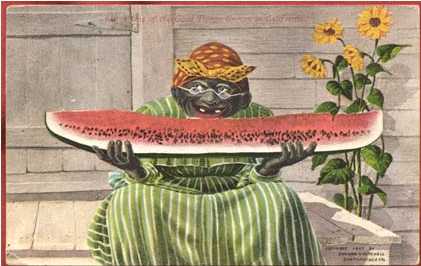


Origins and historical development
The association of Black Americans with watermelon dates back to the 19th century and intensified during the era of slavery, Reconstruction, and the rise of minstrel entertainment. Pro-slavery and white supremacist imagery used the motif to depict formerly enslaved people as content with minimal comforts and too childlike to deserve full citizenship or autonomy. Minstrel shows, postcards, sheet music covers, and early mass media reproduced the image widely, turning a piece of food culture into a tool of ridicule.
Characteristics and common themes
- Reductionism: portraying a whole community through a single behavior or preference.
- Animalization or infantilization: implying immaturity, laziness, or lack of ambition.
- Visual shorthand: recurring use of watermelon in cartoons, advertisements, and caricatures.
Examples and modern manifestations
The stereotype has appeared in songs, films, comic strips, and advertising from the late 1800s through the 20th century. In more recent times it resurfaces in jokes, social media posts, or imagery that may seem harmless to some but is rooted in a history of demeaning representation. Because of that history, such references are often contested and can provoke public debate when used by public figures, brands, or media creators.
Context, meanings, and responses
It is important to distinguish the stereotype from the real cultural significance of watermelon: for many Black communities watermelon has also been associated with leisure, family gatherings, and agricultural independence. Scholars and activists stress that awareness, education, and respectful representation are the appropriate responses to avoid perpetuating harmful tropes. Media literacy and sensitivity can help creators understand why repeating this motif may be hurtful.
Further resources
Author
AlegsaOnline.com Watermelon stereotype in American culture Leandro Alegsa
URL: https://en.alegsaonline.com/art/106856
Sources
- thesocietypages.org : "Watermelon: Symbolizing the Supposed Simplicity of Slaves"
- books.google.com.sg : Fences: Shmoop Literature Guide