
Carl Sagan: Astronomer, Science Communicator, and Advocate for Exploration
Overview of Carl Sagan’s life and work: planetary science, public communication (Cosmos), SETI advocacy, books such as Contact and Pale Blue Dot, founding of the Planetary Society, and his legacy.
Overview
Carl Edward Sagan (November 9, 1934 – December 20, 1996) was an American astronomer, planetary scientist, author, and a prominent popularizer of science. Trained as a scientist, he combined rigorous research with an ability to explain complex ideas to general audiences. Sagan became widely known outside academia through books and television, most notably the 1980 series Cosmos: A Personal Voyage, which reached millions and inspired renewed public interest in astronomy and the natural sciences.
Image gallery
10 Images






Scientific work and contributions
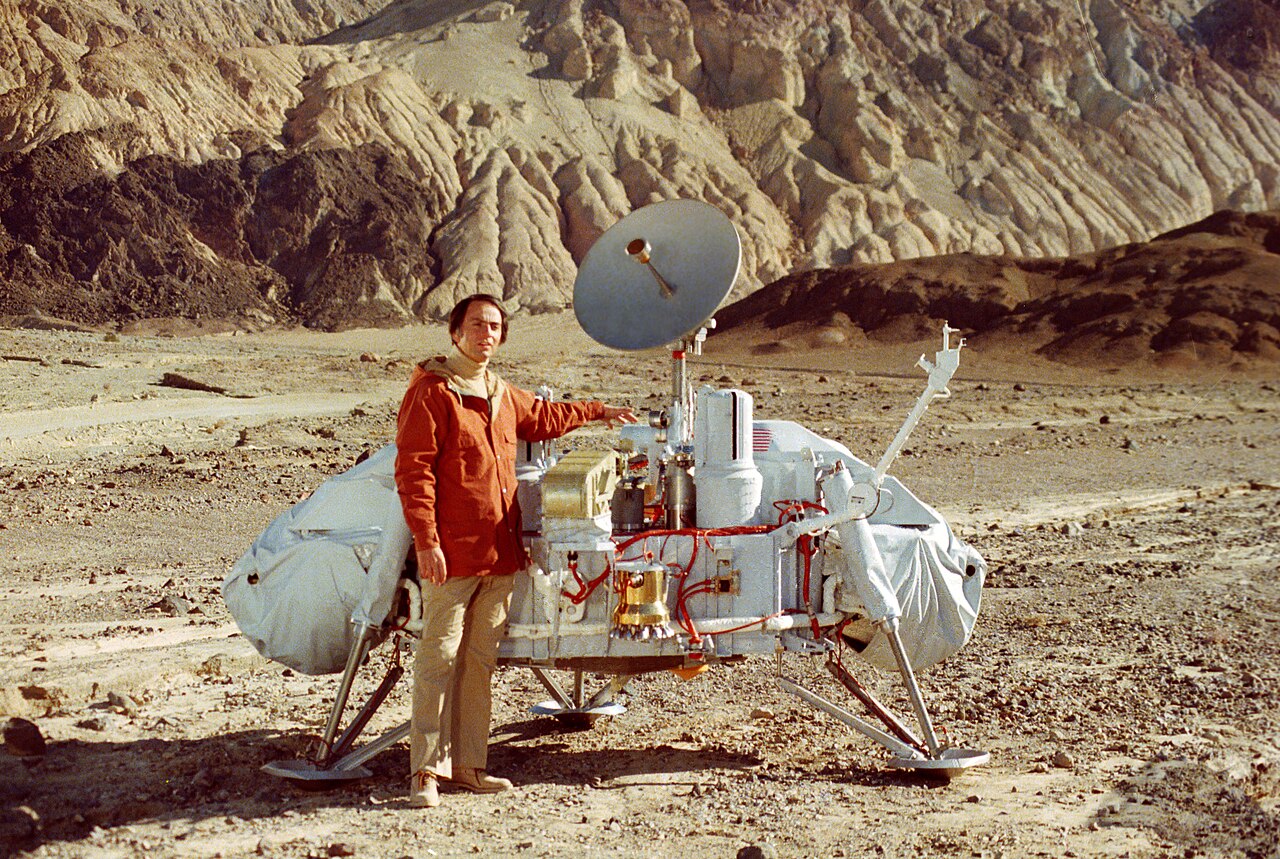
Sagan’s scientific interests centred on planetary atmospheres, the origins of life, and the conditions that could support life beyond Earth. He made influential contributions to our understanding of the greenhouse effect on Venus, the chemistry of planetary atmospheres, and the seasonal and surface processes of other worlds. As a researcher he worked with data from planetary missions and helped interpret observations returned by spacecraft.
- Planetary science: studies of atmospheres and surface chemistry across the Solar System.
- Astrobiology and origins of life: theorizing about how life might arise under varied conditions.
- SETI and interstellar communication: advocating scientific searches for extraterrestrial intelligence and participating in message design for spacecraft.
Science communication and public engagement
Sagan was one of the most influential science communicators of the late 20th century. He wrote numerous popular books—including The Dragons of Eden, Broca’s Brain, Pale Blue Dot, and Contact—and frequently appeared on television and radio. Cosmos combined history, philosophy and science into a narrative that emphasized humanity’s place in the universe and the value of the scientific method. His style mixed poetic language with clear explanation, encouraging curiosity and critical thinking.
Advocacy, organizations and public policy
Beyond research and writing, Sagan engaged in public policy debates. He was an outspoken advocate for arms control and highlighted environmental dangers such as nuclear war and the global greenhouse effect. He helped found the Planetary Society, a nonprofit organization that supports space research and exploration, and played a role in public outreach projects related to space missions, including the conceptual design of messages for interstellar probes.
Major works and notable ideas
- Cosmos: A Personal Voyage (television series and book) — a landmark in science popularization.
- Contact (novel) — a scientific novel about first contact with extraterrestrial intelligence, later adapted into a film.
- Pale Blue Dot — reflections on Earth’s fragility and our responsibility to one another.
- Scientific skepticism — promotion of evidence-based reasoning and the scientific method.
Legacy
Carl Sagan’s influence endures in the fields of planetary science, astrobiology and science communication. He inspired generations of scientists and science enthusiasts, helped establish institutions that support public interest in space, and left a body of writing that continues to introduce readers to the wonder and rigour of scientific inquiry. His emphasis on humility, curiosity, and the need for critical thinking remains a frequent point of reference in discussions about science in public life.
Questions and answers
Q: Who was Carl Edward Sagan?
A: Carl Edward Sagan was an American astronomer who was interested in the possibility of life on other planets. He was also a science communicator, meaning he taught people about science and worked to make it popular again.
Q: What did Sagan do to make science more popular?
A: Sagan wrote books and appeared on television to make science more popular. He mostly talked about planetary science and topics related to space. One of his most famous works includes Cosmos: A Personal Voyage, which he co-wrote and narrated.
Q: What is SETI?
A: SETI stands for Search for Extraterrestrial Intelligence, which is the study of potential life on other planets.
Q: What is scientific skepticism?
A: Scientific skepticism is an approach that involves questioning claims made by scientists or others based on evidence rather than relying solely on faith or personal opinion.
Q: What did Cosmos focus on?
A: Cosmos focused on many different scientific topics such as planetary science and topics related to space.
Q: How did Cosmos help make Sagan famous outside the world of science?
A: Cosmos helped make Sagan famous outside the world of science because it was a television series that he co-wrote and narrated, making him well known beyond just those in the field of astronomy or space exploration.
Related articles
Author
AlegsaOnline.com Carl Sagan: Astronomer, Science Communicator, and Advocate for Exploration Leandro Alegsa
URL: https://en.alegsaonline.com/art/17012
Sources
- us.imdb.com : IMDB