
Viral meningitis — causes, symptoms, diagnosis, treatment, and prognosis
Viral meningitis (aseptic meningitis) is inflammation of the membranes around the brain and spinal cord caused by viruses. Overview of causes, symptoms, diagnosis, treatment, prevention, and outcome.
Overview
Viral meningitis, often called aseptic meningitis, is an inflammation of the protective membranes (meninges) surrounding the brain and spinal cord caused by viral infection. For a general introduction to the condition see viral meningitis overview. It is generally less severe than bacterial meningitis and frequently resolves without specific antiviral drugs.
Image gallery
2 Images
Causes and who gets it
The most common agents are enteroviruses, which circulate widely and are a leading cause of meningitis in many regions. Other viral causes include herpesviruses, mumps virus, and arboviruses in certain areas. Children and young adults tend to be affected more often than older adults, and cases are relatively common during warmer months when enteroviruses spread more readily. For information about enteroviruses see enteroviruses.
Typical signs and symptoms
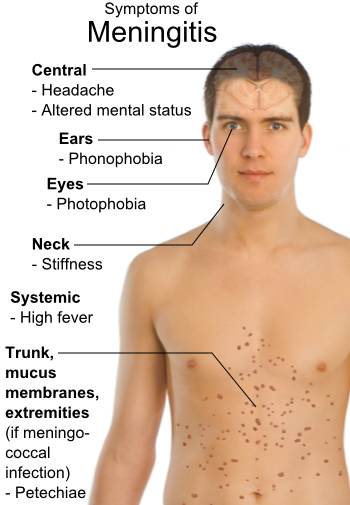
- Headache, often moderate to severe
- Fever and general malaise
- Neck stiffness or discomfort
- Photophobia (sensitivity to light) and sometimes nausea or vomiting
- In infants: irritability, poor feeding, and lethargy
Diagnosis and important distinctions
Diagnosis usually relies on clinical assessment and testing of cerebrospinal fluid (CSF) obtained by lumbar puncture. Viral meningitis typically shows a CSF pattern with increased white blood cells dominated by lymphocytes, normal or mildly reduced glucose, and modestly elevated protein; specific viral tests (PCR) can identify many pathogens. It is important to distinguish viral meningitis from bacterial meningitis, which is commonly more severe, progresses faster, and requires immediate antibiotic treatment and hospital care.
Treatment, prognosis and prevention
Treatment for viral meningitis is mainly supportive: rest, fluids, pain and fever control. Antiviral medication is indicated in certain causes such as herpes simplex virus but is not required for most enteroviral cases. The prognosis is usually good; many people recover fully within days to a few weeks, though recovery time can vary. Rarely, complications or prolonged symptoms occur.
Prevention and public health
Preventive measures include good hand hygiene, avoiding close contact with infected people, and up-to-date immunizations that reduce risk for specific viral causes (for example, vaccines that prevent measles and mumps reduce those rare causes of meningitis). Public health surveillance helps track outbreaks of viral agents that can cause meningitis.
For further reading or clinical guidelines, consult trusted health resources and local public health authorities or medical overviews and laboratory reference materials such as those describing enteroviruses and the differences from bacterial meningitis.
Related articles
Author
AlegsaOnline.com Viral meningitis — causes, symptoms, diagnosis, treatment, and prognosis Leandro Alegsa
URL: https://en.alegsaonline.com/art/105500
Sources
- ncbi.nlm.nih.gov : "Aseptic meningitis and viral myelitis"
- doi.org : 10.1016/j.ncl.2008.03.003
- pubmed.ncbi.nlm.nih.gov : 18657719
- nhs.uk : National Health Service, UK. Meningitis