
Vianden, Luxembourg
Vianden is a small historic city in north-eastern Luxembourg, capital of the canton of Vianden, noted for its medieval castle, riverside setting on the Our, cultural events and tourism.
Vianden is a small historic town in north‑eastern Luxembourg and the administrative centre of the canton of Vianden. It holds formal city status despite a modest population and is frequently visited for its compact old town and scenic location along the Our river. In Luxembourgish the town is known as Veianen.
Image gallery
10 Images
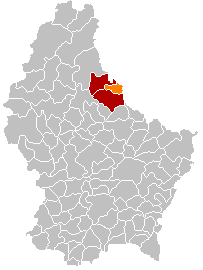


Geography and character
Vianden occupies a narrow river valley with steep wooded slopes rising around the urban core. The town combines medieval architecture, narrow streets and timbered houses with modern visitor facilities. Its position close to the German border makes it accessible from neighbouring regions and gives it a cross‑border character.
History and landmarks
The town developed around Vianden Castle, a fortified medieval residence that dominates the skyline. The castle, originally built in stages from Romanesque through Gothic periods, was long associated with local counts and later fell into disrepair before restoration efforts in the modern era. The old town preserves churches, historic dwellings and fortifications that reflect several centuries of local life.
Culture, tourism and events
Vianden is a regional tourist centre with museums, guided tours and seasonal cultural programming. Visitors commonly explore the castle, a Victor Hugo museum and riverside promenades. A chairlift links the town to viewpoints near the castle, and the community hosts market days and medieval‑themed events that attract both domestic and international visitors.
Notable facts and practical information
- Prominent landmark: the medieval castle overlooking the town.
- Cultural connections: artists and writers have long been drawn to Vianden’s setting.
- Transport: reachable by regional roads and public buses from larger Luxembourg centres.
- Scale: retains the feel of a small town while serving as the canton capital.
Vianden is valued for the combination of historic atmosphere, accessible natural scenery and small‑town cultural life. For practical planning, visitors typically combine a castle visit with short walks along the Our and exploration of museums and cafés in the compact centre.
Related articles
Author
AlegsaOnline.com Vianden, Luxembourg Leandro Alegsa
URL: https://en.alegsaonline.com/art/104854
Sources
- statistiques.public.lu : "Surface area of the cantons and municipalities"
- statistiques.public.lu : "Population by canton and municipality 1821 - 2017"
- vianden.lu : "Présentation"
- statistiques.public.lu : "Altitudes of the different localities per cantons (in m)"