
Valery Bykovsky — Soviet cosmonaut and three‑flight space veteran
Valery Bykovsky (1934–2019) was a Soviet cosmonaut who flew Vostok 5, Soyuz 22 and Soyuz 31. He took part in early long‑duration solo flight, earth observation and Intercosmos international missions.

Overview
Valery Fyodorovich Bykovsky was a Soviet-era cosmonaut known for flying three crewed missions: Vostok 5 (1963), Soyuz 22 (1976) and Soyuz 31 (1978). Born in Pavlovsky Posad, he became part of the generation of pilots selected for the early Soviet human spaceflight program and later participated in both national and international programs.
Image gallery
4 Images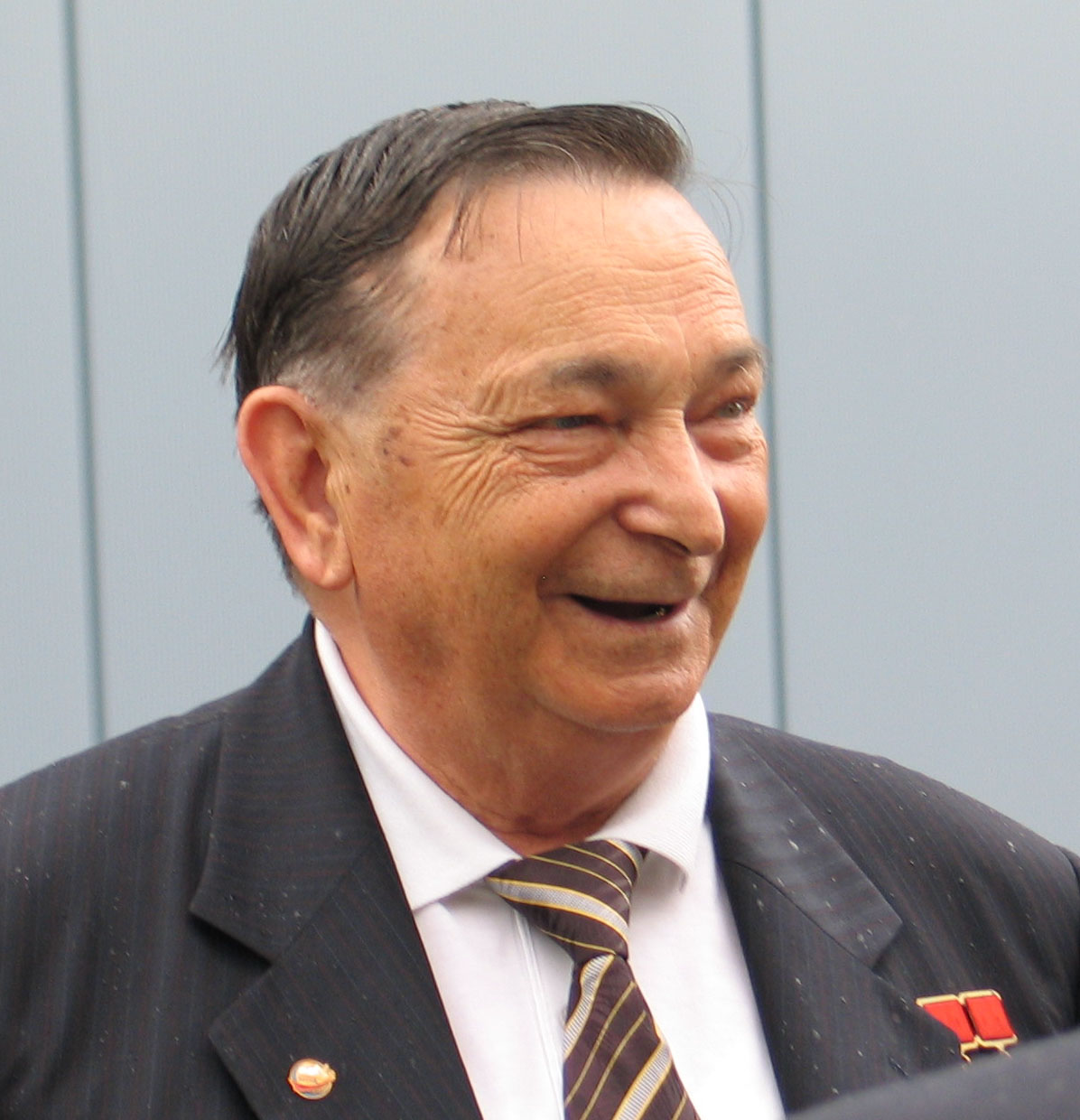


Early life and selection
Bykovsky grew up near Moscow and trained as a military pilot before joining the Soviet space effort. He was selected into the cosmonaut corps during the intake that produced many of the program's early flyers. His Russian name and official transliteration are often shown as Valeriy Fyodorovich Bykovsky, and his birthplace is listed as Pavlovsky Posad. He served as a backup crewmember on other flights, reflecting a long period of active service in the corps.
Spaceflights and activities
Bykovsky's first mission, Vostok 5, was a solo flight during the early 1960s that demonstrated the feasibility of longer durations in orbit for an individual cosmonaut and helped map physiological effects. Years later he flew Soyuz 22, a mission focused on Earth observation and photography using specialized cameras, and Soyuz 31, an Intercosmos flight that carried an international partner to a space station. He was named as backup for Vostok 3 and for Soyuz 37, showing continued involvement across different program phases.
Contributions and legacy
Bykovsky's career spans the pioneering Vostok era and the later Soyuz/Intercosmos period. His Vostok flight set a benchmark for solo duration at the time and contributed to the Soviet understanding of long-duration human spaceflight. On Soyuz missions he worked on scientific and observational tasks that supported Earth science and international cooperation, including training and flying with partners from allied countries.
Notable facts
- Flew three crewed missions across a fifteen‑year span.
- Participated in both national record‑setting flights and international Intercosmos activities.
- Served as backup on additional missions, underscoring a prolonged operational role in the program.
Bykovsky remained a respected figure in spaceflight history until his death in 2019. His career illustrates the transition from solo pioneering missions to multinational cooperation in low Earth orbit and is frequently cited in discussions of early human endurance in space and Cold War era space diplomacy. Further details on his life and missions can be found through resources on the Soviet cosmonaut corps.
Related articles
Author
AlegsaOnline.com Valery Bykovsky — Soviet cosmonaut and three‑flight space veteran Leandro Alegsa
URL: https://en.alegsaonline.com/art/104021