
Văn Tiến Dũng: Vietnamese general and commander of the 1975 Ho Chi Minh Campaign
Biography of General Văn Tiến Dũng (1917–2002): his revolutionary beginnings, military career, leadership of the Ho Chi Minh Campaign, senior party and defense roles, and legacy in Vietnam.
Overview
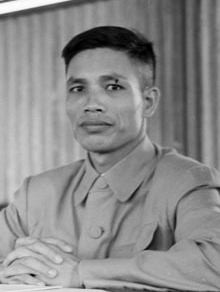
Văn Tiến Dũng (2 May 1917 – 17 March 2002) was a senior Vietnamese military leader and Communist Party official. He served for decades in the People's Army of Vietnam, holding top operational posts and later senior political-military offices. He is widely remembered as the operational commander of the final 1975 offensive that led to the fall of Saigon, commonly called the Ho Chi Minh Campaign.
Image gallery
5 Images


Early life and revolutionary activity
Born in 1917 in what was then colonial Indochina, Văn Tiến Dũng became involved in anti-colonial and Communist activities in his youth. Like many of his contemporaries, he rose through revolutionary networks and guerrilla forces during the struggle against French colonial rule and later in conflicts involving South Vietnam and the United States. His early service established a reputation for organizational skill and commitment to Party goals.
Military career and leadership positions
Dũng's career combined field command and staff leadership. He was Chief of the General Staff of the Vietnam People's Army for a lengthy period, and later served at ministerial and party levels. His principal positions included:
- Chief of the General Staff (1953–1978), responsible for planning and coordinating large-scale operations;
- Member of the Communist Party Politburo, participating in high-level political-military decisions;
- Minister of National Defense (1980–1986), overseeing post-war military affairs and modernization efforts;
- Secretary of the Party Central Military Commission (mid-1980s), linking the armed forces with party leadership.
The 1975 Ho Chi Minh Campaign
Văn Tiến Dũng is best known internationally for his role as the direct commander of the campaign that culminated in April 1975 with the capture of Saigon and the effective end of the Republic of Vietnam. The campaign combined rapid conventional advances, coordinated logistics, and political directives to bring about a swift conclusion to years of conflict. Military histories emphasize the planning, mobilization of multiple army corps, and the collapse of organized resistance in the south during those final weeks.
Later life, assessments and legacy
After 1975, Dũng remained a key figure in Vietnam's military and party hierarchies through the 1980s, participating in reconstruction, defense management, and internal debates on military policy. He retired from front-line political roles later in life and died in 2002. Evaluations of his career note his organizational competence and strategic role in historic campaigns; he is a prominent figure in Vietnam's modern military history. For additional background and sources, see Văn Tiến Dũng resources.
Notable facts: His long tenure as Chief of General Staff spanned both the First Indochina War period and the Vietnam War era. As a Politburo member, he bridged military command and party policymaking, a characteristic feature of Vietnam's civil–military relations after independence.
Questions and answers
Q: Who was Văn Tiến Dũng?
A: Văn Tiến Dũng was a Vietnamese revolutionary and a General in the People's Army of Vietnam.
Q: What positions did Văn Tiến Dũng hold during his career?
A: Văn Tiến Dũng was a Member of the Politburo, Chief of the General Staff of the Vietnam People's Army (1953-1978), Minister of Defense (1980-1986), and Secretary of the Party Central Military Party (1984-1986).
Q: When was Văn Tiến Dũng born and when did he pass away?
A: Văn Tiến Dũng was born on May 2, 1917 and he passed away on March 17, 2002.
Q: Can Văn Tiến Dũng be considered as one of the famous generals of Vietnam?
A: Yes, Văn Tiến Dũng can be considered as one of the famous generals of Vietnam.
Q: What is the Ho Chi Minh Campaign?
A: The Ho Chi Minh Campaign was a military operation in 1975 that resulted in the fall of Saigon and the end of the Vietnam War.
Q: Was Văn Tiến Dũng involved in the Ho Chi Minh Campaign?
A: Yes, Văn Tiến Dũng was the direct commander of the Ho Chi Minh Campaign.
Q: What was Văn Tiến Dũng's title during his term as Minister of Defense?
A: Văn Tiến Dũng's title during his term as Minister of Defense was "Minister."
Related articles
Author
AlegsaOnline.com Văn Tiến Dũng: Vietnamese general and commander of the 1975 Ho Chi Minh Campaign Leandro Alegsa
URL: https://en.alegsaonline.com/art/104154