
Valmiki — Adi Kavi and Author of the Ramayana
Valmiki, revered in Indian tradition as the Adi Kavi (first poet), is credited with composing the Sanskrit epic Ramayana and shaping the śloka poetic form; his life and legacy blend legend, literature, and devotion.
Maharishi Valmiki occupies a central place in South Asian literary and religious tradition. Celebrated as the Adi Kavi, or "first poet," he is traditionally credited with composing the Sanskrit epic Ramayana. In many accounts Valmiki is said to have discovered or popularized the śloka couplet form that became a cornerstone of classical Sanskrit poetry. His name denotes both a historic authorial figure and an archetype of the sage-poet in later storytelling and ritual life.
Image gallery
8 Images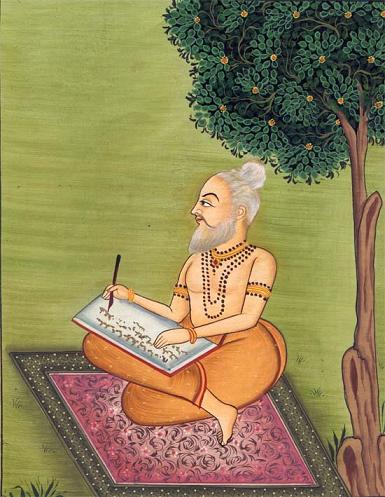


Life and legend
Biographical details about Valmiki are largely drawn from later Hindu texts and regional folklore rather than contemporary historical records. Traditional stories describe his earlier identity as a forest-dweller or bandit named Ratnakara who underwent a moral and spiritual transformation after an encounter with a teacher. Through penance and meditation he is said to have attained insight and composed the first poetic utterance that became the prototype of the śloka. These tales emphasize conversion, discipline, and poetic inspiration rather than verifiable chronology.
Ramayana and literary contributions
The Ramayana attributed to Valmiki is a long narrative poem in Sanskrit that recounts the life and trials of Rama, a key figure in Hindu religious imagination. Traditionally divided into several books, the epic combines narrative episodes, philosophical reflections, and devotional elements. It also contains an episode in which Valmiki himself provides refuge to Sita and becomes the spiritual teacher of her sons, Lava and Kusha, who learn and later recite the epic. Beyond authorship, Valmiki's association with the śloka couplet influenced the rhythm and diction of subsequent Sanskrit composition.
Historical reception and influence
Valmiki's reputation as the founder of classical Sanskrit poetic practice appears in early literary references and was well established by the early centuries of the common era. Over the medieval and modern periods the Ramayana inspired countless regional retellings, commentaries, dramatic adaptations, and devotional works across South and Southeast Asia. Temples, festivals, and local traditions celebrate Valmiki both as a sage and as a cultural ancestor of poetic practice.
Notable distinctions and legacy
- Adi Kavi: Revered as the first poet who set a model for Sanskrit verse.
- Authorial presence: Appears within the Ramayana as a living character and teacher.
- Influence: The epic and its style shaped later literature, performance, and religious life.
- Dating: Traditions place him in a mythic past; modern scholars treat historical claims cautiously.
Whether treated as a historical individual or as a composite figure of memory and piety, Valmiki remains a symbol of poetic origin and moral transformation, his work serving as a foundational text for literary study and religious practice across many cultures influenced by the Ramayana tradition.
Related articles
Author
AlegsaOnline.com Valmiki — Adi Kavi and Author of the Ramayana Leandro Alegsa
URL: https://en.alegsaonline.com/art/104086
Sources
- books.google.com : Authority and Meaning in Indian Religions: Hinduism and the Case of Valmiki