
V (letter)
V is the 22nd letter of the Latin alphabet used in English, representing a voiced labiodental fricative and serving as a symbol in numerals, science, music and typography.
The letter V is the twenty-second character of the modern Latin alphabet as used in English. It commonly denotes the voiced labiodental fricative sound, written informally as /v/ in phonetic descriptions, and appears in many everyday words such as "victory," "value," and "vase." Historically and typographically it has both an uppercase form (V) and a lowercase form (v) with distinct shapes in different typefaces.
Image gallery
3 Images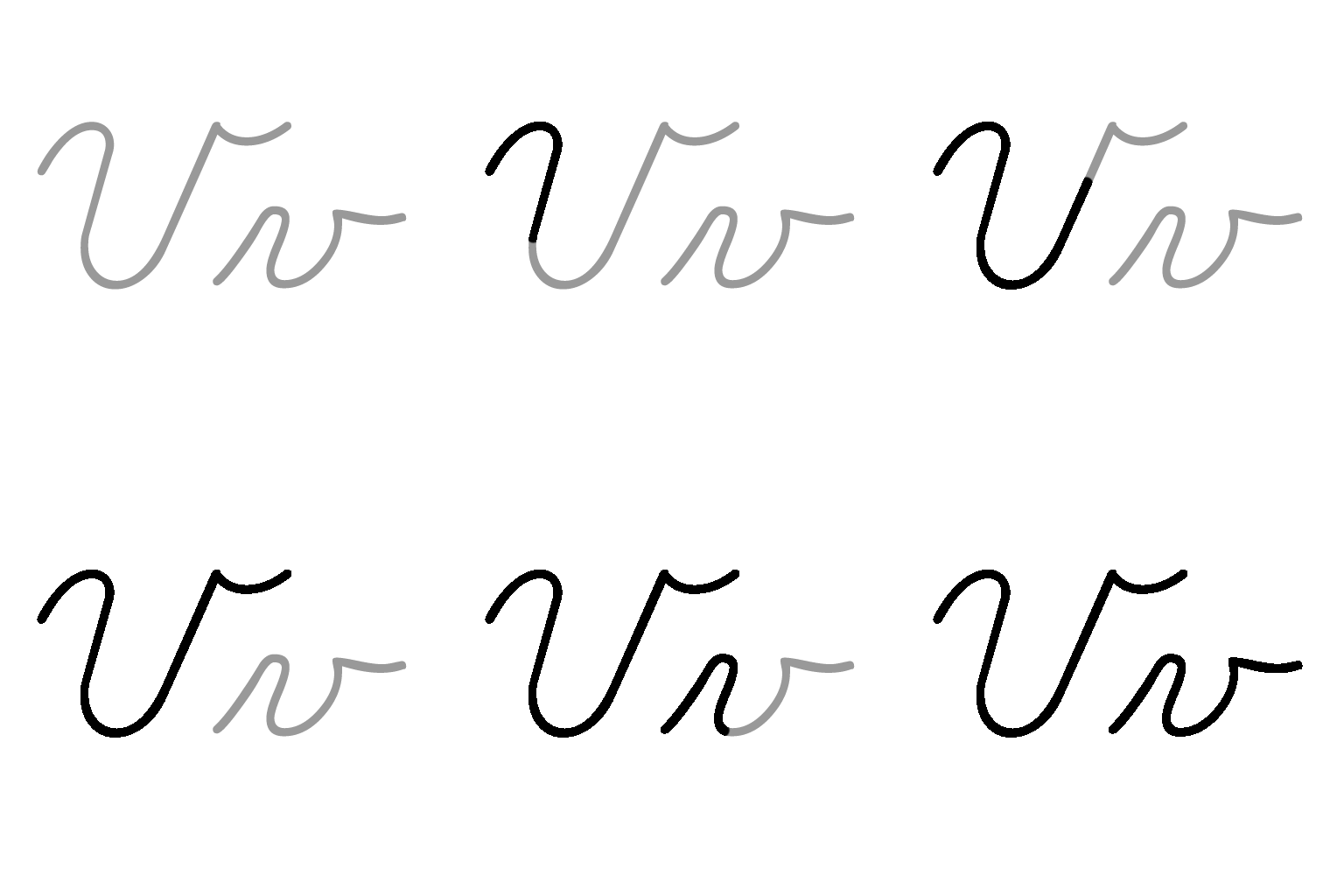


Origins and historical development
The shape and name of V trace back centuries. Its ancestry runs through the Semitic letter waw and the Phoenician script, onward into Greek and Etruscan alphabets before becoming part of the Roman alphabet. In classical Latin the same sign covered both vowel and consonant uses (closer to modern "u" and the consonantal sound /w/), but medieval and early modern writing gradually distinguished the consonantal form as V and the vowel form as U. The character for "double u" later developed into the separate letter W.
Pronunciation and variations
In contemporary English V usually represents the voiced labiodental fricative /v/. Other languages assign different values: in some Germanic languages it can alternate with /f/ or /v/; in many Romance languages it corresponds to /v/ but can vary regionally; in certain languages the letter historically represented or evolved from /w/ or /b/. Spelling conventions and loanwords can affect whether V appears at the start, middle or end of a word and how it combines with adjacent letters.
Beyond its phonetic role, V has acquired several conventional uses across fields. As a Roman numeral it denotes the number five. In science and engineering it commonly stands for voltage (volt) or speed/velocity in formulas. In chemistry, V is the chemical symbol for the element vanadium. In music theory Roman numeral analysis, capital V denotes the dominant chord. Typography and calligraphy show many stylistic variants of the letter shape.
- Alphabetical: the 22nd letter (position 22).
- Phonetics: typically /v/ in English (letter role).
- Numerals and symbols: Roman numeral V equals five; scientific abbreviations use V for volt, velocity, vanadium.
- Cultural: used as an initial, logo, and symbolic form (e.g., the "V" for victory concept).
The letter's history and multiple functions illustrate how a single character can carry phonetic value, numeric notation, scientific meaning and stylistic diversity. For further general background on letters and alphabets, see broader discussions of the English alphabet and the development of the alphabet.
Related articles
Author
AlegsaOnline.com V (letter) Leandro Alegsa
URL: https://en.alegsaonline.com/art/103814