
Veblen good
A Veblen good is a product whose desirability rises with its price because high cost signals status. Named for Thorstein Veblen, it contrasts with ordinary demand behavior and relates to conspicuous consumption.
Overview
In economics, a Veblen good is a type of good for which demand increases as its price rises, over some range. That behavior runs counter to the usual downward-sloping demand curve taught in basic supply-and-demand analysis. The defining mechanism is social signalling: a higher price makes the item more attractive because it conveys wealth, taste or membership in an elite group.
Image gallery
4 Images


Key characteristics
- Status signaling: consumers purchase to display prestige rather than solely to satisfy functional needs.
- Positive price–demand relation: within certain price bands, higher prices raise desirability.
- Positional value: value depends on relative standing; the good’s worth is partly in being exclusive or hard to acquire.
- Limited empirical scope: not all luxury or expensive items are Veblen goods for all buyers or at all prices.
History and theory
The concept traces to Thorstein Veblen’s 1899 critique of “conspicuous consumption,” where the wealthy buy visible, expensive items to demonstrate status. Economists later formalized the idea of goods whose demand curves slope upward in some intervals. The term emphasizes social and cultural drivers of demand that lie outside pure utility from consumption.
Examples and implications
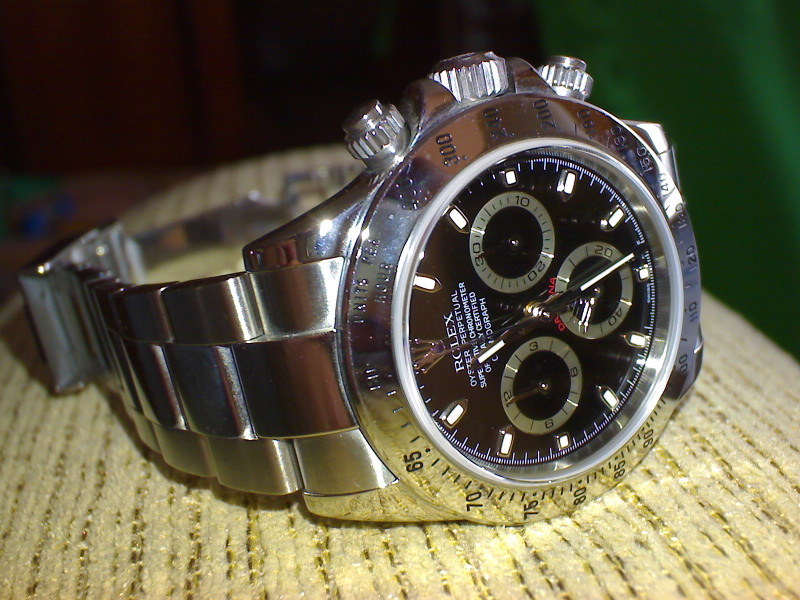
Typical candidates include certain luxury fashion items, high-end cars, collectible art and rare jewelry, though whether any specific product is Veblen depends on context and consumer motives. Firms and marketers may exploit Veblen effects by preserving scarcity, using premium pricing, or promoting exclusivity. Policymakers consider these dynamics when assessing luxury taxes or inequality effects, because such taxes may alter status signaling rather than simply reduce consumption.
Related concepts and distinctions
Veblen goods are related to but distinct from:
- Giffen goods — inferior goods where lower price can reduce consumption due to income effects (a different mechanism).
- Snob effect — desire for uniqueness, overlapping with Veblen behavior but not identical.
- Bandwagon effect — where demand rises as more people buy (opposite of exclusivity).
Empirically identifying Veblen goods is challenging because social motives vary across buyers and time; many luxury products combine ordinary consumption motives with status-driven demand.
Related articles
Author
AlegsaOnline.com Veblen good Leandro Alegsa
URL: https://en.alegsaonline.com/art/104431