
Upanishads: the Vedantic scriptures of Hindu philosophical thought
The Upanishads are ancient Sanskrit texts at the end of the Vedas that explore knowledge (jnana), the nature of self (ātman), ultimate reality (brahman) and the path to liberation (moksha).
Overview
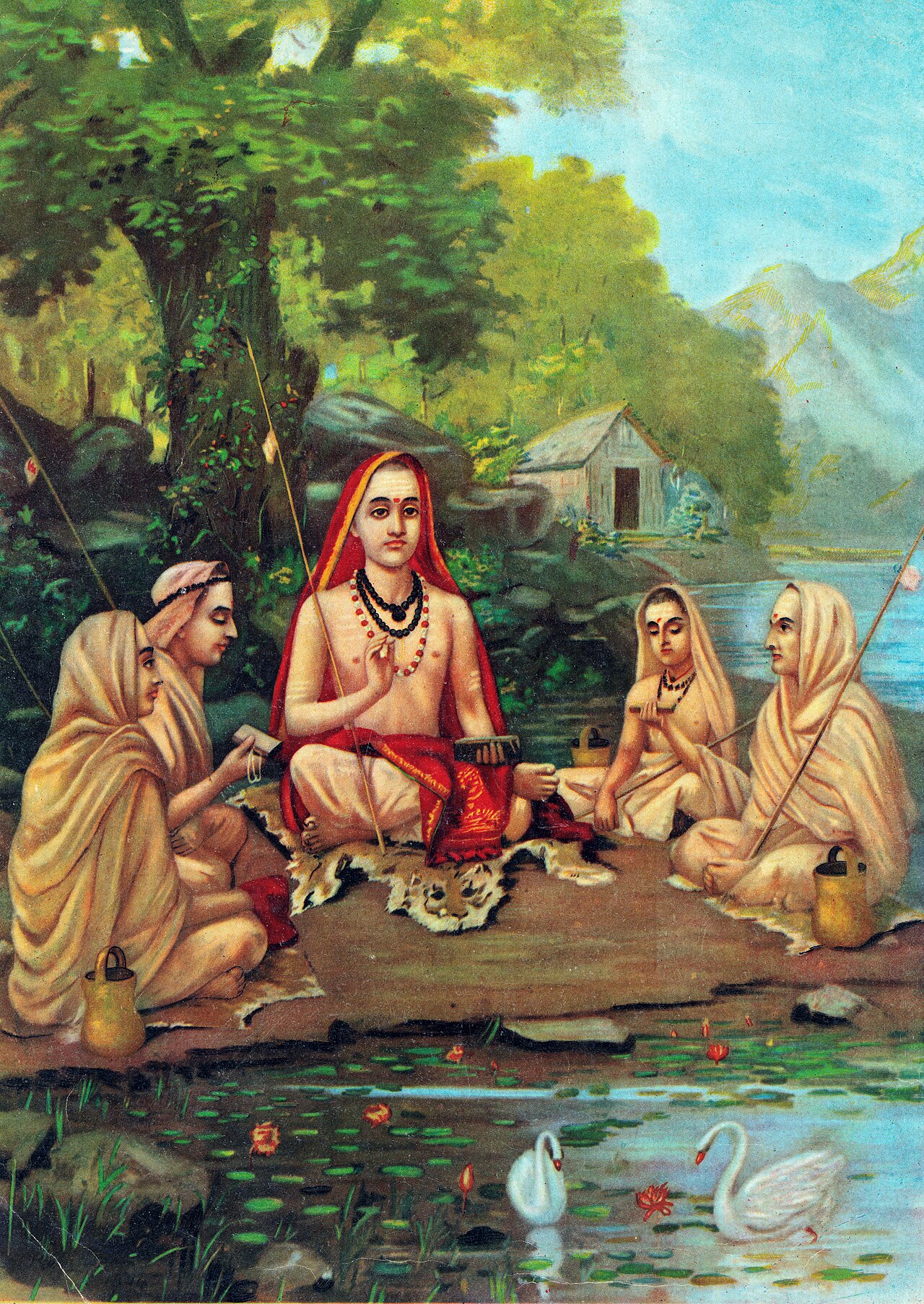
The Upanishads are a collection of Sanskrit texts that form the philosophical culmination of the Vedas, the oldest layer of Indian sacred literature. Traditionally placed at the end of various Vedic recensions, they are often called Vedanta — literally "the end of the Vedas" — because they develop metaphysical and spiritual inquiry more than ritual prescription. The word "Upanishad" is commonly explained as "sitting close" to a teacher to receive esoteric instruction, and the texts preserve conversations, short treatises and aphorisms transmitted in a guru–disciple setting.
Image gallery
9 Images


Structure and characteristics
Unlike the ritual manuals (karma-kanda) and hymns (ṛg and sāman portions) of the Vedas, Upanishadic material is primarily philosophical and introspective. The style ranges from dialogues and stories to terse axioms and poetic passages. Many Upanishads are embedded in the concluding sections of Brahmanas or Aranyakas and combine prose with verse. Recurring themes include inquiry into the nature of ātman (the inner self), brahman (ultimate reality), the relation between the two, and methods for realizing truth, such as meditation, ethical discipline and knowledge (jñāna).
History and dating
The Upanishads were composed over many centuries. A scholarly consensus places the oldest core—texts such as the Bṛhadāraṇyaka and Chāndogya Upanishads—in the first half of the first millennium BCE (estimates vary), while other Upanishads were added through the early medieval period. The tradition was primarily oral for centuries, preserved by Vedic schools that memorized and transmitted texts with precise phonetic rules. Over time, hundreds of Upanishadic works were attributed to the Vedantic corpus; a traditional canon counts 108, while scholars distinguish a dozen or so principal (mukhya) Upanishads frequently cited in later philosophy.
Core ideas and terminology
The Upanishads introduced or elaborated several foundational concepts for Indian philosophy. Key terms include ātman (self), brahman (ultimate reality), karma (action and its consequences), saṃsāra (cycle of rebirth) and mokṣa (liberation). Famous aphorisms such as tat tvam asi ("that thou art"), neti neti ("not this, not this") and ahaṃ brahmāsmi ("I am Brahman") express approaches to self-knowledge and negation of limiting identities. The texts explore knowledge as the means to freedom and often situate ethical conduct and contemplative practice as preparatory to realization.
Uses, influence and interpretation
The Upanishads became the scriptural foundation for the Vedānta school of Hindu philosophy and exerted a profound influence on later Indian thought, including classical Indian metaphysics, devotional movements, and practices of yoga and meditation. Commentators such as Śaṅkarācārya (8th century CE) produced systematic readings that shaped orthodox Vedanta, while other thinkers offered alternative interpretations. Beyond India, translations and engagements with the Upanishads helped shape Western interest in comparative religion and comparative philosophy from the 18th century onward.
Notable facts and further reading
Well-known Upanishads include the Bṛhadāraṇyaka, Chāndogya, Kena, Katha, Īśa, Muṇḍaka, Māṇḍūkya and Taittirīya. Although the Bhagavad Gītā is not formally one of the canonical Upanishads, it is sometimes described as a succinct Upanishadic teaching because it treats many of the same themes. For introductions and translations, consult modern scholarly editions and reliable surveys; for example, see further reading that collects translations, commentaries and historical overviews useful for both general readers and students of religion.
Related articles
Author
AlegsaOnline.com Upanishads: the Vedantic scriptures of Hindu philosophical thought Leandro Alegsa
URL: https://en.alegsaonline.com/art/103466