
University of Würzburg (Julius-Maximilians-Universität)
Public research university in Würzburg, Germany, founded in 1402 (refounded in the 16th century). Strong in medicine and the natural sciences; member of the Coimbra Group.
Overview
The University of Würzburg is a historic public research university located in Würzburg, Germany. Its official name is Julius-Maximilians-Universität Würzburg. The institution traces its roots to an early foundation in 1402 and developed into a modern research university with a broad range of faculties, combining longstanding traditions with contemporary science and teaching.
Image gallery
10 Images



History and development
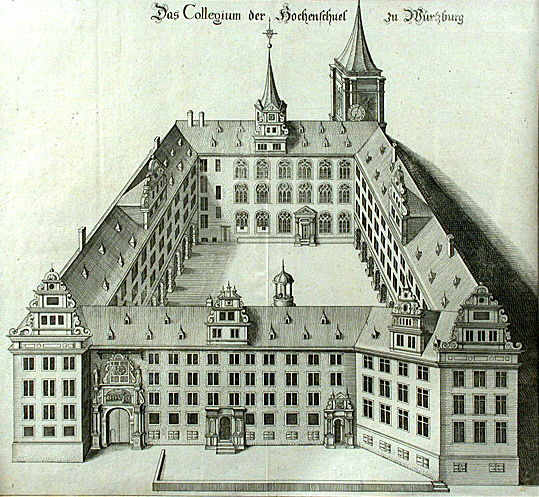
The university's origins reach back to the medieval era; after an initial foundation it was re-established in the early modern period and expanded steadily thereafter. Over centuries it has adapted to changing political and intellectual climates, growing from a regional center for theology and law into a comprehensive university with notable achievements in medicine, physics and the life sciences.
Organisation and academic profile
Würzburg is organized into multiple faculties and institutes that cover classical academic disciplines as well as interdisciplinary research areas. Prominent fields historically and currently include:
- Medicine and clinical research, linked to a major university hospital
- Natural sciences and experimental physics
- Humanities, law and social sciences
- Life sciences and biotechnology
Research, partnerships and impact
The university is active in national and international research networks and is a member of the Coimbra Group, an association of long-established European universities. It supports collaborative projects, doctoral training and technology transfer. Notable discoveries associated with the university include pioneering work in physics; for example, Wilhelm Conrad Röntgen discovered X-rays while working in Würzburg, a development with lasting medical and scientific consequences.
Campus, student life and significance
The campus blends historic buildings and modern facilities. A university hospital provides practical training and clinical research opportunities. Student life reflects typical German campus culture, with academic clubs, cultural events and regional ties to the city of Würzburg. The institution continues to play an important role in regional education, healthcare and scientific innovation.
Notable facts
- One of Germany's oldest universities, with medieval origins and continued evolution into a contemporary research university.
- Member of the Coimbra Group, highlighting its historic profile among European higher education institutions.
- Associated with major scientific advances that have had worldwide impact.
Related articles
Author
AlegsaOnline.com University of Würzburg (Julius-Maximilians-Universität) Leandro Alegsa
URL: https://en.alegsaonline.com/art/103385