
University of Pittsburgh (Pitt)
Public research university in Pittsburgh, founded in 1787. Known for extensive research, an affiliated medical center (UPMC), the Cathedral of Learning, international studies, philosophy, and NCAA sports.
Overview
The University of Pittsburgh, commonly called Pitt, is a public research university located in Pittsburgh. It began as an academy in 1787 and has grown into a large, multi-campus institution. As a public institution, Pitt provides undergraduate, graduate and professional programs and engages in significant research and community partnerships (public university, urban setting).
Image gallery
10 Images





History and development
Pitt traces its roots to the late 18th century and has evolved through periods of expansion, reorganization and increased research activity. Over time the university developed strong programs in the humanities and social sciences, gaining recognition for departments such as philosophy and for international and area studies (international studies), while also broadening professional and scientific offerings.
Campus, buildings and medical connections
The main campus in Pittsburgh features notable landmarks and a mix of historic and modern facilities. Pitt is closely associated with the University of Pittsburgh Medical Center, an extensive health care and research network (UPMC), and hosts numerous research institutes and centers that support interdisciplinary work (research).
Distinctive features
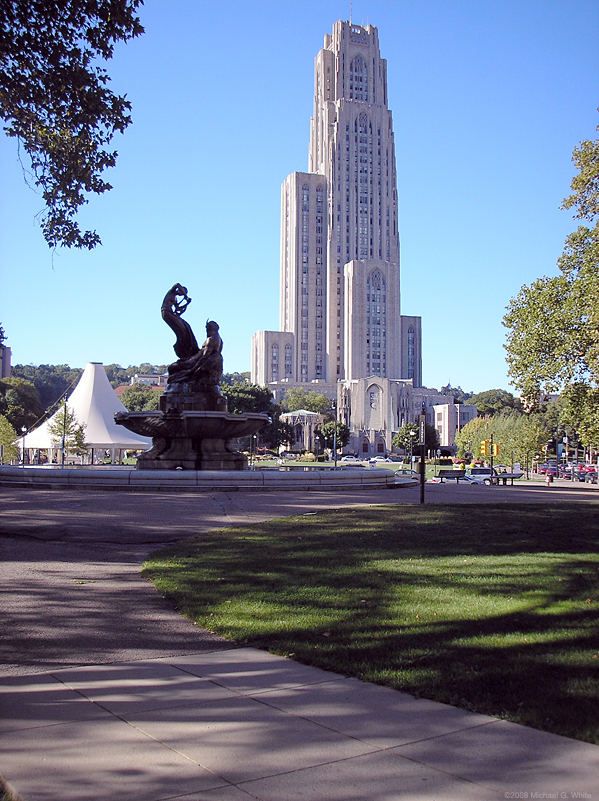
The campus skyline is dominated by the Cathedral of Learning, a tall, landmark building admired for its Gothic Revival architecture and its role as an academic hub (tall building, Cathedral of Learning at Pitt). The university organizes many schools and departments that serve diverse disciplines.
Academics, research and professional impact
- Undergraduate and graduate degrees across arts, sciences, engineering, health professions and business.
- Large scale research enterprise supporting basic and applied science, clinical trials and public policy work.
- Strong professional linkage to regional health care and industry partners, providing training and employment pathways.
Student life and athletics
Student life at Pitt includes a wide range of clubs, cultural organizations and campus services. Athletics play a visible role on campus, with varsity teams competing in sports such as football and basketball. The university balances academic programs with extracurricular and community engagement opportunities.
Overall, the University of Pittsburgh is known for combining a long institutional history with a contemporary research mission, an urban campus, and strong ties to regional medical and civic institutions.
Related articles
Author
AlegsaOnline.com University of Pittsburgh (Pitt) Leandro Alegsa
URL: https://en.alegsaonline.com/art/103323
Sources
- nacubo.org : "U.S. and Canadian Institutions Listed by Fiscal Year (FY) 2019 Endowment Market Value and Change in Endowment Market Value from FY 2018 to FY 2019"
- brand.pitt.edu : University of Pittsburgh Brand Guidelines
- brand.pitt.edu : "Primary Palette"
- portal.state.pa.us : "PHMC Historical Markers Search"
- digital.library.pitt.edu : Pitt: The Story of the University of Pittsburgh 1787–1987
- philosophicalgourmet.com : The Philosophical Gourmet Report, date=Match 2009
- stat.tamu.edu : "NRC Rankings in Each of 41 Areas"
- pittmag.pitt.edu : ""The Company We Keep""
- grad-schools.usnews.rankingsandreviews.com : "Best Graduate Schools: Medical: University of Pittsburgh"
- upmc.com : "UPMC Named to U.S. News & World Report Honor Roll of America’s Best Hospitals for the Ninth Time"
- mac10.umc.pitt.edu : "University Times"
- nationalregisterofhistoricplaces.com : "PENNSYLVANIA — Allegheny County"