
University of Paris — history, structure and legacy
A historic medieval university in Paris, often called the Sorbonne; founded in the 12th century, reorganized in the 20th century into autonomous institutions and influential across European higher education.
Overview
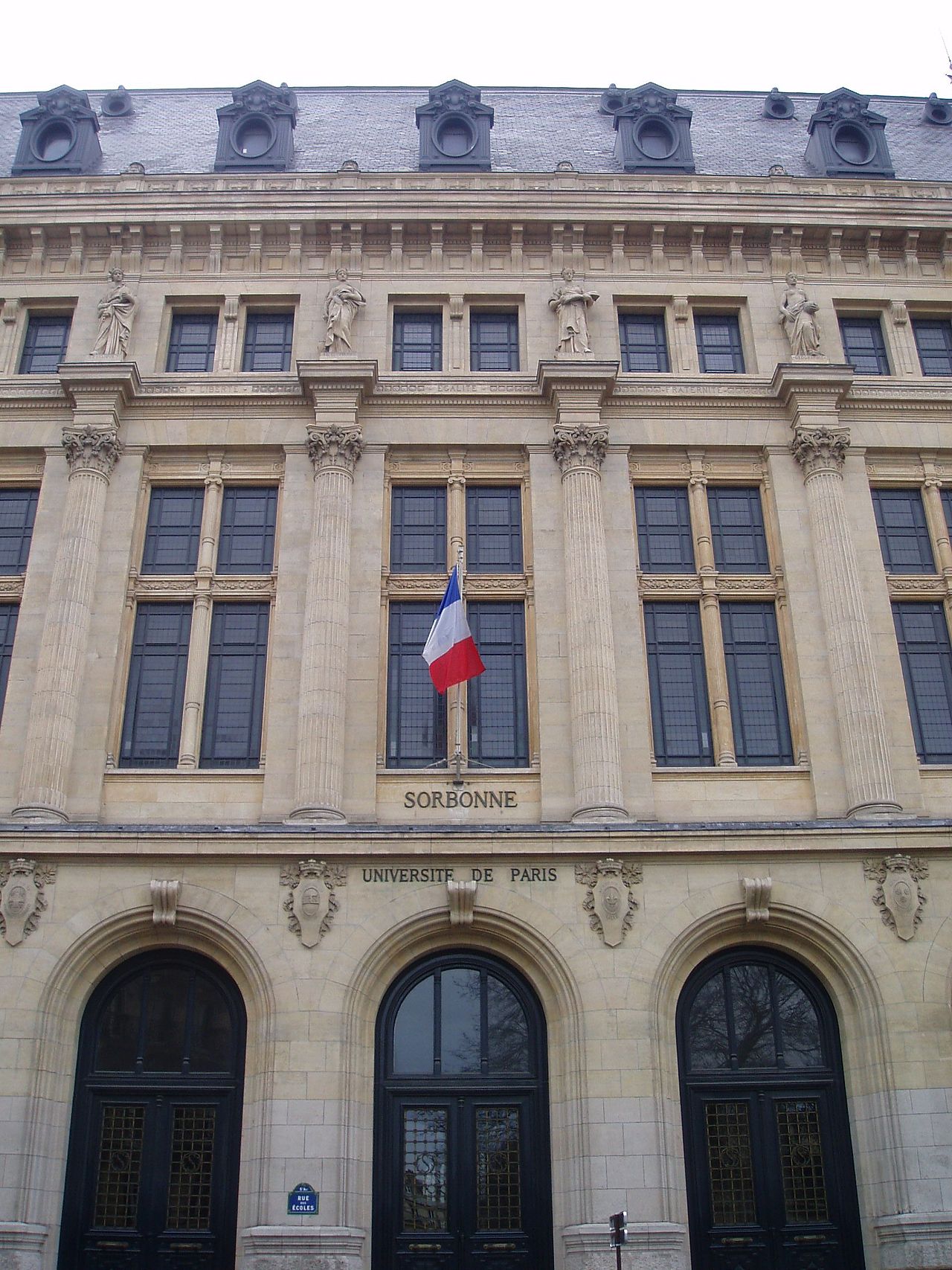
The University of Paris was one of medieval Europe's foremost centers of learning. Established in the middle of the 12th century, it grew around the schools clustered in Paris' Latin Quarter and later became closely associated with the Collège de Sorbonne, founded about 1257 by Robert de Sorbon. Its historic precincts are identified by coordinates often cited in descriptions of the site: 48°50′55″N 2°20′36″E. The institution is commonly referred to by its French name, Université de Paris, and by the popular nickname "la Sorbonne".
Image gallery
10 Images





Characteristics and internal organization
As a medieval university, the University of Paris was organized around several principal faculties. Students typically progressed through the faculty of arts before specializing in one of the higher faculties. Key divisions historically included:
- Arts (the preparatory faculty)
- Theology
- Law (canon and civil)
- Medicine
The institution developed its own standards for degrees and academic ranks and became a model for later European universities, contributing to the broader university tradition across the continent.
History and development
Teaching in Paris consolidated during the 12th and early 13th centuries, and the school secured formal recognition and privileges that increased its autonomy and reputation. The Collège de Sorbonne, created in the mid-13th century as a theological college, lent its name to the wider university complex and to the notable lecture halls and libraries that followed. Over centuries the University of Paris played a central role in scholastic thought, theological debate and the education of clergy and civil servants.
Campus, influence and culture
Located in central Paris, the university's presence shaped the Latin Quarter as a durable intellectual quarter. Its faculties attracted students and scholars from many regions, and the academic life of Paris influenced law, theology and philosophy across Europe. The name "Sorbonne" came to stand not just for a single college but as a symbol of Parisian academic life.
Reorganisation and modern legacy
In the late 20th century the structure of higher education in Paris underwent major change. Following a series of reforms and social events around 1968, the historical University of Paris was divided into thirteen autonomous universities (commonly numbered Paris I–XIII) in the early 1970s. These successor institutions inherited different faculties, campuses and specializations while some retained the Sorbonne name in various forms. The original medieval foundations remain an important part of the cultural memory of European learning.
Notable facts
- The University of Paris is counted among Europe's oldest universities and was especially prominent in the Middle Ages.
- "Sorbonne" properly refers to the collegiate foundation established by Robert de Sorbon, though the label has been applied more broadly to the university and its buildings.
- The model of faculties and degrees that developed in Paris helped shape subsequent universities across Europe.
For further institutional and historical details consult dedicated histories and archives, or institutional pages for the successor universities that preserve the University's long academic tradition. Coordinates, the French name Université de Paris, institutional context at historic summaries and the city's background Paris are useful starting points.
Related articles
Author
AlegsaOnline.com University of Paris — history, structure and legacy Leandro Alegsa
URL: https://en.alegsaonline.com/art/103321