
Tulipa sylvestris (wild tulip)
Tulipa sylvestris is a scented, low-growing wild tulip that naturalizes in meadows and woodlands. Native to parts of Europe, North Africa and western Asia, it is valued for its buttercup-yellow flowers and resilience.
Overview
Tulipa sylvestris, commonly called the wild tulip or botanical tulip, is a bulbous perennial noted for its fragrance and informal, naturalized habit. Its flowers are usually buttercup-yellow with a subtle green stripe on the outer tepals and open in mid to late spring. Unlike many garden hybrids, this species is prized for its ability to spread and form colonies, making it a popular choice for naturalistic plantings.
Image gallery
4 Images


Characteristics
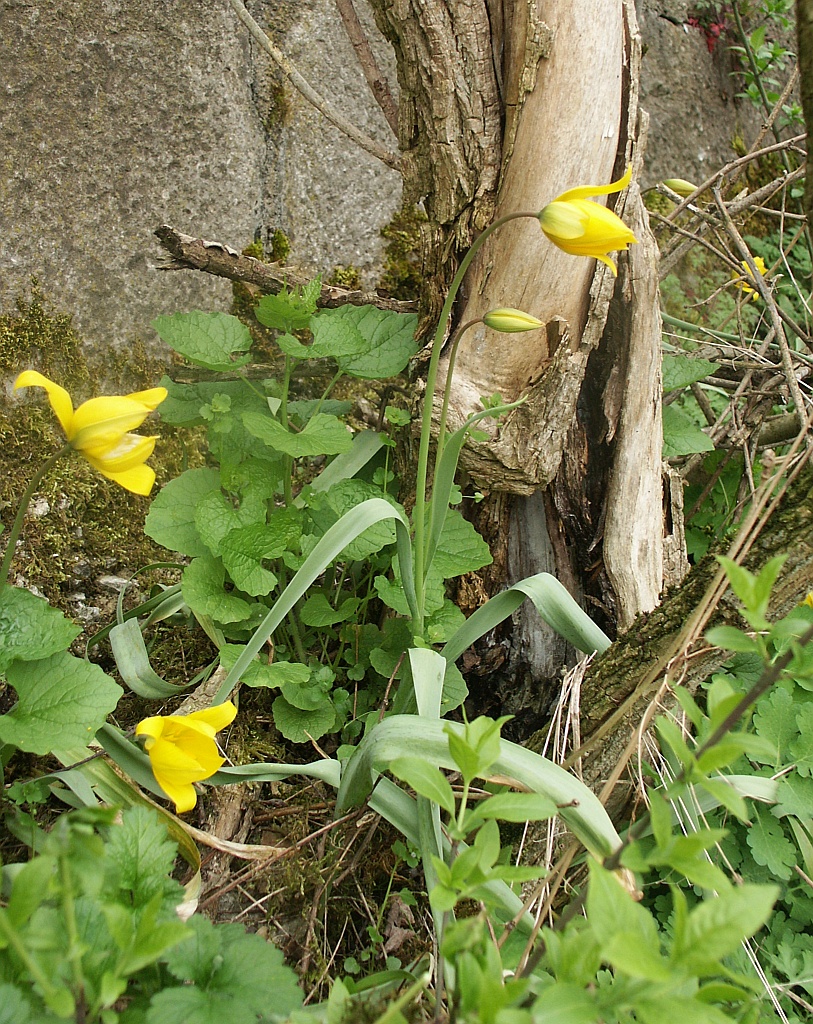
The plant is relatively low-growing with one or a few stems per bulb and grey-green, elongated leaves. Flowers are often fragrant, with a simple, star-like shape and pointed tepals; the outer surfaces commonly show a darker green rib. Reproduction occurs both by seed and by producing offsets from the bulb, so it can increase in number over time.
- Flower color: pale to deep yellow, often with greenish outer ribs
- Growth form: bulbous perennial, naturalizing
- Leaves: glaucous, lanceolate
- Flowering: spring
Habitat and distribution
Native to regions of Europe, parts of North Africa and western Asia, Tulipa sylvestris typically grows in open woodlands, meadows, grassy slopes and along roadsides, especially on well-drained, often calcareous soils. It has become naturalized in several other areas where bulbs were introduced into gardens and allowed to spread.
Cultivation and uses
Gardeners use this species in informal borders, woodland gardens and meadow-style plantings where a long-lived, low-maintenance tulip is desired. It tolerates partial shade better than many hybrid tulips and requires little intervention once established. Propagation is by seed for larger, mixed colonies or by dividing bulbs to maintain vigor. For further horticultural details see resources on wild tulips.
History and notable facts
Botanical tulips like Tulipa sylvestris have been grown in Europe for centuries and are distinct from the large, bred garden varieties. They are valued for historical gardens and conservation plantings as well as their role in reconnecting ornamental cultivation with native and naturalized flora. In some regions the species carries cultural significance and local recognition.
Related articles
Author
AlegsaOnline.com Tulipa sylvestris (wild tulip) Leandro Alegsa
URL: https://en.alegsaonline.com/art/101982