
Turkey national football team
The Turkey national football team represents the Republic of Turkey in international football, governed by the Turkish Football Federation. Notable achievements include third place at the 2002 World Cup and Euro 2008 semi-finals.
Overview
The Turkey national football team represents the Republic of Turkey in international association football and is governed by the Turkish Football Federation. The team competes in UEFA competitions and FIFA tournaments; the federation coordinates senior and youth squads, coaching and development programs. Supporters commonly refer to the side as the "Crescent-Stars" (Ay-Yıldızlılar). The national colours are red and white and the squad traditionally wears predominantly red shirts. The team's continental affiliation is with UEFA, which governs its participation in European competitions.
Image gallery
4 Images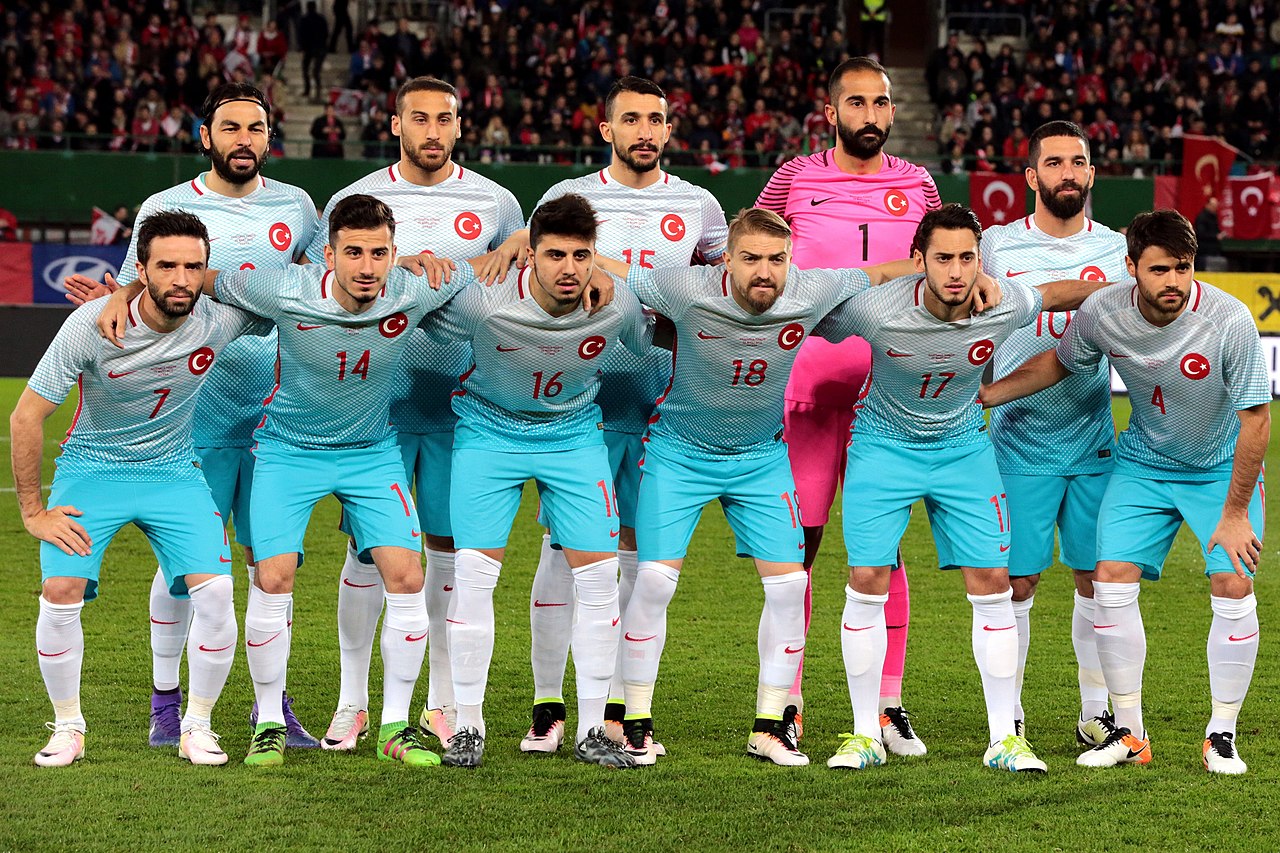


Characteristics and structure
Players are selected from the domestic Süper Lig and from clubs across Europe and beyond. Squads typically mix experienced internationals and emerging prospects. Matches are staged at several major stadiums in Turkey and abroad for friendlies; home crowds are known for their intensity and vocal support. Tactical approaches have varied by coach and era, often emphasising organisation, physicality and rapid transitions or counter-attacking football. The Turkish Football Federation maintains programmes for talent identification and coaching education to feed the national teams at all levels.
History and development
Turkey has a long footballing history with alternating periods of limited success and notable campaigns. The national side made early appearances in the mid-20th century and produced its best World Cup finish in 2002, when the team reached third place on the global stage. The country was entered for the 1950 World Cup but did not take part in the final tournament. For broader context on global competition see World Cup material. Over time Turkey has developed a stronger domestic league and produced players who established careers at leading European clubs.
Major achievements and notable moments
- FIFA World Cup: the side's most widely recognised result came in 2002 with a third-place finish, a breakthrough that raised the team’s international profile.
- UEFA European Championship: Turkey reached the semi-finals at Euro 2008 after a dramatic run, a campaign remembered for late goals and resilient performances; for tournament context see Euro 2008.
- Memorable matches: the team has produced several dramatic knockout and qualification results that are part of its modern legacy, including come-from-behind wins and decisive late goals.
Coaching, style and players
The national team’s style has changed with different managers, alternating between pragmatic, defence-oriented approaches and more expansive, attack-minded setups depending on personnel. Over the decades Turkey has produced players who earned recognition for performances at club and international level. Coaching appointments and the integration of overseas-based players remain important factors in the side’s competitiveness.
Kit, crest and identity
The team plays in red shirts, with white used as a secondary colour, reflecting the national flag. The crescent and star motif features prominently on kits and crests and contributes to the team’s common nickname. The visual identity is widely used by supporters and in national branding around football events.
Rivalries and supporters
Turkey has competitive relationships with several European sides arising from qualification campaigns and tournament encounters. Matches against regional neighbours and established European nations draw significant attention at home. Supporters are known for passionate backing at home fixtures and for creating an energetic atmosphere in stadiums. Encounters with major football nations, such as a notable semi-final against Germany at a recent European Championship, are often highlighted when describing Turkey’s modern high points.
Legacy and outlook
Football occupies an important cultural role in Turkey and the national team helps shape domestic interest in the sport. The federation continues to invest in youth work and league development with the aim of turning club success into more consistent international results. While qualification can be unpredictable, Turkey remains a competitive presence in European qualifying groups and a national side capable of surprising strong opposition.
Related articles
Author
AlegsaOnline.com Turkey national football team Leandro Alegsa
URL: https://en.alegsaonline.com/art/102090
Sources
- uefa.com : "Turkey sneak through as best third-placed team"
- dailysabah.com : Beşiktaş boss Şenol Güneş appointed Turkey national team coach
- rsssf.com : "FIFA Country Codes"
- fifa.com : "The FIFA/Coca-Cola World Ranking"
- eloratings.net : "World Football Elo Ratings"