
Tsushima Province: history, geography, and legacy of the island province
Tsushima Province was a small island province of Japan located between Kyushu and the Korean Peninsula, notable for its strategic location, medieval diplomacy with Korea, and later incorporation into Nagasaki Prefecture.
Tsushima Province (対馬国, Tsushima-no kuni), sometimes written Taishū (対州), was a historic Japanese island province consisting principally of the islands now called Tsushima. Situated in the strait between Kyushu and the Korean Peninsula, the province occupied a key maritime position. The old provincial capital lay at Izuhara on the main island, and the territory later became part of modern Nagasaki Prefecture. The province is often discussed in the context of broader Japanese regional administration and frontier defense.
Image gallery
2 Images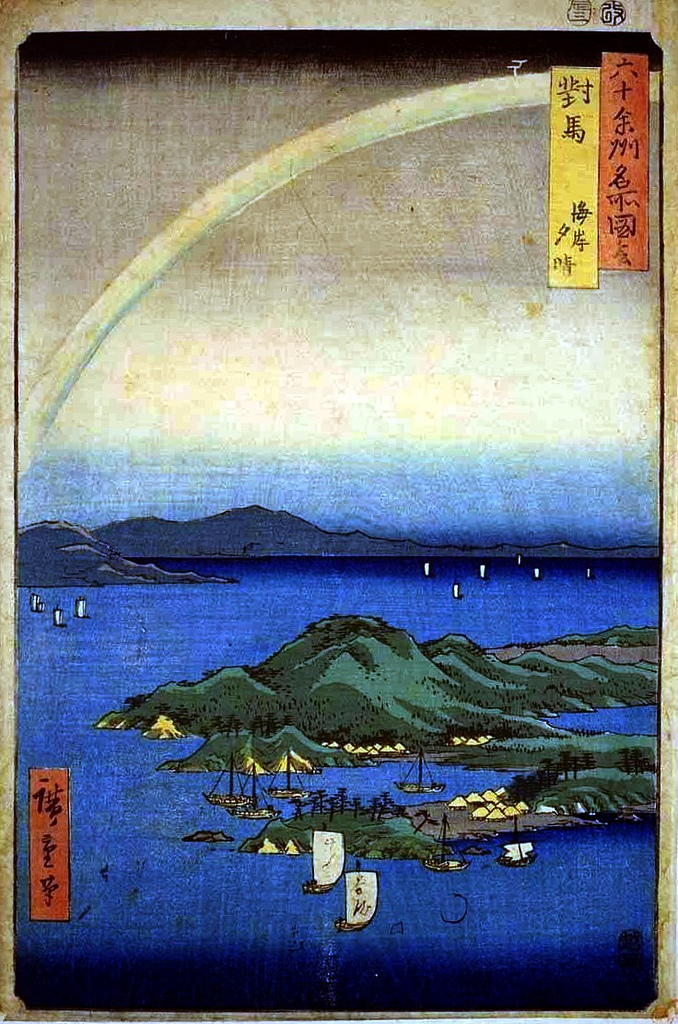

Geography and administration
Tsushima Province comprised a chain of islands that formed natural waypoints for ships crossing the Tsushima Strait. Its isolation from mainland Kyushu lent it a distinct identity: the whole province corresponded roughly to the inhabited islands rather than to a mainland district. Administratively it was treated as a separate province under the classical Ritsuryō system and as a domain in later feudal periods.
Historical development
In medieval and early modern times Tsushima’s position made it strategically important. The islands were among the first Japanese territories encountered by invading fleets during the Mongol attempts to conquer Japan in the late 13th century; those events left a legacy in local memory and fortification efforts. Over centuries Tsushima’s rulers were responsible for coastal defense, anti-piracy measures, and control of maritime traffic.
The Sō clan and diplomacy with Korea
From the Muromachi period onward the Sō (宗) clan became the dominant local lords and later governed the area as the Tsushima (or Tsushima-Fuchū) Domain under the Tokugawa shogunate. The Sō acted as intermediaries in regulated trade and diplomatic contacts with the Korean Joseon court, a role that combined commercial privilege with official responsibilities for managing contacts and preventing illicit raiding across the strait.
Meiji reforms and modern legacy
In the Meiji era the han (domain) system and traditional provinces were superseded by prefectural organization. Tsushima’s islands were incorporated into Nagasaki Prefecture, and the old provincial title persisted chiefly in historical and geographical usage. Today the islands are administratively organized within municipalities and are known for their cultural heritage, coastal scenery, and fisheries.
Notable features and distinctions
- Strategic location: Tsushima sits on a major Northeast Asian sea lane between Japan and Korea.
- Diplomatic role: The local rulers uniquely mediated official exchanges and regulated trade with Korea.
- Cultural memory: Events such as the Mongol invasions and long-distance commerce shaped local institutions and identity.
- Modern status: The historical province corresponds to territory now administered by Nagasaki Prefecture, centered historically on Izuhara.
Related articles
Author
AlegsaOnline.com Tsushima Province: history, geography, and legacy of the island province Leandro Alegsa
URL: https://en.alegsaonline.com/art/101897
Sources
- books.google.com : "Provinces and prefectures"
- eos.kokugakuin.ac.jp : "Nationwide List of Ichinomiya," p. 3