
Tripitaka (Buddhist Canon)
The Tripitaka, or Three Baskets, is the traditional collection of Buddhist scriptures comprising monastic rules, discourses, and scholastic analyses; it exists in several canons and language traditions.
The Tripitaka, often called the "Three Baskets" (from the Pali word Tipitaka), is the classical division of Buddhist scriptures into three broad categories. It functions as the foundational body of canonical texts for many Buddhist traditions and is consulted for doctrine, monastic discipline, liturgy, and study. For general background and further reading see this resource.
Image gallery
10 Images


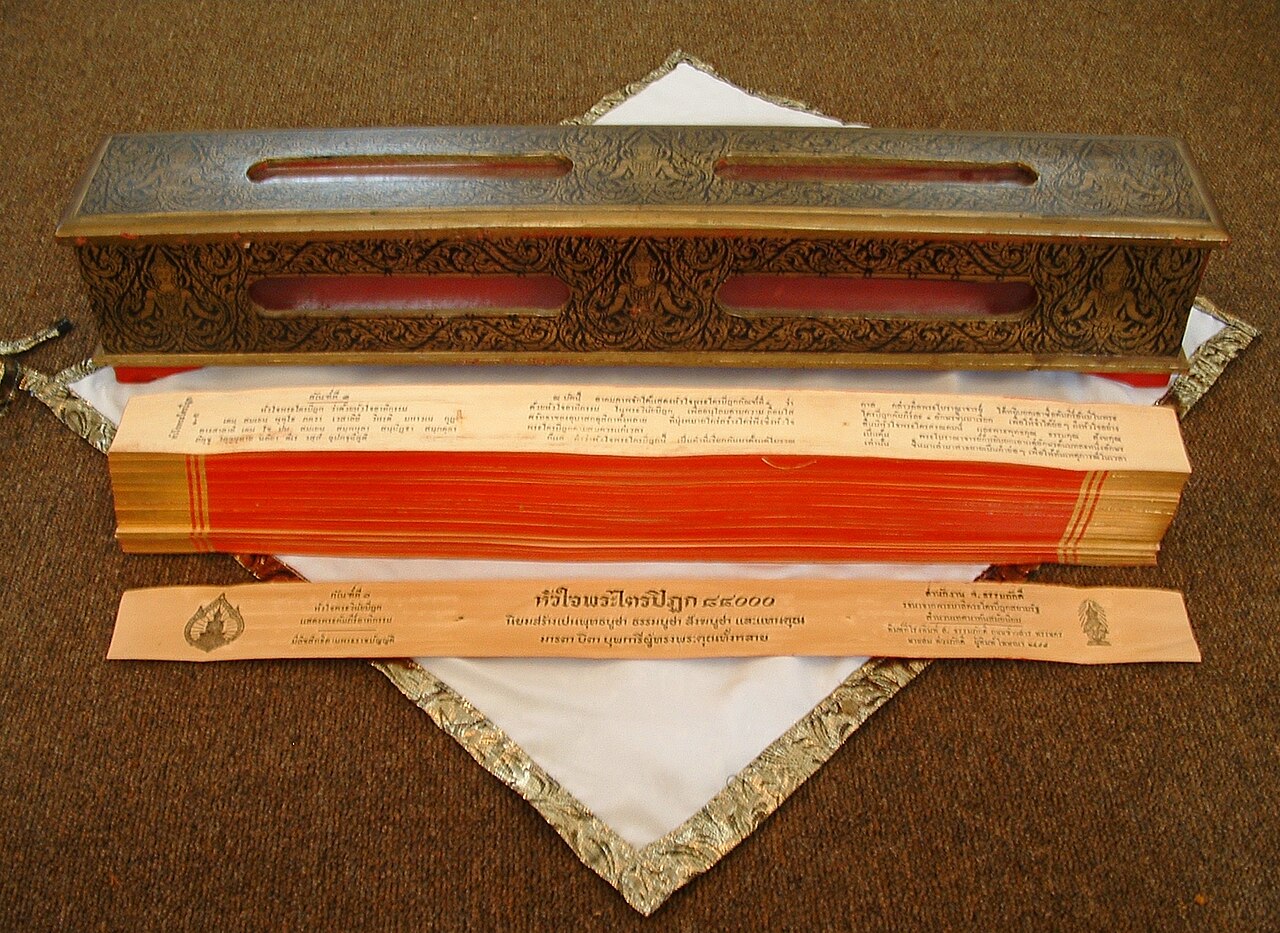


Structure and contents
By convention the Tripitaka is grouped into three main parts:
- Vinaya Piṭaka — rules and procedures governing monastic life, including procedures for disciplinary hearings and ordination.
- Sutta (Sutra) Piṭaka — discourses and sermons attributed to the Buddha and his close disciples; these are often used in ritual recitation and ethical instruction.
- Abhidhamma (Abhidharma) Piṭaka — systematic, often technical analyses of doctrine, mind, and phenomena used in scholastic and meditative contexts.
Historical development and canons
According to traditional accounts the material of the Tripitaka was preserved orally after the Buddha's lifetime and organized in early councils; modern scholarship treats this as an evolving process of compilation and redaction. Different Buddhist schools preserved and transmitted the Tripitaka in different languages and collections. The Theravada tradition maintains the Pali Tipitaka; other branches produced Sanskrit, Chinese and Tibetan collections. East Asian and Tibetan corpora were often expanded with later sutras and commentaries, resulting in multiple canonical forms.
The word "Tripitaka" thus refers more to a functioning classification than to a single fixed book. In some regions the canonical corpus was translated and organized into large printed editions sometimes called a "Tripitaka" in local languages.
Uses range from guidance for monastic discipline and lay ethics to source texts for meditation, sermons and scholastic argument. Commentarial traditions developed extensive exegesis of the three baskets, and modern scholarship studies their origins, transmission, and variant versions across languages. Notable distinctions include the differences between the Theravada Pali Tipitaka and the broader collections adopted in Mahayana and Vajrayana contexts, where additional sutras and treatises are central.
Because of its centrality to Buddhist practice and theory, the Tripitaka remains a primary reference for religious study, ritual life, and historical research into early Buddhism and its diverse later developments.
Related articles
Author
AlegsaOnline.com Tripitaka (Buddhist Canon) Leandro Alegsa
URL: https://en.alegsaonline.com/art/101555