
Tribune, Kansas
Tribune is a small city in western Kansas, the county seat of Greeley County. It serves as a local center for agriculture, government, schools and community life on the High Plains.
Tribune is a small city in western Kansas that functions as the county seat of Greeley County. Located on the High Plains near the Colorado border, Tribune is a regional center for county government, local services and agriculture in a sparsely populated part of the state.
Image gallery
5 Images


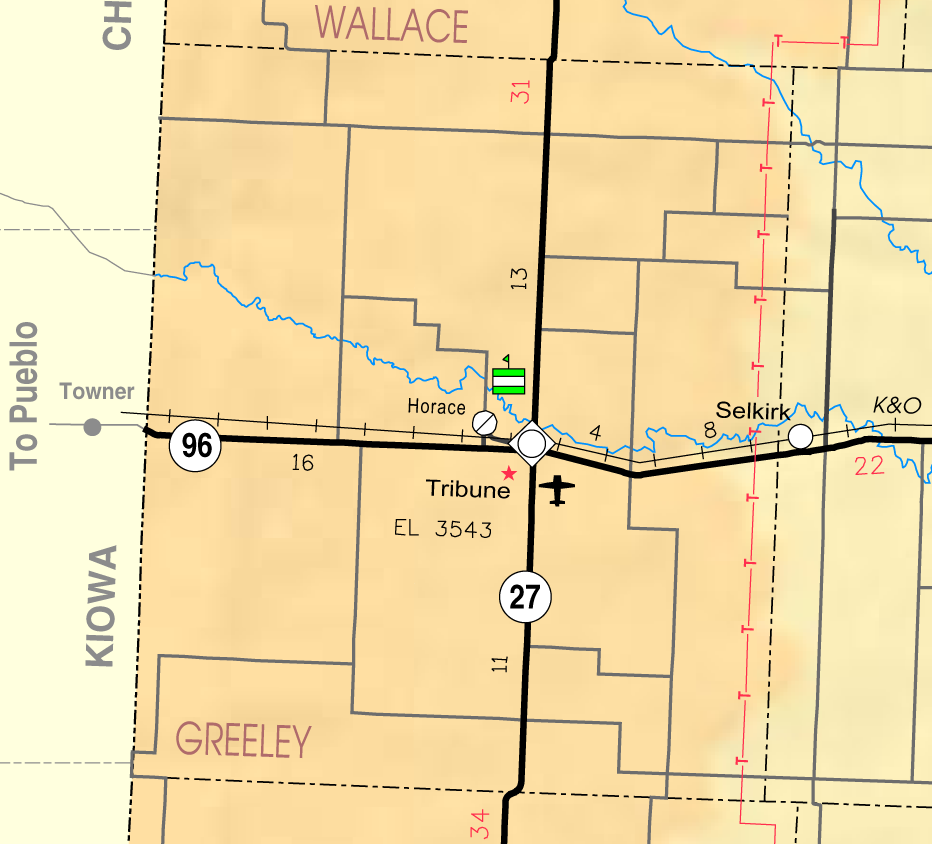
Geography and climate
Tribune lies on the Great Plains where broad prairie landscapes, open skies and relatively flat terrain predominate. The area experiences a continental, semi-arid climate with warm summers, cold winters and modest precipitation. These conditions shape land use and the natural vegetation, which is dominated by grasses and farmland adapted to limited rainfall.
History
The community emerged during the late 19th-century settlement of western Kansas, a period marked by homesteading, cattle ranching and the expansion of transportation links. As with many prairie towns, Tribune developed institutions such as a courthouse, schools and commercial businesses to serve surrounding farms and ranches. Its name reflects a common 19th‑century practice of choosing civic or journalistic titles for new settlements.
Economy and community life
Tribune’s economy is anchored by agriculture—grain farming, livestock and related services—alongside county government, education and small businesses that meet local needs. The city hosts civic institutions such as the county courthouse, a public school system and community organizations that provide services and social life for residents across the rural region.
Culture, recreation and landscape
Local culture centers on community events, school activities and traditions typical of rural Midwestern towns. Outdoor recreation includes hunting, birdwatching and enjoying the open prairie; the low population density and wide horizons are part of the area's appeal. Local churches, volunteer organizations and annual gatherings reinforce social ties.
Notable facts
- Serving as the county seat gives Tribune a central administrative role for Greeley County.
- The town exemplifies western Kansas communities that developed during late 19th-century settlement of the High Plains.
- Its economy and way of life remain closely linked to agriculture, rural services and local institutions.
Related articles
Author
AlegsaOnline.com Tribune, Kansas Leandro Alegsa
URL: https://en.alegsaonline.com/art/101459