
Trecento: Italy in the Fourteenth Century
Trecento refers to Italy's 14th-century cultural period, marked by innovations in painting, literature, music and civic life that anticipated the Renaissance.
Overview
Trecento is the Italian term for the 1300s, used to describe the artistic, literary and musical culture of fourteenth-century Italy. The word literally points to the 'three hundreds' (i.e., the years 1300–1399) and serves as a convenient label for a transitional era that moved Italian tastes away from medieval models toward more naturalistic, individual and civic expressions. Scholars use the term to group developments across several Italian city-states rather than a single unified movement; for contemporary summaries see Italian culture.
Image gallery
2 Images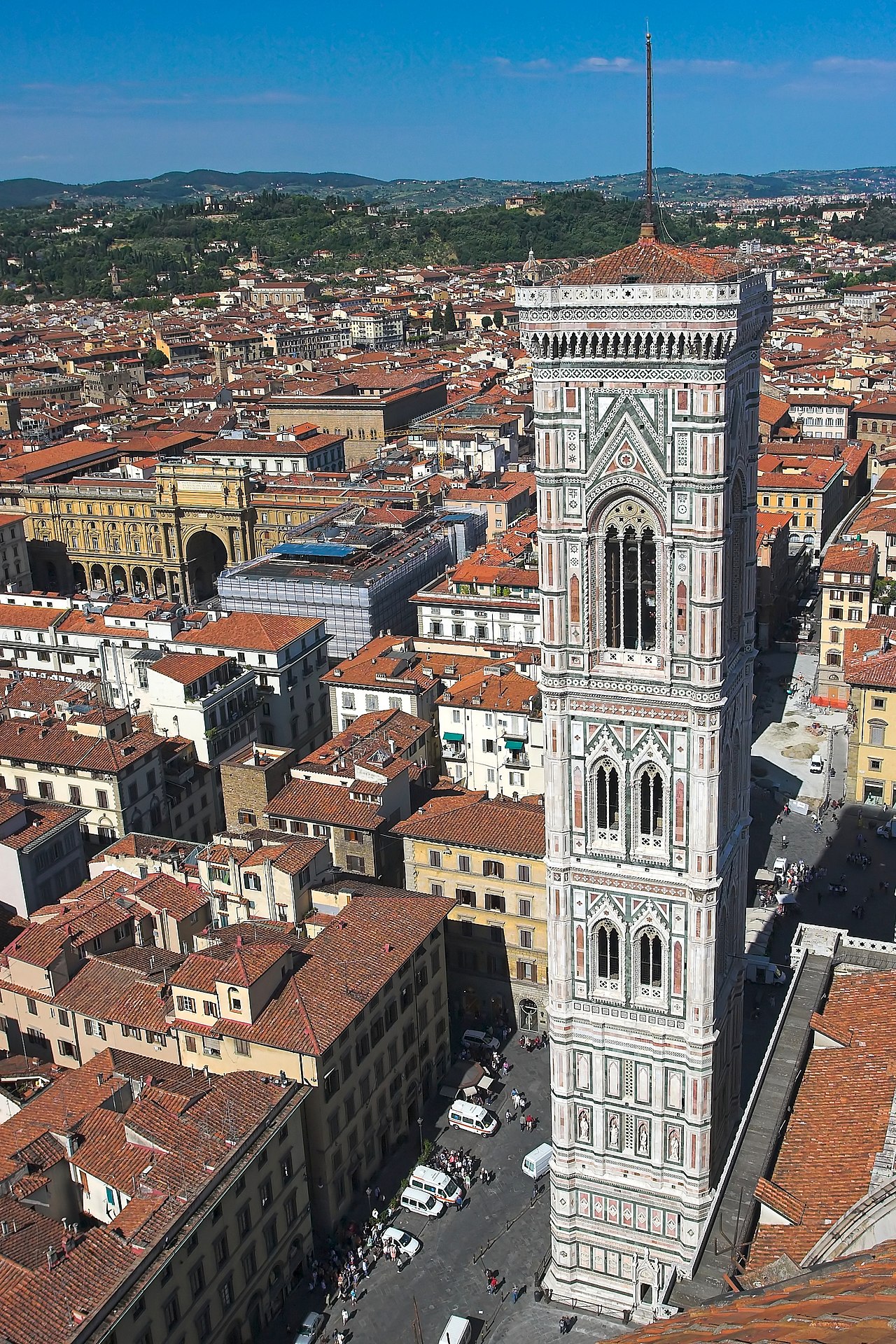

Visual arts and architecture
In painting and architecture the Trecento witnessed important shifts in style and technique. Artists experimented with volume, spatial suggestion and more lifelike human figures, paving the way for later Renaissance advances. Key regional centers such as Florence and Siena produced distinct but influential approaches—Florentine works emphasized solidity and modeling while Sienese painting retained a decorative, courtly refinement. Notable practitioners include Giotto, Simone Martini, Ambrogio Lorenzetti and Duccio, whose work illustrates the move toward narrative realism and emotional expression.
Literature and language
Literary activity in the Trecento was remarkable for the rise of vernacular Italian as a literary vehicle. Writers composed major works in Tuscan and other dialects rather than Latin, helping to shape the language of later Italy. Dante, whose epic vision concludes the medieval world view; Petrarch, an early humanist poet; and Boccaccio, known for his narrative collection of short tales, are often cited as central figures. Their themes ranged from spiritual pilgrimage and classical learning to realistic depictions of social life and human character.
Music
Musical life in the Trecento developed distinct secular genres and notational practices. Composers cultivated the ballata, madrigal and caccia—forms used for courtly and communal entertainment. The so-called Italian ars nova paralleled contemporary changes in northern Europe but retained local rhythmic and melodic preferences. Francesco Landini is among the best-known composers associated with this repertoire, and manuscript sources from the period preserve a rich variety of secular polyphony.
Historical context and institutions
The Trecento unfolded amid urban growth, evolving civic institutions and intense patronage by communes, guilds and ruling courts. Wealth from commerce and banking supported public works, altarpieces and literary production. Political turbulence, plagues and other social pressures also left marks on artistic themes and civic commissions, shaping the era's characteristic mixture of innovation and continuity with medieval traditions.
Legacy and distinctions
Although sometimes described as proto-Renaissance, the Trecento is best seen as a distinct century of experimentation that prepared intellectual and aesthetic conditions for later developments. It differs from the Duecento (13th century) and the Quattrocento (15th century) in both emphasis and technique, and it remains central to understanding how Italian culture evolved from medieval forms toward the human-centered outlook of the Renaissance.
- Important artists: Giotto, Duccio, Simone Martini, Ambrogio Lorenzetti
- Important writers: Dante, Petrarch, Boccaccio
- Musical forms: ballata, madrigal, caccia; notable composer Francesco Landini
Related articles
Author
AlegsaOnline.com Trecento: Italy in the Fourteenth Century Leandro Alegsa
URL: https://en.alegsaonline.com/art/101331
Sources
- books.google.com : La vita italiana nel trecento