
Tommy Cooper: British prop comedian and magician
Tommy Cooper (1921–1984) was a Welsh-born entertainer known for his red fez, prop comedy and deliberately failed magic routines. A skilled conjurer and television star, he remains an influential figure in British comedy.
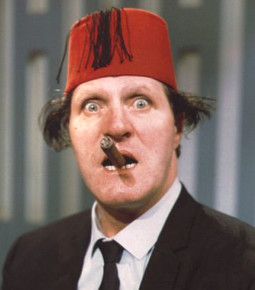
Thomas Frederick "Tommy" Cooper (19 March 1921 – 15 April 1984) was a Welsh-born entertainer whose blend of visual gag work, prop comedy and magic made him a distinctive figure in 20th-century British variety entertainment. He cultivated a stage persona of amiable chaos: large in stature, wearing a trademark red fez, and appearing to botch tricks and routines to comic effect while maintaining a deadpan delivery. Although his act often relied on deliberate mishaps, Cooper was a trained and competent magician and was a member of The Magic Circle.
Image gallery
4 Images

Early life and background
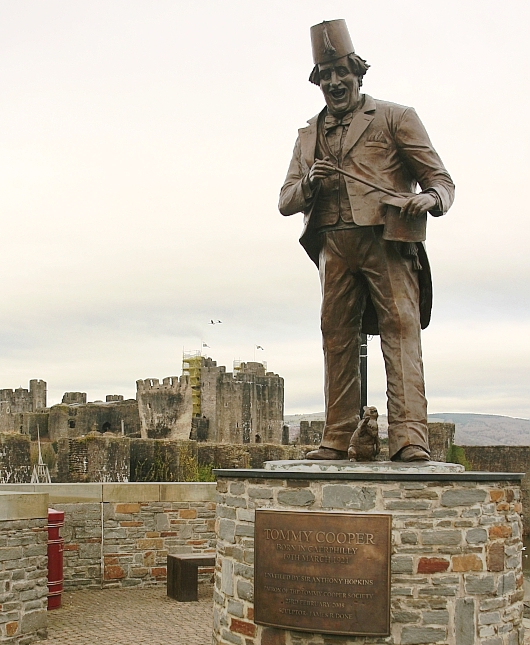
Cooper was born in Caerphilly, Glamorgan, in southern Wales. After an upbringing in a working-class Welsh family he served in the British Army during the Second World War, where he first developed the mix of close-up conjuring and comic timing that would define his later act. Over time he refined a public image that combined genuine sleight-of-hand skills with an apparently clumsy, anarchic stage character that audiences found endearing.
Performance style and stage persona
His comedy relied heavily on props, physical timing and the theatrical presentation of failure: a trick would appear to go wrong, Cooper would react with mock surprise or confusion, and the audience would laugh both at the gag and at the recovery. This use of deliberate error set him apart from straight magicians and made him a master of prop-based humor. He was rarely seen without his red fez, a visual signature that became as much a part of the act as the routines themselves. Many descriptions of his work emphasize that, beneath the apparent bumbling, he possessed genuine technique as a conjurer.
Career and media presence
Cooper became a regular performer on variety stages, television and in clubs across the United Kingdom. He made numerous appearances on British television variety programmes and was a popular draw in theatres and summer seasons. His style translated particularly well to television, where short visual routines and quick timing worked for studio audiences and viewers at home. Though widely known for comedic mishaps, he maintained professional recognition among magicians for his craft and stagecraft.
Personal life and death
He married Gwen Henty in 1947 and had two children, a daughter, Victoria, and a son, Thomas (1956–1988), who later worked as an actor. Cooper died suddenly of a heart attack on 15 April 1984 while performing on live television at Her Majesty's Theatre in London. The collapse occurred in the middle of his routine; the fatal event was initially indistinguishable from the comic business of his act. He was 63. The circumstances of his death were widely reported and remain one of the more dramatic examples of an entertainer dying in performance.
Legacy and notable facts
- Known primarily as a prop comedian and for a style that made failed tricks central to the joke, differing from conventional magic performance.
- While he cultivated a bumbling persona, he was a respected practitioner of magic and a member of The Magic Circle, demonstrating professional skill beneath the comic façade.
- His choices in costume and stagecraft — especially the red fez — became iconic and helped create an instantly recognisable silhouette.
- Cooper came from Caerphilly, Glamorgan in Wales and after wartime service developed the act that would make him a television regular and theatre favourite.
For further reading on his comedic approach and recorded performances, many retrospective programmes, biographies and collections of his televised appearances are available; he has been the subject of biographies, documentaries and dramatizations that explore both the performed persona and the private man behind it. His onstage collapse during a live broadcast remains a poignant and often-cited moment in British entertainment history, illustrating the thin line between performance and reality when a comedian's act imitates misfortune as comic material. For archival footage and program listings see television and theatre reference sources and curated collections of British variety entertainment.
Additional context and resources: prop comedy as a genre, stage magic as a craft, the anatomy of a routine and how live performance and live television shaped mid-20th-century variety stars.
Related articles
Author
AlegsaOnline.com Tommy Cooper: British prop comedian and magician Leandro Alegsa
URL: https://en.alegsaonline.com/art/100455
Sources
- walesonline.co.uk : "Tommy Cooper's last act fooled us all, says Jimmy Tarbuck"