
Toba catastrophe: the Toba supereruption and its proposed impacts
The Toba catastrophe refers to the massive Toba supereruption (~74,000 years ago) and the hypothesis that resulting climate change and ashfall caused a global volcanic winter and a severe human population bottleneck.
The Toba catastrophe describes the massive volcanic event on Sumatra known as the Toba supereruption and the wider hypothesis that it triggered severe environmental and biological consequences. The eruption produced an enormous volume of ash and aerosols and created the large caldera now filled by Lake Toba. Scientists discuss both the geological facts of the eruption and its potential effects on climate and on early human populations.
Image gallery
3 Images

Characteristics of the eruption
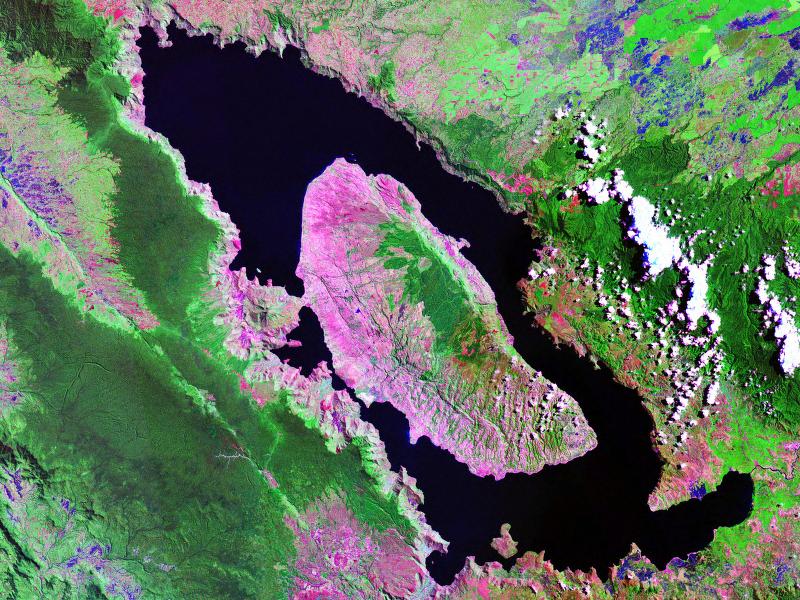
The Toba event is classified as a supereruption and left an extensive tephra layer found across South and Southeast Asia and beyond. It injected large amounts of sulfur and fine ash into the atmosphere, which can reduce sunlight and cool the surface. The eruption is widely dated to about 74,000 years ago and produced the caldera that forms Lake Toba on the island of Sumatra.
Climate effects and the "catastrophe" hypothesis
Proponents of the Toba catastrophe theory argue that the atmospheric injection of ash and sulfur caused a prolonged volcanic winter, with sharp cooling, reduced precipitation, and declines in plant and animal productivity in many regions. Climate models and some ice-core and marine records indicate significant short-term cooling after large sulfate injections, which supports the plausibility of regional or global climatic disruption following Toba. For general context on volcanic influences, see a basic entry on volcanic eruption.
Impact on humans and biological consequences
One influential idea holds that the eruption contributed to a genetic bottleneck in Homo sapiens, lowering global numbers and reducing genetic diversity. This interpretation rests on genetic patterns, but it is controversial. Archaeological sites in parts of Africa and India show continuity of human activity across the time of the eruption, suggesting effects were uneven and that many groups persisted locally. Thus, the scale and uniformity of human impact remain debated.
Evidence and ongoing debate
- Widespread tephra deposits traceable to Toba indicate the eruption's geographic reach.
- Sulfate signals in ice cores and marine sediment records document atmospheric perturbations after large eruptions.
- Climate models reproduce substantial short-term cooling when large sulfur loads are included, but the magnitude and duration vary by model and assumptions.
- Archaeological and genetic datasets provide mixed signals about how severe and widespread biological impacts were.
The Toba catastrophe remains an active area of interdisciplinary research. Geologists, climatologists, geneticists and archaeologists continue to refine dating, expand regional records, and model climate-biological interactions to better resolve how this singular volcanic event affected environments and human history.
Related articles
Author
AlegsaOnline.com Toba catastrophe: the Toba supereruption and its proposed impacts Leandro Alegsa
URL: https://en.alegsaonline.com/art/100202
Sources
- volcano.si.edu : Global Volcanism Program page on Toba
- geo.mtu.edu : "Eruptive history of Earth's largest Quaternary caldera (Toba, Indonesia)"
- doi.org : 10.1038/276574a0
- news.bbc.co.uk : "When humans faced extinction"
- doi.org : 10.1029/2008JD011652
- toba.arch.ox.ac.uk : "Middle Paleolithic assemblages from the Indian subcontinent before and after the Toba super-eruption"
- ncbi.nlm.nih.gov : PMID 17615356