
The Star Chamber (1983 film)
1983 legal-crime thriller about judges who take justice into their own hands when legal technicalities block prosecutions. Stars Michael Douglas and Sharon Gless; directed by Peter Hyams.
Overview
The Star Chamber is a 1983 American legal crime thriller directed by Peter Hyams. It centers on a group of judges who secretly investigate and punish criminals whom the regular justice system cannot convict because of procedural or evidentiary loopholes. The film stars Michael Douglas as Judge Hardin and Sharon Gless as Emily Hardin, and it probes questions of judicial ethics, due process, and vigilante impulses inside institutions meant to uphold the law. For a basic listing see film entry.
Image gallery
1 Image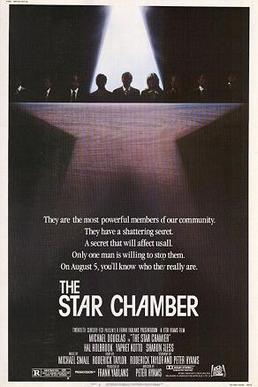
Premise and themes
The story begins when two men evade prosecution in the killing of a child because of flaws in the case. Troubled by the outcome, a veteran judge describes a clandestine bench—modeled as a modern "Star Chamber"—that tracks and punishes offenders who have slipped through legal safeguards. The film uses this premise to examine tensions between moral outrage and legal safeguards, exploring themes such as the balance between liberty and security, the rule of law, and the danger of secret tribunals. Critical commentary and contemporary reviews reflect on these concerns; see selected reviews at reviews and critical analysis.
Characters and cast
Michael Douglas leads the cast as Judge Hardin, a jurist who becomes personally invested in preventing miscarriages of justice. Sharon Gless portrays Emily Hardin, a supporting character connected to the judge. Other judicial figures and investigators appear as the plot unfolds and the existence of the secret panel complicates careers and consciences. For actor biographies and credits consult actor profile and co-star details.
Production and release
Directed by Peter Hyams, the film was released in August 1983. Its title deliberately evokes the historical Star Chamber of English law—a powerful, secretive court abolished in the 17th century—to frame a modern debate about clandestine authority and accountability. Filmmaking choices emphasize legal settings, moral confrontation, and courtroom tension rather than action set-pieces; production notes and contextual information can be found at production notes.
Reception and legacy
Upon release the movie drew attention for its topical subject and for strong central performances. Critics noted its willingness to ask uncomfortable questions about how a democratic society responds when its legal system appears insufficient. The film continues to be cited in discussions of legal ethics and cinematic portrayals of vigilantism and remains of interest to viewers curious about courtroom dramas that foreground moral dilemmas.
Notable distinctions
- The title links a contemporary fictional tribunal to a real historical institution, inviting comparisons about secrecy and the rule of law.
- The film emphasizes procedural obstacles—such as rights against unlawful searches, hearsay rules, and chain-of-custody problems—rather than sensational crime-show tropes.
- It is often recommended for audiences interested in legal drama and films that debate the ethics of extra-legal remedies.
Further information and archival references are available through film databases and historical discussions of the Star Chamber concept: film entry, production notes, cast information, lead actor profile, contemporary reviews, scholarly commentary.
Related articles
Author
AlegsaOnline.com The Star Chamber (1983 film) Leandro Alegsa
URL: https://en.alegsaonline.com/art/98898