
The Snow Queen (Hans Christian Andersen)
A comprehensive overview of Hans Christian Andersen's fairy tale 'The Snow Queen': publication, plot, characters, themes, and its cultural legacy and adaptations.
The Snow Queen is a long fairy tale by Danish writer Hans Christian Andersen, first published on 21 December 1844 as part of New Fairy Tales. It ranks among Andersen's lengthier works and is conventionally divided into seven chapters. The story blends magical adventure with symbolic imagery: a demon-forged mirror shatters and a fragment lodges in a boy's eye and heart, setting in motion a journey that tests love, innocence, and endurance. For author and publication details see Hans Christian Andersen and the tale's original release publication record.
Image gallery
6 Images

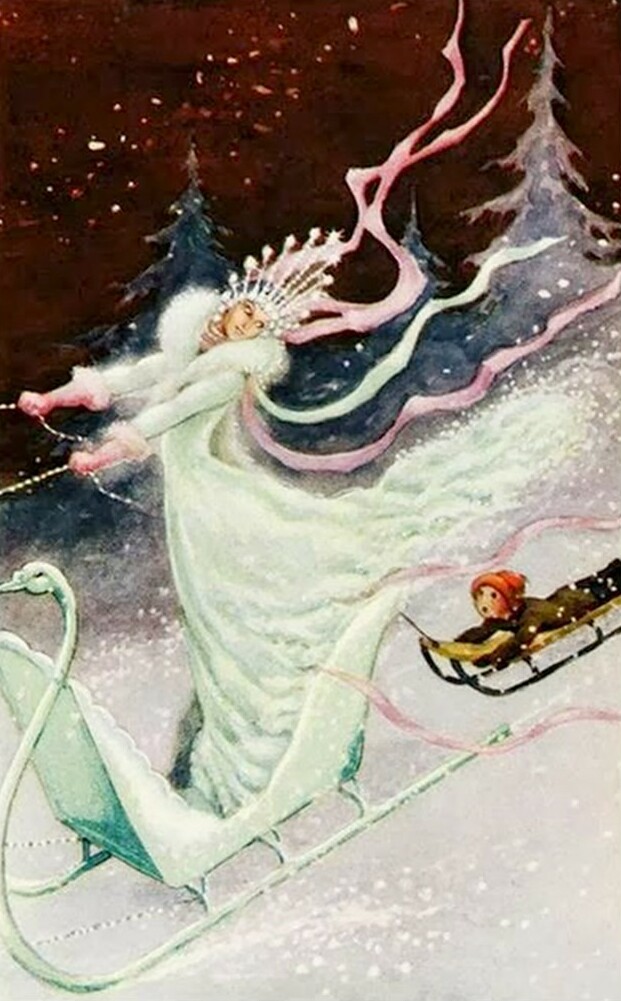
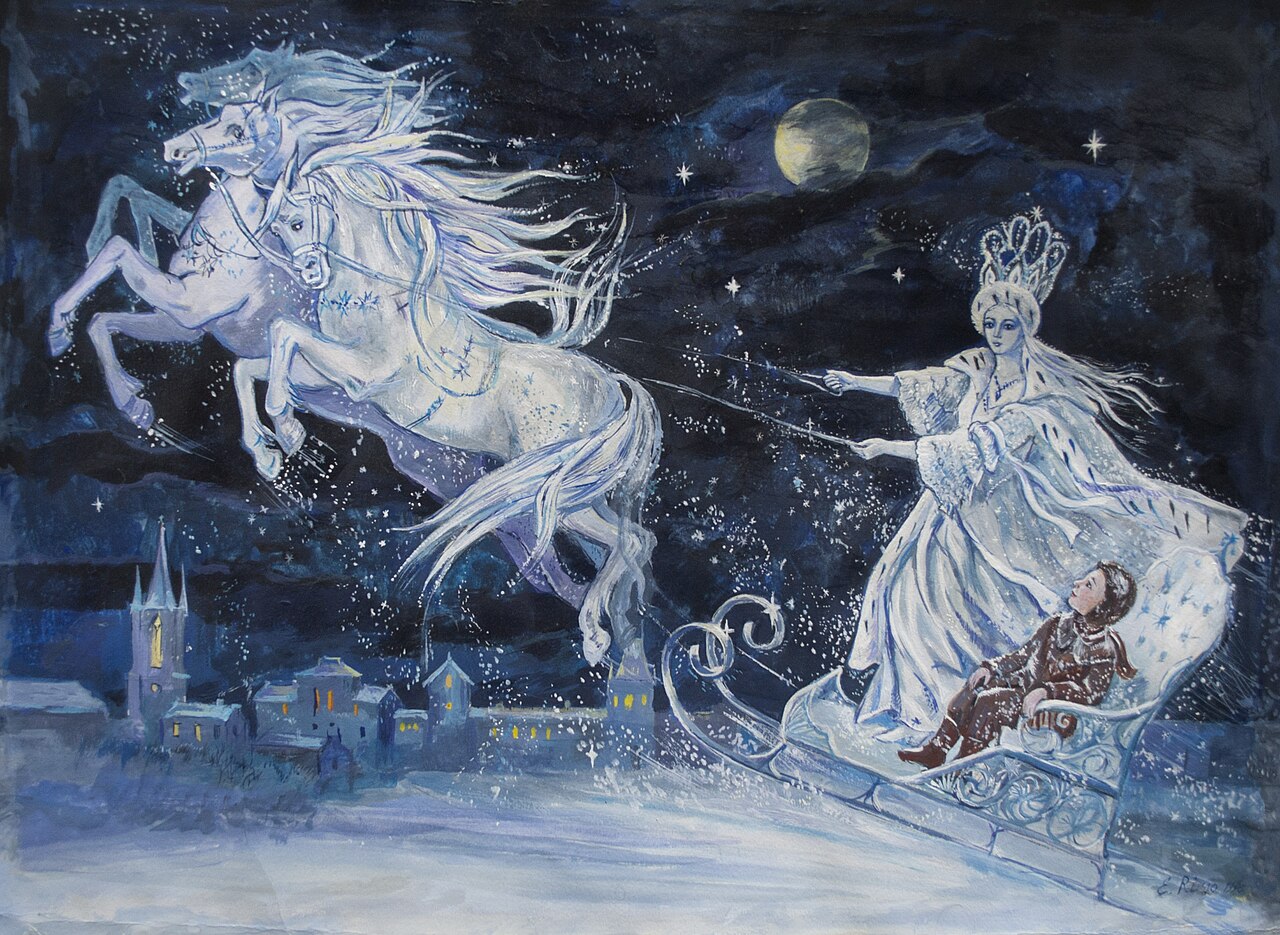


Plot overview
The narrative follows two children, Kai and Gerda, who are close friends. After a malignant mirror breaks, a splinter enters Kai's eye and a sliver pierces his heart. He grows emotionally cold and ruthless, and is eventually carried away to the Snow Queen's palace in the far north. Gerda sets out alone to find him. Her journey takes her through enchanted gardens, princely courts, and across frozen landscapes. Along the way she meets helpers and faces obstacles that test her courage and compassion. In the Snow Queen's realm she finds Kai, whose sight and heart are restored by Gerda's tears and faithfulness; together they return home with restored warmth and understanding.
Structure, characters and motifs
The tale is notable for its episodic structure of seven connected chapters, each functioning like a miniature adventure that advances Gerda's quest. Key characters and elements include:
- Gerda — the heroine, whose loyalty and innocence drive the rescue.
- Kai — the boy afflicted by the mirror fragment and taken by the Snow Queen.
- The Snow Queen — a cold, majestic figure who presides over a northern palace and symbolizes intellect, distance, or winter depending on interpretation.
- The shattered mirror — created by malignant forces and described in the tale as a mirror that distorts and diminishes, with shards that wound perception and emotion; this element is often referenced when discussing Andersen's use of moral and symbolic devices (mirror motif, demonic origin).
Themes and interpretations
The story explores themes of childhood innocence, the power of love and redemption, and the contrast between warmth and coldness—both literal and moral. Critics and readers have noted religious, psychological, and folkloric resonances without a single, definitive interpretation. Andersen's blending of realism (childhood detail, domestic scenes) with the supernatural (enchanted landscapes, talking animals, magical helpers) gives the tale moral depth and allegorical openness.
Publication context and related works
Published alongside other pieces in New Fairy Tales, the story was released with works such as "The Fir Tree" and forms part of Andersen's mid‑19th century output that expanded the literary fairy tale beyond oral tradition. The seven-chapter format is a deliberate narrative design that allows episodic encounters and a sustained quest structure; bibliographic notes and chapter listings are discussed in many commentaries on Andersen's oeuvre (companion tales, chapter divisions).
Adaptations and legacy
"The Snow Queen" has been adapted many times for stage, film, ballet, opera, radio and television. Its images and motifs have inspired illustrators, composers, and filmmakers; elements of the tale have influenced later works in popular culture, including prominent cinematic retellings that draw on the core themes of love and rescue. For modern adaptations and critical surveys see general adaptation listings and media histories adaptation overview and specific adaptation surveys adaptation studies. The tale continues to be anthologized, translated, and taught, remaining a central work in Andersen's legacy and in the Western fairy-tale tradition (textual motifs, author studies).
Notable facts: the story's episodic quest, its mixture of stark winter imagery and domestic warmth, and its theological and psychological openness make it a rich subject for literary study. Its enduring popularity rests on both the emotional clarity of Gerda's devotion and the tale's symbolic openness, which invites multiple readings across cultures and generations.
Related articles
Author
AlegsaOnline.com The Snow Queen (Hans Christian Andersen) Leandro Alegsa
URL: https://en.alegsaonline.com/art/98861