
The Prophet (book)
A 1923 collection of 26 prose-poetry fables by Kahlil Gibran exploring love, work, death and spirit; influential worldwide, translated into over 40 languages and continuously in print.
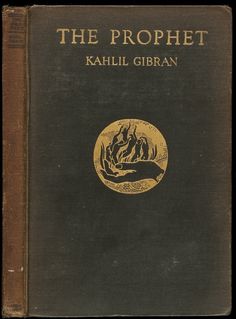
The Prophet is a short book of philosophical prose-poetry by the Lebanese‑American writer Kahlil Gibran. First published in 1923 by Alfred A. Knopf, it comprises 26 poetic essays in the form of fables or meditative addresses. The work became Gibran's best-known title and has remained widely read, translated into over 40 languages and — by common account — has never been out of print.
Image gallery
2 Images
Structure and themes
The book is framed as a single narrative: a prophet, about to leave a city where he has lived for twelve years, is asked by its people to speak on a variety of everyday and existential topics before his departure. Each short chapter treats a different subject and is written in lyrical, aphoristic prose that blends poetry and philosophical reflection.
- Major subjects include love, marriage, children, work, joy and sorrow, freedom, pain, and death.
- The language is deliberately simple and evocative, using parable-like images and rhythmic sentences rather than systematic argument.
- Its worldview draws on diverse spiritual and mystical traditions, presenting ethical and spiritual guidance rather than doctrinal teaching.
Publication and reception
When it appeared, the book reached readers at a moment of broad interest in spiritual literature and alternative religious ideas. Early reviews were mixed, but the public response grew steadily. Over the decades it has been adopted by a wide range of readers for personal reflection, ceremonial readings, and popular quotation. The book's form — accessible, quotable and translatable — helped it spread across cultures.
Influence, uses and adaptations
The Prophet has influenced literature, popular spirituality, and public ritual. Passages are frequently read at weddings, funerals and memorials; teachers and speakers often draw on its imagery. The book has inspired theatrical readings, musical settings and visual art; its lines have been reproduced on posters, recordings and in many anthologies of spiritual writing. Its continual presence in print and multiple translations attest to a long-standing cultural resonance.
Notable facts include its compact form — 26 short essays — and its hybrid style that sits between poetry and prose. Readers appreciate the book both as a source of consolation and as a stimulus for reflection. While individual lines are often cited as aphorisms, the text functions as a sustained, poetic meditation inviting readers to consider practical and transcendent dimensions of ordinary life.
Related articles
Author
AlegsaOnline.com The Prophet (book) Leandro Alegsa
URL: https://en.alegsaonline.com/art/98680
Sources
- newyorker.com : "Prophet Motive", Joan Acocella
- alhewar.com : "Source: The Arab American Dialogue, Vol"
- bbc.co.uk : Kahlil Gibran's The Prophet: Why is it so loved?