
The Only Game in Town (1970 film)
A 1970 romantic drama directed by George Stevens, adapted from Frank D. Gilroy's play and starring Elizabeth Taylor and Warren Beatty. Noted as Stevens' final film and for its theatrical origins.
Overview
The Only Game in Town is a 1970 American romantic drama film directed by George Stevens and adapted from a stage play by Frank D. Gilroy. Released by 20th Century Fox, the picture stars Elizabeth Taylor and Warren Beatty. The movie is often remembered as the last feature directed by Stevens and as a screen vehicle that paired two high-profile actors of the era.
Image gallery
1 Image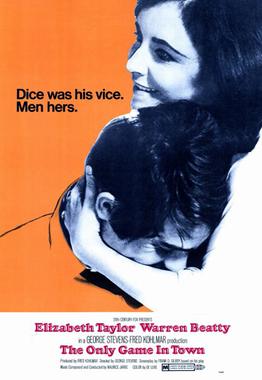
Source and Adaptation
The screenplay is credited to Frank D. Gilroy, who based it on his own play. The film preserves the theatrical roots of the material: it concentrates on intimate character interaction, dialogue-driven scenes and the emotional stakes between its central figures. As with many stage-to-screen adaptations of the period, the movie attempts to broaden the play’s scope while retaining its focus on personal relationships and moral choices.
Production and Release
Produced and distributed by 20th Century Fox, the production attracted attention because of its director and its stars. George Stevens, whose career included earlier acclaimed films, directed what would be his final movie. The production followed typical studio practices of the late 1960s and early 1970s, bringing theatrical material into the commercial cinema marketplace. Upon release the film met a mixed critical reception and did not achieve major box-office success, though it has been the subject of interest among fans of its principal artists.
Cast, Performances and Reception
- Elizabeth Taylor — top-billed lead, noted for her screen presence and dramatic skill.
- Warren Beatty — co-star, bringing a contemporary star persona to the role.
Contemporary reviews varied: some critics praised the lead actors’ chemistry and moments of compelling drama, while others found the adaptation uneven or too stagebound. Over time the film has remained a lesser-known entry in both stars’ filmographies and in Stevens’ oeuvre, often discussed for historical context rather than as a definitive work.
Themes and Legacy
The Only Game in Town explores themes common to romantic drama and theatrical adaptations: risk and chance, emotional dependency, and the compromises people make in relationships. Its legacy rests on several points — the pedigree of its director, the marquee casting of Taylor and Beatty, and its origin as a Broadway play — making it of particular interest to students of film adaptation and of the careers involved. For further basic information about the director and principal actors, see linked references above.
Credits and Further Reading
- Director: George Stevens
- Writer (play & screenplay): Frank D. Gilroy
- Stars: Elizabeth Taylor, Warren Beatty
- Distributor: 20th Century Fox
Related articles
Author
AlegsaOnline.com The Only Game in Town (1970 film) Leandro Alegsa
URL: https://en.alegsaonline.com/art/98561