
The Masque of the Red Death — Poe's Gothic Allegory
A concise encyclopedia entry on Edgar Allan Poe's short story 'The Masque of the Red Death': plot, symbolism, publication, themes of mortality and social isolation, and its literary legacy.
Overview
"The Masque of the Red Death" is a short story by Edgar Allan Poe first published in May 1842. Written in Poe's distinctive Gothic style, it tells of a prince who attempts to evade a deadly, unspecified plague by secluding himself and his courtiers in an abbey and staging a lavish masked ball.
Image gallery
7 Images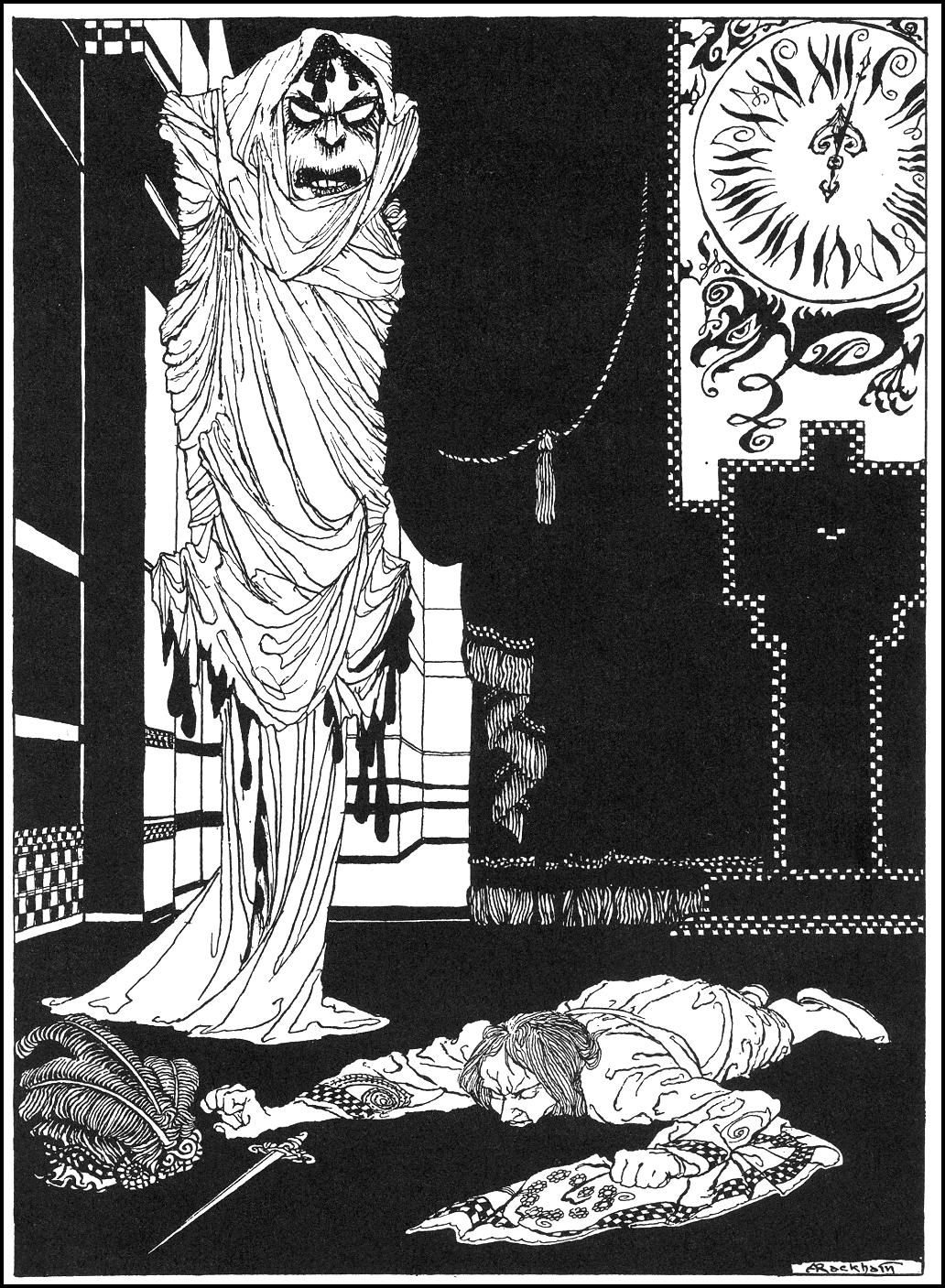


Plot and setting
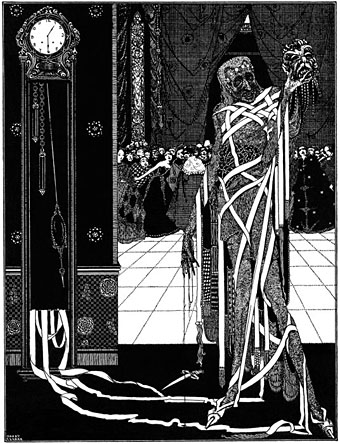
Prince Prospero locks the gates of his fortified abbey and invites a thousand nobles to wait out the epidemic in comfort. The setting centers on a sequence of seven connected rooms, each decorated in a different color, and a great black clock whose ominous chimes punctuate the festivities. At the height of the masque a mysterious figure appears dressed as a victim of the plague, and when the prince confronts the intruder the revelers discover that no one can escape the disease.
Structure and symbolism
The story is compact but heavily symbolic. The seven rooms are commonly read as stages of life or facets of experience; the black room with red windows and the ebony clock symbolize death and the passage of time. The masked intruder functions as an embodiment of the contagion or Fate, breaking the illusion of protection. Poe uses setting, color, and sound to create an escalating sense of dread.
Themes and interpretations
Major themes include the inevitability of death, the futility of human pride and luxury in the face of mortality, and social critique of the wealthy who attempt to insulate themselves from suffering. Critics also emphasize the tale's allegorical quality and its exploration of fear, denial, and irony.
Publication and reception
First appearing in a periodical in 1842, the story became one of Poe's most frequently anthologized works. It is widely studied as a model of Gothic short fiction and of symbolic, tightly controlled narrative technique. Its economy and atmosphere have made it a staple in discussions of 19th-century American literature.
Legacy and adaptations
The tale has inspired stage, film, and visual reinterpretations and is often invoked in commentary about epidemics and social inequality. Its memorable images—the colored rooms, the tolling clock, and the masked interloper—remain potent symbols in popular culture and literary study.
Related articles
Author
AlegsaOnline.com The Masque of the Red Death — Poe's Gothic Allegory Leandro Alegsa
URL: https://en.alegsaonline.com/art/98432