
The Game of Life: family board game of chance and choices
A family board game that simulates careers, money and life events using a spinner and decision points; originated in the 19th century and remains widely produced in many editions and digital forms.
Overview
The Game of Life is a family board game that models a simplified progression through adulthood: education, career, marriage, children, investments and retirement. Players move pieces around a track, experience scripted events, and accumulate or lose money until play ends and totals are compared to determine a winner. It is designed for group play and is known for mixing chance (spinner or cards) with a small number of strategic choices.
Image gallery
3 Images

Components and typical features
While editions vary, common components include a folding game board with a track of spaces, a spinner or other randomizer, player tokens (often cars or figures), paper money or a banking mechanism, cards that trigger events, and tiles or markers representing life milestones. Many modern releases add plastic houses, career cards, or electronic banking units. For manufacturer details and specific rules, see a product page such as official product information.
How the game is played
A turn usually begins with spinning to determine how many spaces to move. Landing on a space can prompt drawing a card, paying or receiving money, or choosing a path — for example, going to college (delaying income but opening different career options) versus entering the workforce immediately. Players encounter recurring events like promotions, taxes, or unexpected expenses, and they may be asked to record family additions or buy assets. Play typically ends when everyone reaches a retirement zone, at which point final tallies of cash, assets and bonuses determine the winner. For detailed rules and common variants consult a rules summary such as spin and move rules.
History and development
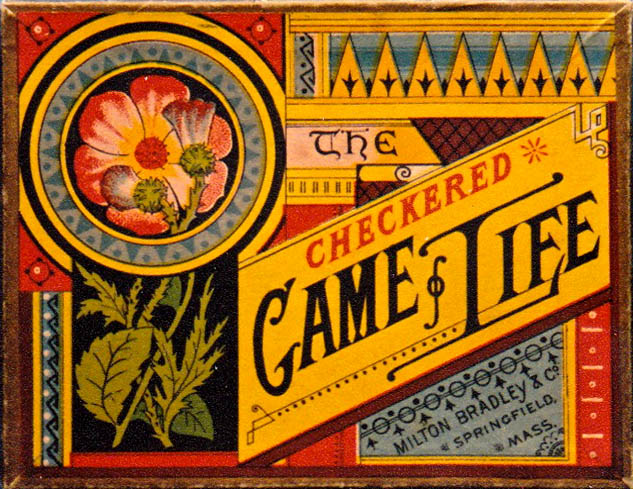
The concept has roots in 19th-century moral and educational games; an early ancestor was published by Milton Bradley as The Checkered Game of Life. The modern commercial version that many people recognize was reimagined in the mid-20th century and has been repeatedly updated since to reflect changing social norms and technologies. Electronic and licensed editions (movie or brand tie-ins) have extended the product line; see historical notes and versions at a reference entry like historical overview.
Cultural role and uses
As a mainstream family board game, The Game of Life serves several roles: casual entertainment for mixed-age groups, a light introduction to basic money concepts, and a cultural touchstone referenced in discussions about luck versus planning. It is often used at social gatherings and remains a recognizable title in retail and online marketplaces. Digital ports and apps also let players try computerized or networked versions.
Variations, criticisms and notable facts
There are numerous themed editions and simplified or deluxe variants. Critics note the game's heavy reliance on chance and simplified portrayal of adulthood; supporters cite its accessibility and role as a conversation starter about life choices. For product support, gameplay FAQs or purchase options, consult a vendor or help page such as support and FAQ.
- Typical decisions: college vs. career, buy a house, accept a promotion.
- Common outcomes: salary changes, taxes, chance events and retirement bonuses.
- Modern changes: electronic banking, updated social depictions, licensed themes.
Related articles
Author
AlegsaOnline.com The Game of Life: family board game of chance and choices Leandro Alegsa
URL: https://en.alegsaonline.com/art/98033