
The Fisher King (1991 film)
The Fisher King is a 1991 comedy-drama directed by Terry Gilliam, starring Robin Williams and Jeff Bridges. It blends urban realism, surreal fantasy and themes of guilt, healing and redemption.
The Fisher King is a 1991 American comedy-drama film written by Richard LaGravenese and directed by Terry Gilliam. The story centers on a disgraced radio host who seeks atonement after a casual on-air remark devastates another person's life. The movie pairs dark humor with moments of striking surrealism, led by performances from Robin Williams and Jeff Bridges, and notable support from Mercedes Ruehl, Amanda Plummer and Michael Jeter.
Image gallery
1 Image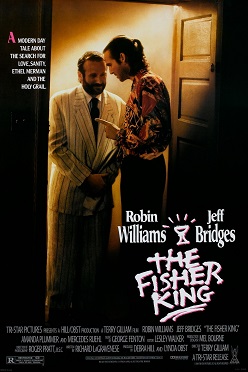
Plot and themes
At its core the film explores guilt, compassion and recovery. A shock-jock's career is shattered after a tragedy tied to his sensational on-air persona; years later he encounters a troubled man whose life was affected by that same event. Their relationship becomes a vehicle for mutual rescue: one character seeks redemption while the other confronts trauma and loneliness. Gilliam layers this human drama with mythic and fantastical imagery, drawing loose inspiration from the Arthurian "Fisher King" legend to examine woundedness and the hope of restoration.
Style and production
The film is notable for combining gritty urban locations with surreal sequences that reflect characters' inner states. Gilliam's background in visual comedy and imagination informs elaborate dreamlike scenes, while quieter moments focus on character interaction and emotional realism. The screenplay balances humor and melancholy, letting actors move between comic improvisation and poignant drama.
Cast and reception
- Jeff Bridges as the radio personality whose life is upended.
- Robin Williams as the damaged, eccentric man he befriends.
- Mercedes Ruehl in a supporting role that earned her major awards recognition.
- Additional performances by Amanda Plummer and Michael Jeter complete the ensemble.
Critics praised the film for its emotional ambition and the strength of the central performances. Mercedes Ruehl received the Academy Award for Best Supporting Actress for her work, and the film is often cited as a high point in Gilliam's career for its successful melding of realist drama and poetic, fantastical imagery.
Over time The Fisher King has maintained a reputation as a compassionate, oddball portrait of grief and recovery. Its mix of street-level social concerns with mythic motifs makes it distinctive among early 1990s American films and continues to attract viewers interested in character-driven stories that embrace both humor and the surreal.
Related articles
Author
AlegsaOnline.com The Fisher King (1991 film) Leandro Alegsa
URL: https://en.alegsaonline.com/art/97987