
The Beast from 20,000 Fathoms
1953 science-fiction monster film noted for Ray Harryhausen's stop-motion effects; a prehistoric creature is awakened by nuclear testing and helped launch 1950s atomic-age monster cinema.
Overview
The Beast from 20,000 Fathoms is a 1953 science-fiction monster film that became a touchstone of postwar popular culture. Released in June 1953, it tells of a prehistoric creature that is disturbed by an underwater explosion and later attacks coastal towns. The picture combined Cold War anxieties about nuclear technology with spectacle and helped establish a visual and thematic template for later giant-monster cinema.
Image gallery
4 Images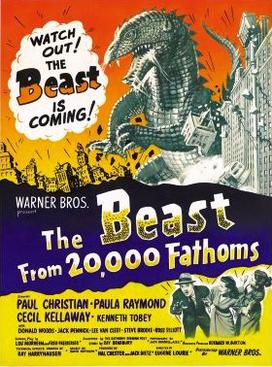


Production and special effects
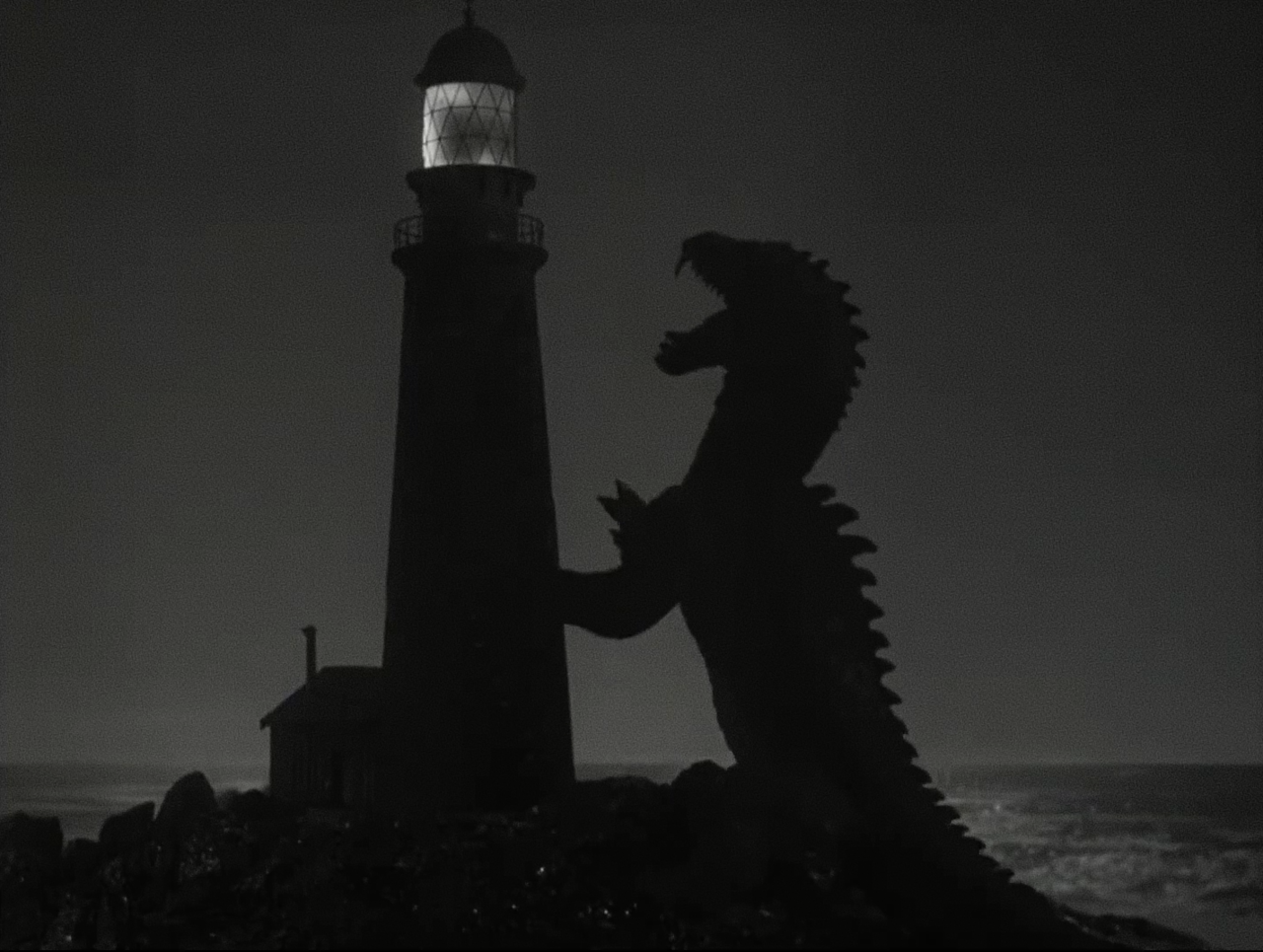
The film is widely remembered for its stop-motion animation work by Ray Harryhausen. Using articulated models, miniature sets and layered optical compositing, the effects team integrated animated model shots with live-action photography to portray the creature on screen. Harryhausen's work on the picture influenced many later effects artists and is often cited in histories of cinematic special effects.
Source material and themes
The screenplay was developed from ideas circulating in contemporary speculative fiction and is generally described as being loosely based on a short story by Ray Bradbury. The narrative reflects anxieties of its era: scientific experiments and atomic-age detonations produce unforeseen consequences, and the monster functions as a metaphor for human fears about technology and environmental disturbance. The film's motifs are commonly discussed in surveys of atomic-age films.
Release and box office
Released in mid-June 1953, the picture was commercially successful for its scale, reporting over $5 million in gross receipts in its first year and substantial domestic returns according to contemporary accounts (box office). Its success demonstrated the marketability of monster spectacles and encouraged studios and independents to invest in similar projects.
Reception and influence
Contemporary reviewers and later critics have noted the film's effective marriage of special effects and popular anxieties; many point to its role in prompting the 1950s wave of giant-monster features. Filmmakers outside the United States cited the picture as an influence on their own work, and it is frequently linked in genre histories to the emergence of films such as Godzilla. Discussions of its initial reviews and period coverage can be found in retrospective compilations (contemporary reviews).
Legacy and availability
The film remains a reference point in studies of mid-20th-century science fiction and Cold War cultural expression. Its model animation sequences are studied by students of film effects, and the title appears in many genre overviews and studio histories (studio records). The film has been released on various home-video formats and has been included in restoration and preservation programs that aim to maintain classic genre cinema for modern audiences.
Notable facts
- Popularized the trope of a creature awakened or created by nuclear detonations.
- Helped establish Ray Harryhausen's reputation as a leading figure in stop-motion effects.
- Serves as an early exemplar of 1950s monster cinema and is frequently cited in genre histories and retrospectives (film overview).
Questions and answers
Q: What is The Beast from 20,000 Fathoms?
A: The Beast from 20,000 Fathoms is a science fiction monster movie from 1953.
Q: When was The Beast from 20,000 Fathoms released and by which production company?
A: The movie was released on June 13, 1953, by Premier Productions and was produced by Warner Bros.
Q: How much money did The Beast from 20,000 Fathoms make in its first year?
A: The movie made over $5 million, including $2.25 million in the United States, in its first year.
Q: What was significant about The Beast from 20,000 Fathoms in terms of film history?
A: The Beast from 20,000 Fathoms was the first movie to show a monster being woken up or created by an explosion from an atomic bomb.
Q: What was the impact of The Beast from 20,000 Fathoms on the film industry?
A: The success of The Beast from 20,000 Fathoms helped cause the creation of more monster movies in the 1950s such as Godzilla.
Q: Who produced The Beast from 20,000 Fathoms?
A: The Beast from 20,000 Fathoms was produced by Warner Bros.
Q: When did The Beast from 20,000 Fathoms make its debut?
A: The Beast from 20,000 Fathoms was released on June 13, 1953.
Related articles
Author
AlegsaOnline.com The Beast from 20,000 Fathoms Leandro Alegsa
URL: https://en.alegsaonline.com/art/97581