
Tenri, Nara — city in central Honshū, Japan
Tenri is a city in Nara Prefecture on Honshū known for its role as the headquarters of Tenrikyō, its educational institutions and cultural sites, and its position in the historic Nara region.
Overview
Tenri is a city in Nara Prefecture on the island of Honshū in Japan. It functions as both a local administrative center and a focal point for religious, educational, and cultural activities. The city combines modern municipal services with strong ties to traditional life in the Yamato region, near the ancient capitals that shaped early Japanese history.
Image gallery
4 Images
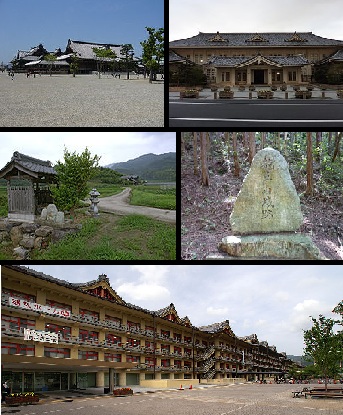


Geography and transport
Tenri sits in the Nara Basin, a generally flat area surrounded by low hills. Its location places it within easy travel distance of Nara city and other parts of the Kansai region. Rail and road links connect Tenri to neighboring municipalities and to larger urban centers, enabling commuting, student travel, and visitors attending religious and cultural events.
History and religion
The modern identity of the city is closely connected to Tenrikyō, a religious movement that established its central institutions in the area. Over time, the presence of a major faith headquarters shaped urban growth: religious facilities, residences, and institutions founded or supported by the movement have influenced the layout and civic life of Tenri. The city also lies in a region with ancient Shinto and Buddhist heritage.
Institutions and cultural life
Tenri is noted for educational and cultural institutions that attract students, researchers, and visitors. A private university and related schools are prominent local employers and cultural contributors. The city hosts museums, libraries, and archives that preserve manuscripts, local history, and art. Sports clubs and community events are also active parts of municipal life.
Notable features and uses
- Religious headquarters and associated complex of buildings and community facilities.
- University and educational establishments that provide undergraduate and graduate programs.
- Libraries and collections important to regional studies and historical research.
- Annual events and festivals that draw visitors for cultural and sporting activities.
Distinctions and significance
Tenri represents a blend of religiously influenced urban development and the quieter rhythms of the Nara plain. Its institutions serve both local residents and a broader national and international community of adherents, students, and scholars. For those exploring the cultural landscape of central Honshū, Tenri offers insight into how belief, education, and regional history intersect in contemporary Japan.
Related articles
Author
AlegsaOnline.com Tenri, Nara — city in central Honshū, Japan Leandro Alegsa
URL: https://en.alegsaonline.com/art/97015
Sources
- books.google.com : "Tenri"
- books.google.com : Japan; Geschichte nach japanischen Quellen und ethnographische Skizzen. Mit einem Stammbaum des Kaisers von Japan, p. 13