
Talcahuano — Chilean port city, naval base and industrial center
Talcahuano is a major Chilean port and commune on the Bay of Concepción, noted for its naval facilities, shipyards, fishing industry and role in the country’s maritime history.
Overview
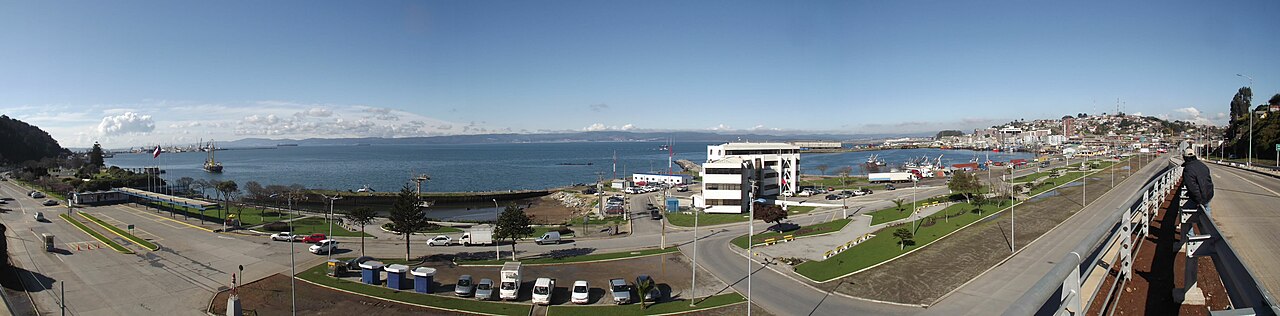
Talcahuano is a coastal city and commune in south-central Chile, situated on the Bay of Concepción near the city of Concepción. According to the 2002 census, it covered about 92.3 square kilometres and had a population recorded as 171,383 at that time. The port’s sheltered bay and strategic position on the Pacific coast have made it an important center for maritime activity for more than a century.
Image gallery
10 Images




Characteristics and infrastructure
The urban area combines residential neighborhoods, industrial zones and extensive port facilities. Key elements of the city’s infrastructure include naval installations, commercial docks, shipyards and fish-processing plants. Ship maintenance and construction yards serve both military and civilian vessels, and the port supports cargo, fishing and passenger operations. Transport links connect Talcahuano with the regional capital and road and rail networks of the Biobío region.
Economy and uses
Talcahuano’s economy is strongly maritime. Principal activities are:
- Commercial port operations handling imports and exports;
- Fishing and seafood processing, supplying domestic and export markets;
- Shipbuilding, repairs and naval maintenance, including state-run shipyards and private facilities;
- Support services for maritime trade, logistics and related industries.
History and development
The port has long been regarded as one of Chile’s earliest and most significant naval and industrial harbors, with development tied to the country’s maritime and military needs. Over time Talcahuano grew as a fishing and ship-repair center and became closely associated with the Chilean Navy. Its bay and protected waters encouraged establishment of docks and yards that supported regional commerce and defense.
Challenges, recovery and environment
Like much of the Chilean coast, Talcahuano is exposed to seismic and tsunami risk. The city suffered extensive damage in the large 2010 earthquake and consequent tsunami, which affected port infrastructure, shipyards and neighborhoods. Recovery programs have focused on rebuilding docks, reinforcing coastal defenses and restoring economic activity. The surrounding marine environment supports productive fisheries but also requires management to balance industry and conservation.
Notable facts and distinctions
Talcahuano is often described in historical sources as an early military, industrial and fishing port in Chile’s development. Its combination of naval presence, shipbuilding capacity and a busy commercial harbor distinguish it within the Biobío region. Today it remains a focal point for Chile’s southern maritime economy and a community shaped by its long relationship with the sea.
Related articles
Author
AlegsaOnline.com Talcahuano — Chilean port city, naval base and industrial center Leandro Alegsa
URL: https://en.alegsaonline.com/art/96107
Sources
- talcahuano.cl : "Asociación Chilena de Municipalidades"
- ine.cl : "National Statistics Institute"