
Swedish Empire (Stormaktstiden, c. 1611–1718)
Period in which Sweden emerged as a major Baltic and European power (often called stormaktstiden), expanding across Finland, the Baltic coast and parts of Germany before its decline after the Great Northern War.
The Swedish Empire refers to the period from the early 17th century through the early 18th century when the kingdom of Sweden rose to become one of the great powers of Europe. In modern scholarship this era is commonly called stormaktstiden, or "the age of great power"; historians use that term to frame Sweden's military expansion, administrative reforms and prominent role in continental conflicts such as the Thirty Years' War (modern historiography treats these developments as part of a single chapter of state-building and overseas influence).
Image gallery
10 Images
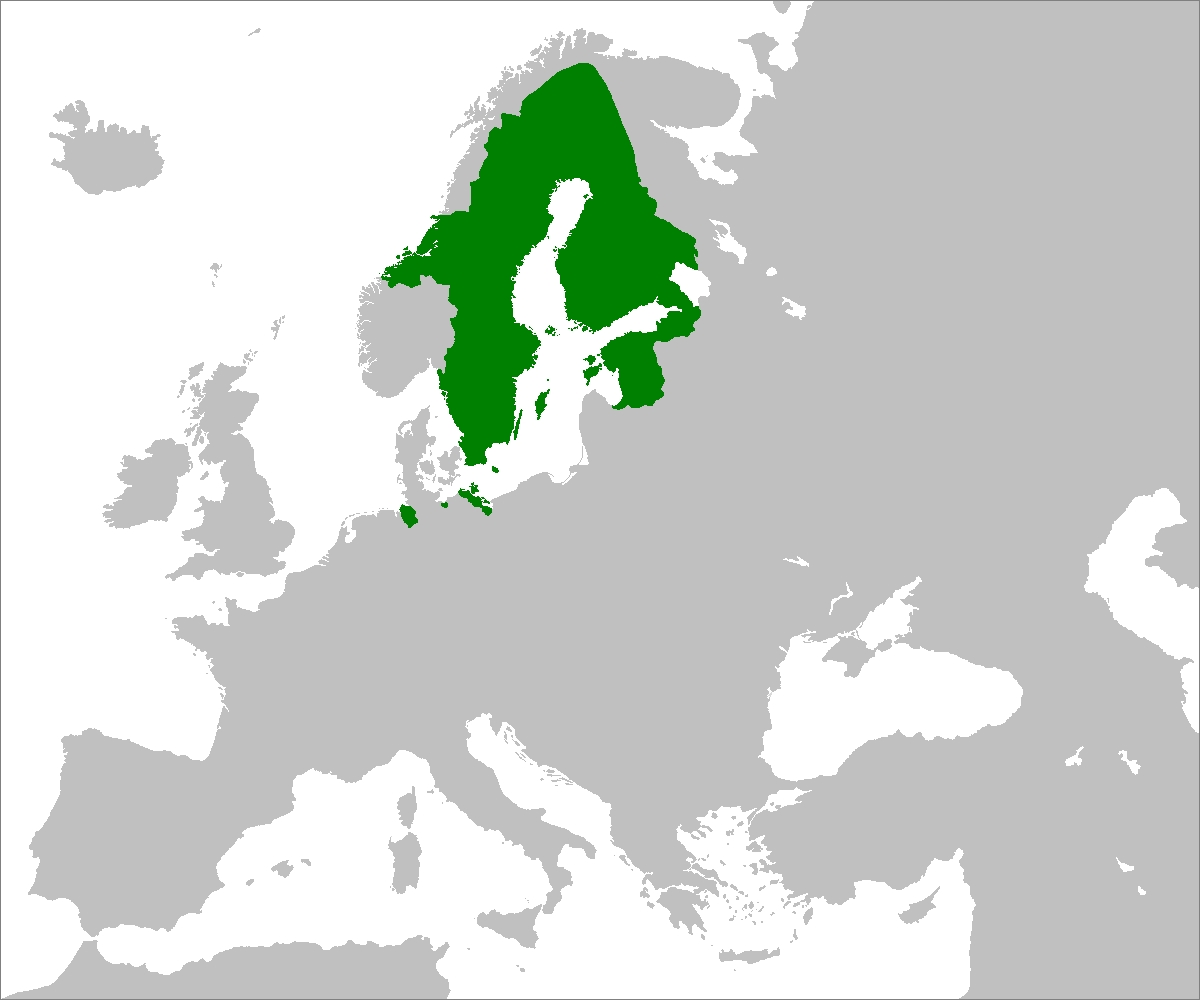


Territories and reach
At its height the Swedish realm included the kingdom of Sweden proper (which encompassed present-day Finland), large stretches of the eastern Baltic littoral, and several footholds in northern Germany. Swedish control of the Baltic Sea—sometimes described as an attempt at a dominium maris baltici—gave it considerable leverage over trade and regional politics.
Institutions, army and innovations
Key features of the empire were a professionalized army, notable military leaders such as Gustavus Adolphus, fiscal and administrative reforms to sustain long campaigns, and a capable navy. Military innovations in tactics and organization contributed to Sweden's success on the battlefield and its reputation as a disciplined, expeditionary state.
Decline and legacy
The empire's decline began with prolonged warfare against a coalition led by Russia, Denmark–Norway and Saxony–Poland. The struggle culminated in the Great Northern War; military setbacks and economic strain reversed Sweden's gains and ended its era as a major continental power after the war and the death of Charles XII (Great Northern War). The legacy of the period includes institutional reforms, cultural exchange across the Baltic, and a lasting mark on northern European borders and diplomacy.
Notable facts
- Important leaders included Gustavus Adolphus and Charles XII.
- Territories were often held as dominions rather than fully integrated provinces.
- The era shaped state-building practices in Scandinavia and the Baltic region.
Author
AlegsaOnline.com Swedish Empire (Stormaktstiden, c. 1611–1718) Leandro Alegsa
URL: https://en.alegsaonline.com/art/95468