
Suzanne (Leonard Cohen song)
A 1960s poem-turned-song by Leonard Cohen, first recorded by Judy Collins in 1966 and later by Cohen on his 1967 debut. Noted for its spare arrangement and blend of erotic and spiritual imagery.
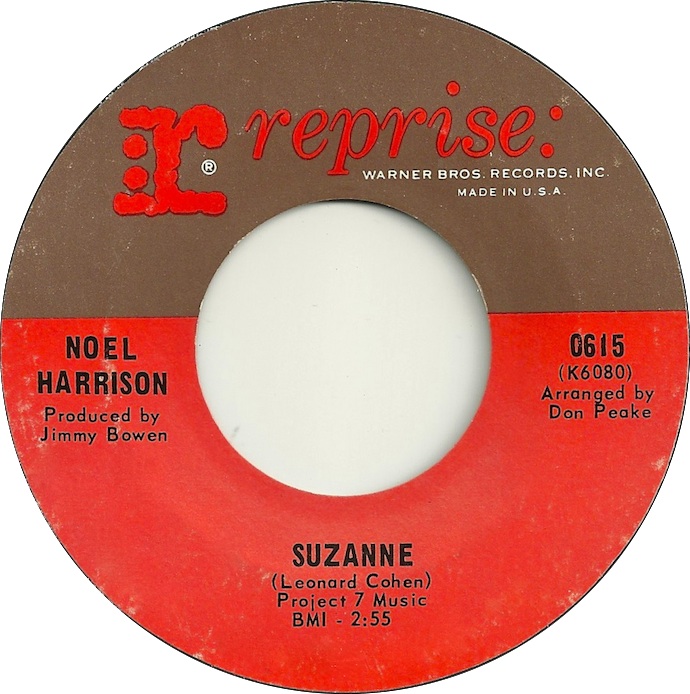
"Suzanne" is one of Leonard Cohen's best-known compositions, first published as a poem in 1966 and introduced to a wide audience when folk singer Judy Collins recorded it the same year. Cohen included his own performance of the song on his 1967 debut album Songs of Leonard Cohen. The piece moved quickly from page to record and has since become emblematic of Cohen's mixture of literary poetics and popular songcraft. For background on the writer, see Leonard Cohen.
Image gallery
3 Images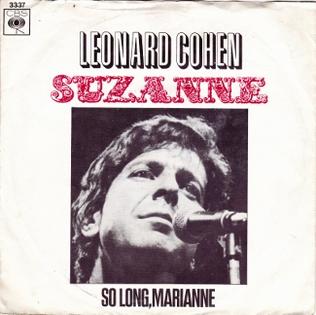

Origins and early recordings
Cohen originally wrote "Suzanne" as a poem; a female acquaintance in Montreal — commonly identified in accounts of the song as Suzanne Verdal — served as the personal inspiration for its opening scenes. Judy Collins's recording brought the text to listeners outside Cohen's immediate circle, and her version was instrumental in drawing attention to Cohen as a songwriter. Cohen's own recording, released on his first album, presented a more austere arrangement centered on his voice and guitar. See Judy Collins's recording history at Judy Collins and Cohen's album details at Songs of Leonard Cohen.
Lyrics, themes and musical character
Structurally the song is notable for its conversational verses and repeating refrains that combine intimate, concrete imagery (riverbanks, tea, walking by the water) with spiritual and symbolic lines (references to Jesus and transcendence). Musically it is simple and restrained: melodic lines support the narrative without ornamental virtuosity, allowing the words to remain central. Readers and listeners often point to the song's simultaneous erotic and devotional registers — the woman of the title is both an earthly companion and a guide toward a larger, ambiguous sense of meaning.
Reception and legacy
Critics and audiences have consistently singled out "Suzanne" as a high point in Cohen's early career and as a canonical song of the 1960s folk revival. The song has been covered many times across genres and remains a staple of Cohen repertory. In recognition of its enduring influence, music writers have included it on retrospective lists of the decade; for example, it ranked on Pitchfork Media's list of top songs from the 1960s (Pitchfork).
Notable facts and distinctions
- Begun as a poem and adapted into song, "Suzanne" exemplifies Cohen's career-long movement between poetry and songwriting.
- The song helped establish Cohen's public reputation after being championed by other performers before he achieved fame as a recording artist.
- Its spare musical approach keeps the emphasis on narrative voice and lyrical detail, a model followed in many of Cohen's later works.
Because of its literary origins, evocative imagery and broad influence, "Suzanne" often appears in discussions of 20th-century songwriting where poetry and popular music intersect. For listeners discovering Cohen through covers or his own records, the song remains a frequently cited entry point into his songwriting world.
Related articles
Author
AlegsaOnline.com Suzanne (Leonard Cohen song) Leandro Alegsa
URL: https://en.alegsaonline.com/art/95340
Sources
- pitchfork.com : "The 200 Greatest Songs of the 1960s"