
Battle of Gonzales: Opening Clash of the Texas Revolution
The Battle of Gonzales (October 2, 1835) was the first military engagement of the Texas Revolution, when Texian settlers refused to return a locally held cannon to Mexican troops, sparking wider rebellion.
Overview
The Battle of Gonzales, fought on October 2, 1835 near the town of Gonzales, Texas, is widely regarded as the first armed confrontation of the Texas Revolution. A small detachment of Mexican soldiers attempted to retrieve a cannon that had been loaned to local residents, and the settlers resisted. The encounter was brief and limited in scale but carried outsized symbolic importance.
Image gallery
4 Images

Background and causes
Throughout the 1820s and early 1830s, the Mexican government stationed troops and provided arms to frontier communities in Tejas (Texas) to defend against raids and to exercise authority. The cannon at Gonzales had been supplied for local defense. Political shifts in Mexico, including stronger central government policies and growing mistrust of Anglo-American colonists, increased tensions between residents of Mexico and settlers in the territory. These strains set the stage for an armed contest.
The engagement
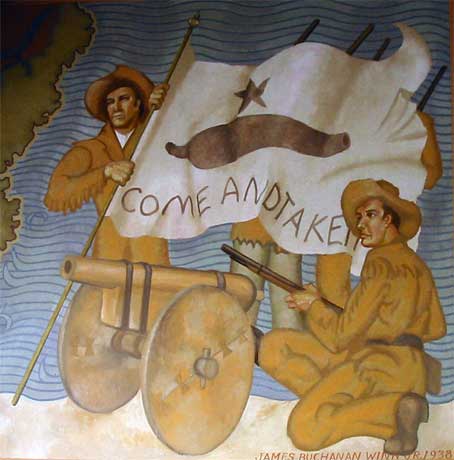
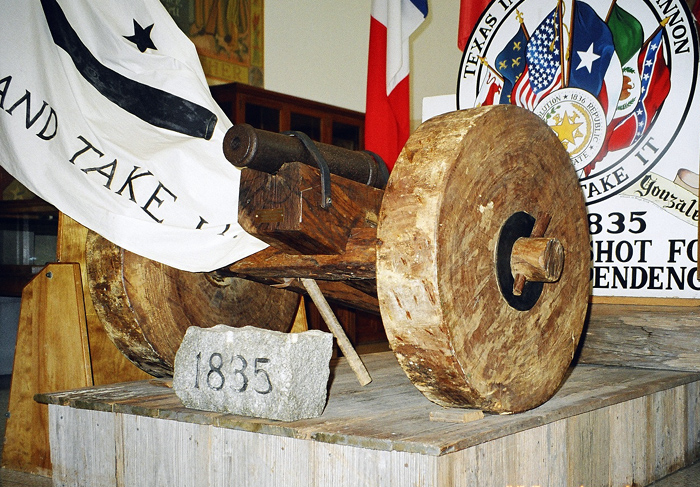
When Mexican officers were dispatched to reclaim the cannon, Gonzales settlers refused. A small militia assembled, and a makeshift banner — bearing a crude cannon image and the defiant slogan "Come and Take It" — was raised. The confrontation involved a short exchange of fire after negotiations failed. Reports describe only a limited skirmish with scattered shots and no definitive, contemporaneously confirmed large-scale casualties; accounts vary.
Aftermath and significance
Although militarily minor, the action at Gonzales energized Texian resistance and prompted more volunteers to take up arms. It marked the transition from political dispute and civil disobedience to organized military opposition. Within months the conflict widened into a full revolution, culminating in the declaration of Texas independence in 1836.
Participants, symbols, and legacy
- Participants included local Texian settlers and a Mexican military detachment led by officers dispatched to enforce orders.
- The cannon itself, originally provided by Mexican authorities for frontier defense, became a powerful emblem.
- The "Come and Take It" flag endures as a popular symbol associated with the rebellion and is referenced in historical commemorations.
The Battle of Gonzales is therefore remembered less for battlefield outcomes than for its role in igniting a sustained independence movement. For further reading on the broader conflict and regional context, see related summaries of the Spanish and Mexican eras and detailed narratives of the Texas struggle and the Mexican response.
Author
AlegsaOnline.com Battle of Gonzales: Opening Clash of the Texas Revolution Leandro Alegsa
URL: https://en.alegsaonline.com/art/9480