
Stye (Hordeolum): Causes, Symptoms, Treatment and Prevention
A stye (hordeolum) is a common, usually bacterial infection of an eyelid gland or eyelash follicle that produces a painful red bump. This article explains types, signs, care, and prevention.
Overview
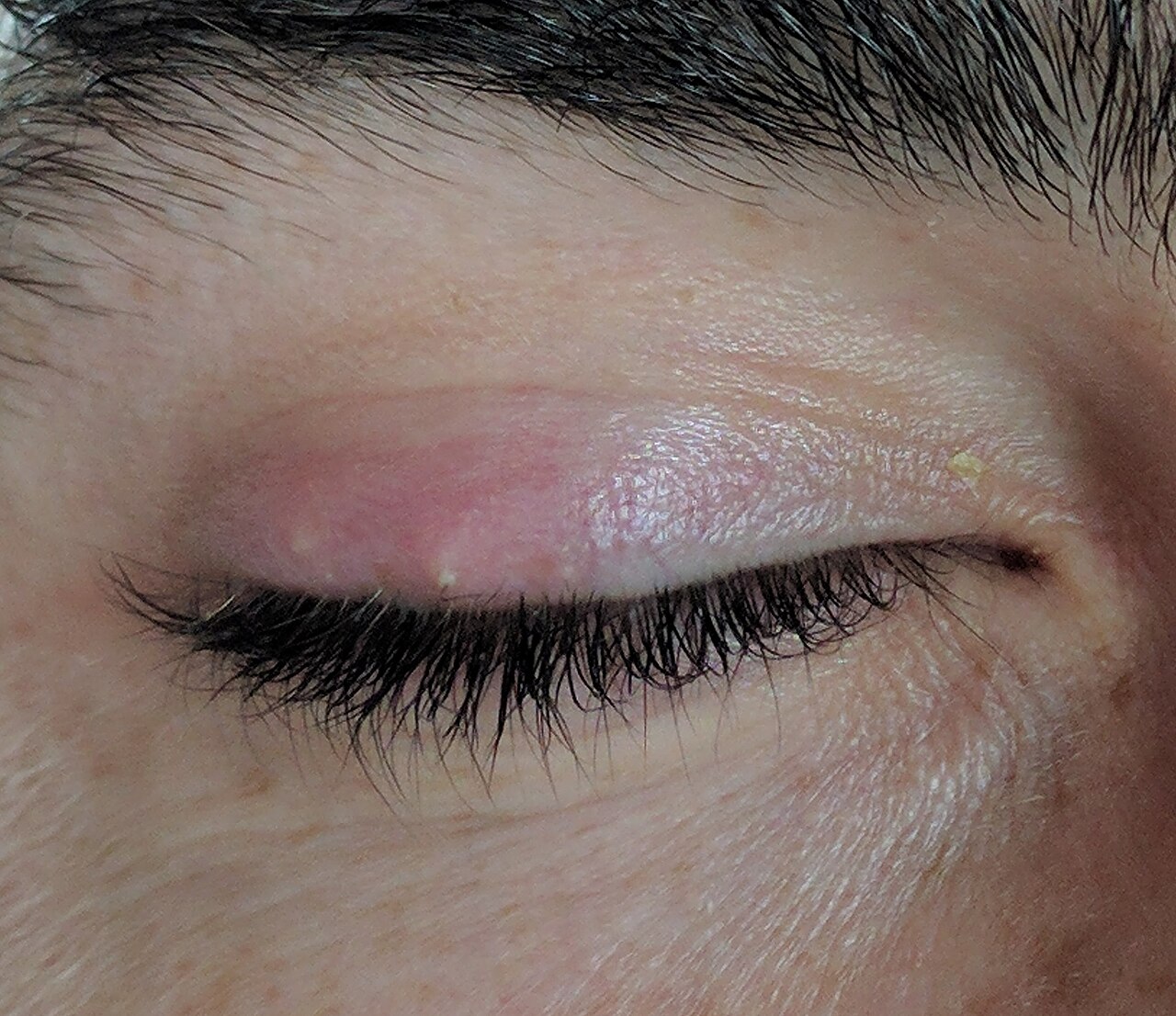
A stye, medically called a hordeolum, is an acute infection of the oil glands or hair follicles at the edge of the eyelid. It usually appears as a small, tender, red lump near the eyelash line and often fills with pus. Most styes are harmless and self-limiting, but they can be painful and interfere with blinking or wearing contact lenses. For a basic illustration of eyelid anatomy see eyelid anatomy.
Image gallery
4 Images


Causes and types
The common cause is a bacterial infection, most often Staphylococcus species, that enters through a blocked gland or an eyelash follicle. Two main types are described:
- External stye – arises from an infected eyelash follicle or the gland at the lash base.
- Internal stye – involves a deeper meibomian gland inside the eyelid.
Symptoms and diagnosis
Typical symptoms are a localized red bump, localized pain or tenderness, swelling of the eyelid, tearing, and sometimes crusting at the eyelid margin. Vision is rarely affected beyond blurring from swelling. A clinician usually diagnoses a stye by inspection; they may distinguish it from a chalazion, which is a noninfectious blocked gland that becomes a painless lump over time. If in doubt, consult a health resource such as trusted eye care information.
Treatment
Most styes improve with simple conservative care within a few days to two weeks. Recommended measures include warm compresses applied for 10–15 minutes several times daily to encourage drainage, gentle eyelid hygiene and avoiding eye makeup or contact lenses until healed. If there is persistent pus, spreading redness, or significant pain, a health professional may prescribe topical or oral antibiotics or perform a minor drainage procedure. Avoid squeezing or attempting to lance a stye yourself; seek professional care instead. For treatment options and when to seek help see treatment advice.
Prevention and complications
Preventive steps focus on eyelid hygiene: regular cleaning of lashes, replacing old cosmetics, avoiding eye rubbing, and managing underlying eyelid inflammation. Most styes cause no lasting harm. Rare complications include recurrent infection, development of a chalazion after an acute episode, or spread of infection to nearby tissues. If you have frequent styes or chronic eyelid problems discuss evaluation and long-term care with an eye specialist; additional resources are available at further reading.
Author
AlegsaOnline.com Stye (Hordeolum): Causes, Symptoms, Treatment and Prevention Leandro Alegsa
URL: https://en.alegsaonline.com/art/94428