
Strategy video game
A genre of video games that emphasizes decision-making, long-term planning and control of resources; includes turn-based and real-time variants and several well-known subgenres.
A strategy video game is a genre in which success depends primarily on the player's planning, resource management, and tactical or strategic judgement rather than on quick reflexes. Unlike action-oriented games that reward fast responses, strategy titles reward foresight, adaptation and efficient allocation of limited resources. The term is often used broadly and may overlap with simulation, role-playing and puzzle elements depending on design priorities. For a concise definition see strategy video game.
Image gallery
5 Images


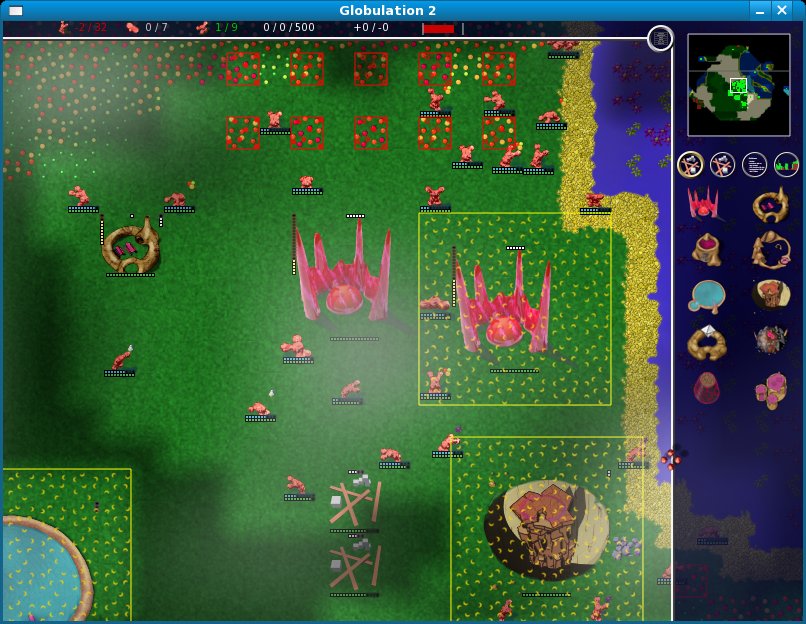
Core characteristics
Most strategy games share several recurring features: control of units or assets, a focus on objectives such as territory or economic dominance, systems for resource gathering and production, and multiple viable approaches to victory. Designers typically balance long-term planning (strategic choices) with short-term execution (tactical choices). Many discussions distinguish between strategy—the high-level plan—and tactics, the immediate maneuvers used to carry it out.
Common subgenres
- Turn-based strategy (TBS): players alternate moves, allowing deliberation between turns.
- Real-time strategy (RTS): actions occur continuously and require simultaneous management.
- 4X (explore, expand, exploit, exterminate): emphasis on empire-building and long campaigns.
- Grand strategy: large-scale political, diplomatic and military control over extended timeframes.
Examples of well-known strategy titles span a wide range of styles and eras. Some focus on historical or fantastical empire-building, while others prioritize competitive multiplayer. A notable commercially successful example is Age of Empires III, which combines resource management, base building and battlefield tactics. Other familiar franchises include Civilization, StarCraft and Total War, each illustrating different emphases within the genre.
History and development
The roots of strategy games reach back to abstract board games and military thought. With the rise of computers, designers adapted those ideas into digital formats, experimenting with both turn-taking and continuous-time mechanics. Over decades the genre expanded technologically and culturally—improving AI opponents, networking for multiplayer, and adding complex economic and diplomatic systems. Parallel advances in hardware allowed more units, finer simulation detail and larger maps.
Strategy games are used for entertainment, competitive esports and occasional educational or research purposes. They are studied in game design for their systems thinking demands and in artificial intelligence as challenging environments for planning algorithms. Players value strategy games for the depth of decision-making, the variety of viable approaches and the satisfaction of converting long-term plans into results on the virtual battlefield.
Distinctions within the genre help players choose titles that match their preferences: those who enjoy deliberate, contemplative play may prefer turn-based or 4X games, while players seeking fast-paced multitasking often gravitate to RTS and competitive multiplayer. Regardless of subtype, the core appeal remains the exercise of judgement and the testing of plans against an adaptive opponent.
Related articles
Author
AlegsaOnline.com Strategy video game Leandro Alegsa
URL: https://en.alegsaonline.com/art/94191