
Stop! Or My Mom Will Shoot (1992)
Overview of the 1992 action‑comedy starring Sylvester Stallone and Estelle Getty, its production, reception, and legacy, including critical response and Razzie awards.
Stop! Or My Mom Will Shoot is a 1992 action-comedy film that pairs an unlikely onscreen duo: Sylvester Stallone as a tough police sergeant and Estelle Getty as his overbearing mother. The picture was directed by Roger Spottiswoode and produced by a team including Ivan Reitman, Joe Medjuck and Michael C. Gross. It opened in North America on February 21, 1992 and is often recalled for the contrast between its star's action persona and the film's sitcom-style domestic comedy.
The plot revolves around the clash between the professional life of a law-enforcement officer and the meddling presence of his mother, who becomes entangled in his work and in the film's central investigation. The tone mixes procedural set pieces with broad, family-oriented gags; critics and audiences generally found the balance uneven. The screenplay, performances and humor were frequent targets of negative reviews, and the film’s comedic strategies were described by some reviewers as dated or forced.
Image gallery
1 Image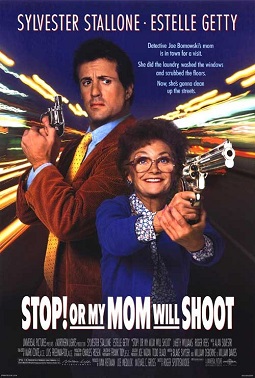
Production and principal contributors
- Director: Roger Spottiswoode
- Lead actors: Sylvester Stallone, Estelle Getty
- Producers: Ivan Reitman, Joe Medjuck, Michael C. Gross
- Release: February 21, 1992
On its release the film drew overwhelmingly poor reviews. It holds a very low approval score on review aggregators such as Rotten Tomatoes, and prominent critics expressed strong disapproval — for example, Roger Ebert dismissed it as lacking genuine laughs. Beyond critical reaction, the movie’s reputation was cemented by recognition from the Golden Raspberry Awards, which singled out the project and performances for its annual negative prizes.
Despite its high-profile star and producers, the film is frequently cited in discussions about misfires in star-driven Hollywood comedies of the era. It has not enjoyed significant critical rehabilitation, though it sometimes appears in retrospective pieces that examine unexpected casting choices or the cross‑genre experiments of early 1990s cinema. For viewers interested in Stallone’s career outside the action genre, the film remains a noted, if controversial, example.
For further information on the movie’s reviews, awards and production credits see the linked resources and contemporary press coverage. The film’s unusual title and premise continue to make it a reference point in conversations about comedic risk-taking and the limits of star image transformation.
Related articles
Author
AlegsaOnline.com Stop! Or My Mom Will Shoot (1992) Leandro Alegsa
URL: https://en.alegsaonline.com/art/94069