
Batman Returns (1992 film)
Tim Burton's 1992 sequel to his 1989 Batman film, noted for a darker Gothic style, memorable villain performances, Danny Elfman's score, and a Christmas-set Gotham. Stars Michael Keaton, Michelle Pfeiffer, Danny DeVito.
Overview
Batman Returns is the second major cinematic adaptation of the DC Comics hero directed by Tim Burton. Released on June 19, 1992, it follows Burton's 1989 Batman and continues a distinctive visual approach. The movie is set in a wintry, Christmas-time Gotham and blends superhero action with a darker, Gothic sensibility and satirical elements.
Image gallery
10 Images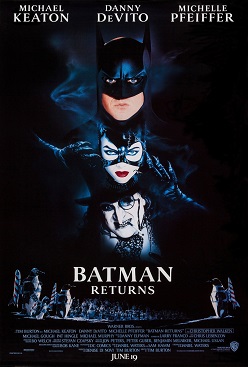






Production, style and themes
The film is often remembered for its stylized production design, dramatic lighting, and a score that reinforces its mood. Composer Danny Elfman's music and Burton's trademark visual choices contribute to a tone that is more noir and grotesque than many mainstream superhero pictures of the period. Recurring themes include identity and transformation, the consequences of social exclusion, and a critique of corporate ambition and media spectacle.
Cast and characters
Performances are a central feature of the film. Principal cast members include:
- Michael Keaton as Bruce Wayne / Batman
- Michelle Pfeiffer as Selina Kyle / Catwoman
- Danny DeVito as Oswald Cobblepot / The Penguin
- Christopher Walken as Max Shreck
The movie gives the villains significant screen time and psychological detail, turning them into complex foils for the hero rather than simple antagonists.
Plot dynamics and notable elements
Without summarizing the full narrative, the film centers on the intersecting arcs of three characters: Batman, a vigilante wrestling with his role in a corrupt city; Catwoman, whose fractured identity oscillates between revenge and reluctant heroism; and The Penguin, a grotesque outsider whose campaign for recognition becomes violent and theatrical. The seasonal setting and a mixture of dark humor and pathos create a distinctive mood.
Reception and legacy
Upon release the film achieved financial success and provoked varied critical reaction: many praised the visual design and lead performances while others debated its tone and levels of on-screen violence. Over time Batman Returns has remained influential for its aesthetic and thematic boldness and is frequently discussed in histories of superhero cinema and of Burton's career. It occupies an important place in the early development of large-scale comic-book adaptations and the public image of several comic characters like Catwoman.
For further context, see the broader Batman film series and the director's body of work via the Tim Burton link above.
Related articles
Author
AlegsaOnline.com Batman Returns (1992 film) Leandro Alegsa
URL: https://en.alegsaonline.com/art/9387