
Standing wave (stationary wave)
A standing wave is a stationary pattern produced by interference of waves traveling in opposite directions; this article explains nodes, antinodes, boundary conditions, harmonics, examples and uses.
Overview
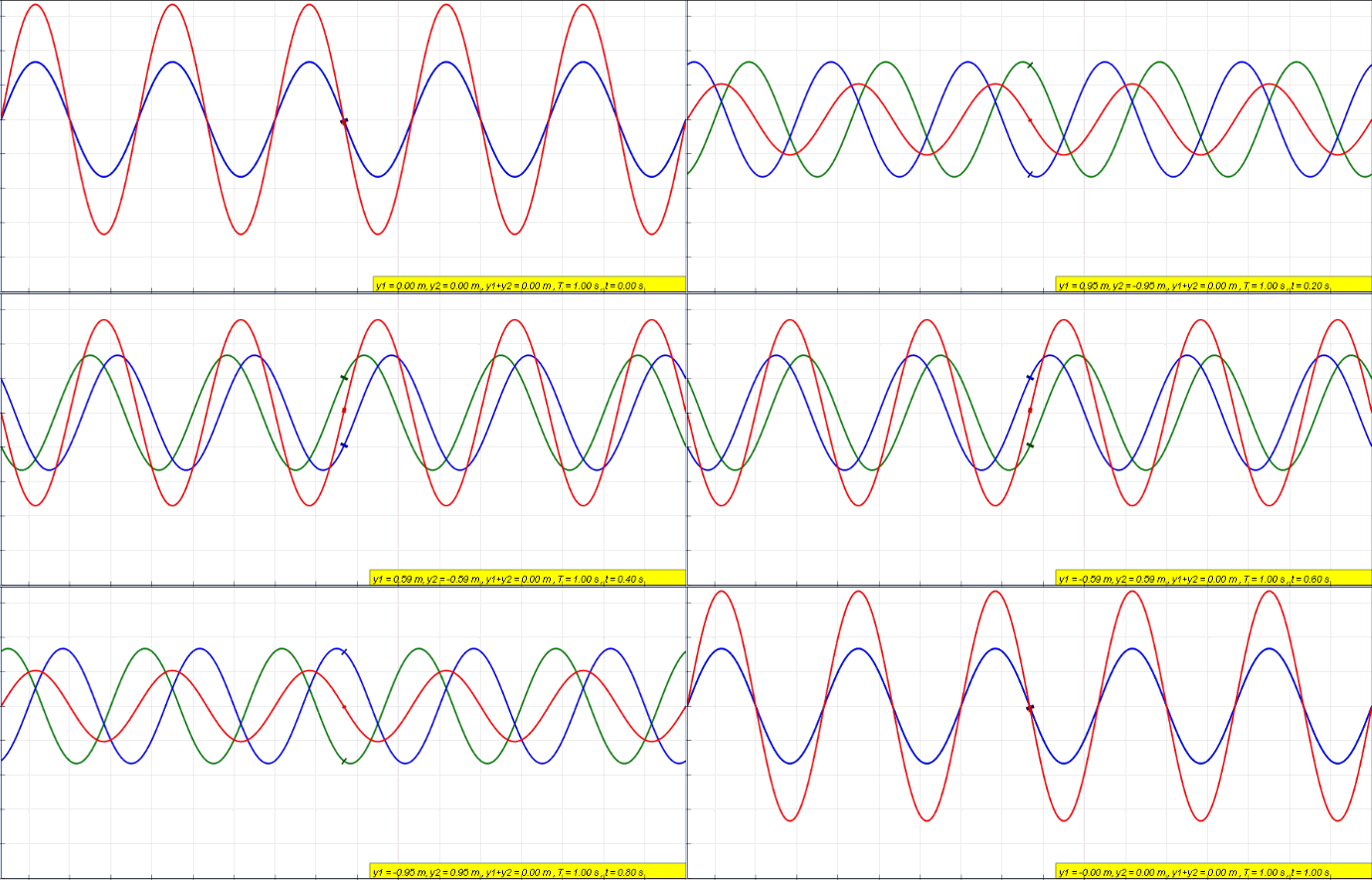
A standing wave, sometimes called a stationary wave, is a wave pattern that remains fixed in space while its amplitude oscillates in time. It arises when two waves of the same frequency and similar amplitude travel in opposite directions and interfere. Unlike a progressive (traveling) wave, a pure standing wave does not carry net energy along the medium; instead, energy is alternately stored and returned locally. For a concise technical introduction see further reading.
Image gallery
9 Images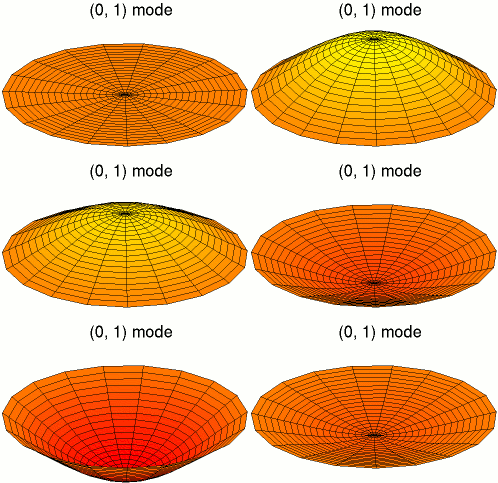



Characteristics and structure
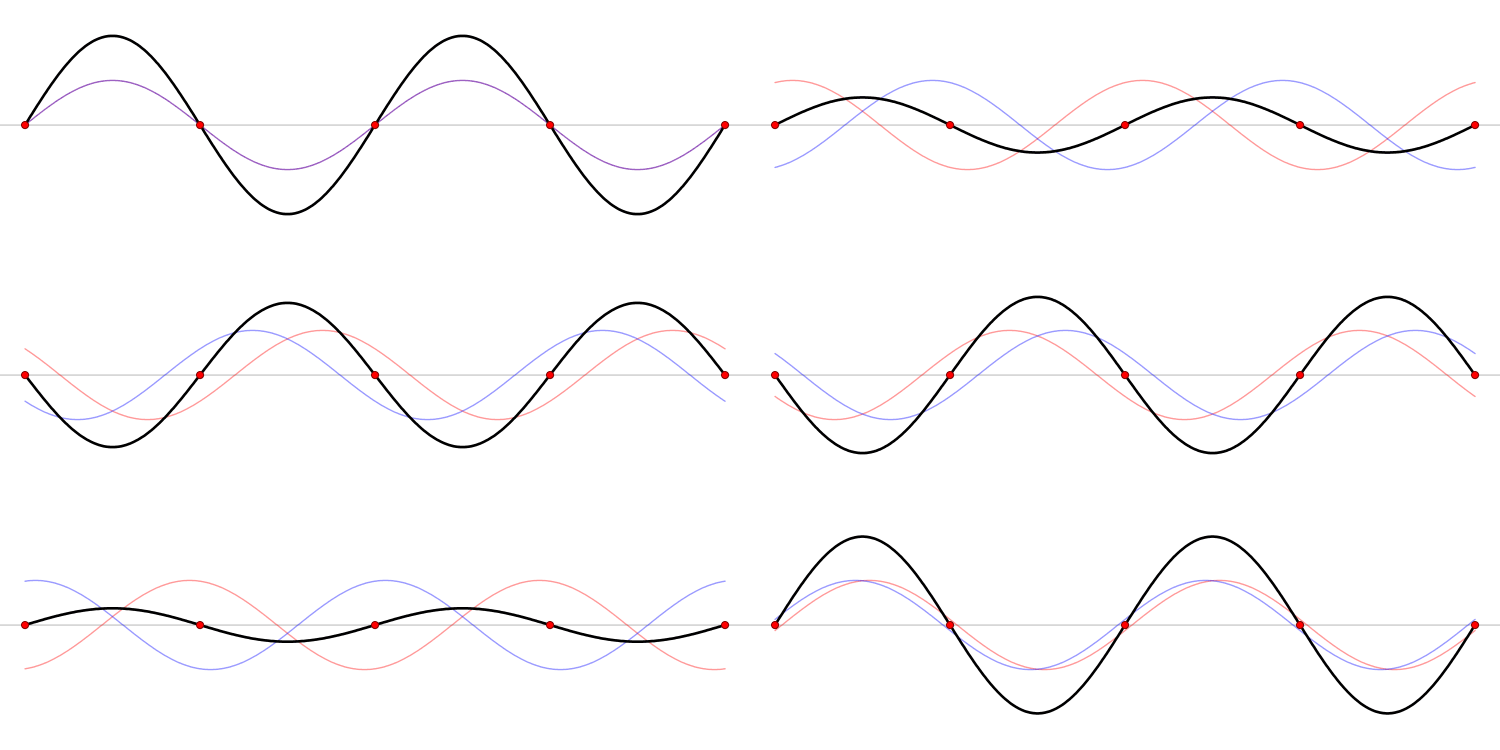
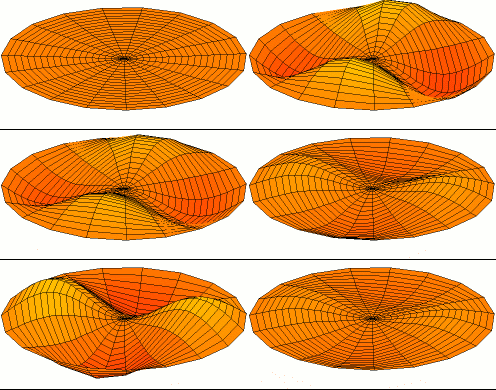
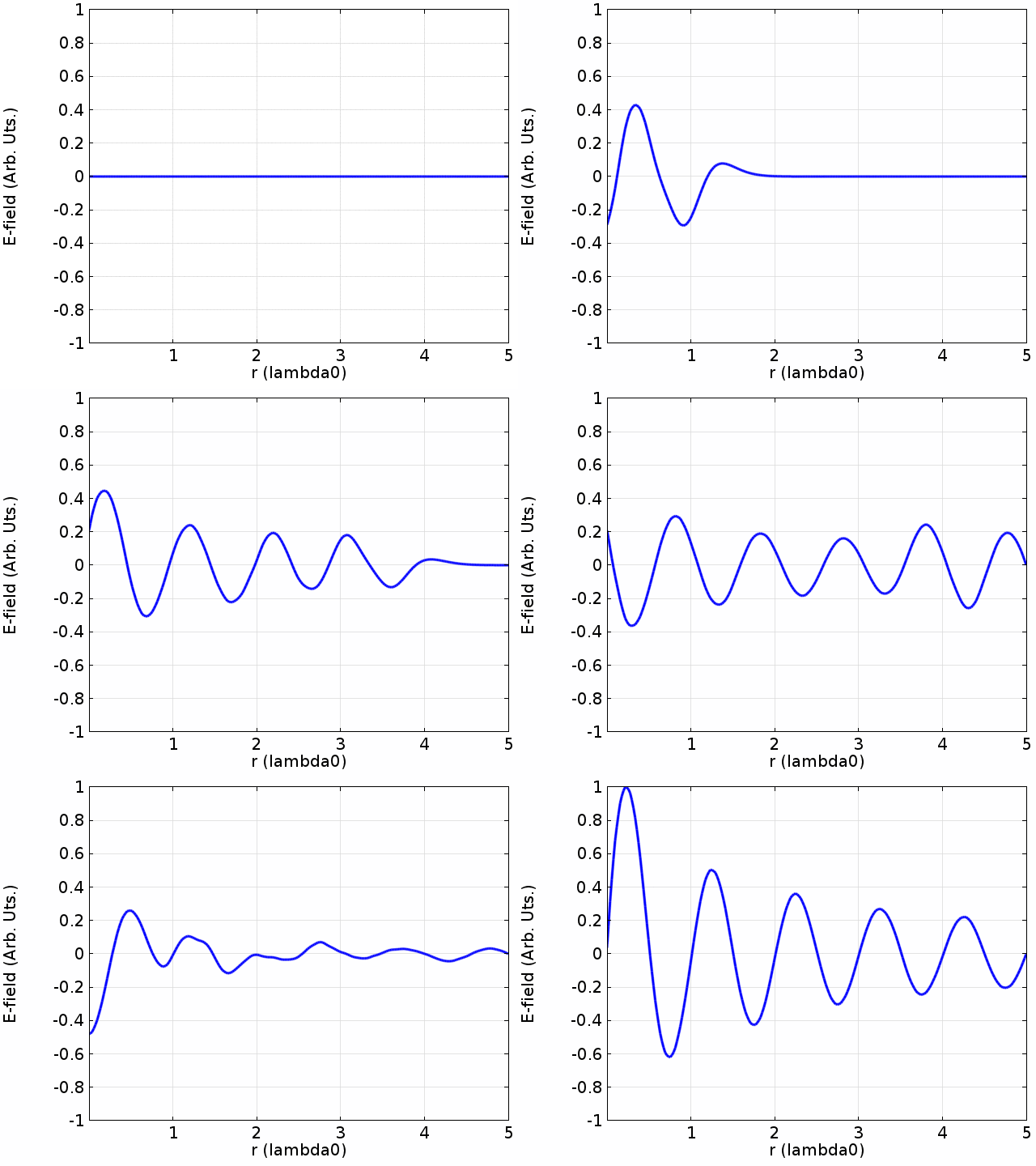
The most distinctive features of a standing wave are its nodes and antinodes. Nodes are points that remain stationary (zero amplitude) at all times; antinodes are points of maximum oscillation. The spatial arrangement of nodes and antinodes depends on wavelength and the boundary conditions of the system. A common analytic form for an ideal one-dimensional standing wave is y(x,t) = 2A sin(kx) cos(ωt), where k is the wavenumber and ω the angular frequency. That expression emphasizes the separation of spatial and temporal dependence: sin(kx) determines the fixed node/antinode pattern while cos(ωt) provides the time variation.
Formation and boundary conditions
Standing waves form when an incident wave reflects from a boundary and the reflected wave has the same frequency and amplitude. Boundary conditions (for example: fixed end, free end, closed or open pipe) determine which spatial patterns are allowed. In a string fixed at both ends, the ends must be nodes and only wavelengths that produce nodes at both ends are permitted; this leads to discrete resonant modes or harmonics. In open pipes, pressure nodes and antinodes occur at different positions compared with closed pipes, producing different harmonic series.
Examples and applications
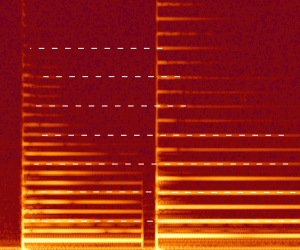
Standing waves appear across physics and engineering. In musical instruments, plucked strings and vibrating air columns produce standing-wave modes that set the pitch and overtone structure. Microwave ovens and radio-frequency cavities support standing electromagnetic modes that concentrate energy at antinodes; this principle is used in filters, oscillators and particle accelerators. Optical cavities in lasers also rely on standing-wave resonances to amplify light. Practical uses include acoustic design, nondestructive testing, and sensors that detect changes in resonant frequency.
History and study
Observations of stationary vibration patterns date back to experiments with vibrating plates and strings; early investigators displayed mode shapes and nodal lines that reveal the underlying standing-wave structure. Theoretical descriptions were developed as the mathematics of waves and resonance matured; formal treatments appear in classical texts on acoustics and wave theory. Modern laboratory methods visualize standing waves with high-speed imaging, interferometry and electronic sensors.
Distinctions and notable facts
- Standing waves are not the same as traveling waves: traveling waves transfer energy from one place to another, while ideal standing waves do not produce net transport along the medium.
- Resonance occurs when the driving frequency matches a natural standing-wave frequency; small driving forces can then produce large amplitudes.
- Different physical quantities may have nodes at different locations: e.g., on an air column a pressure node corresponds to a displacement antinode.
- Practical systems often show a mixture of standing and traveling components; losses and imperfect reflections alter the ideal pattern. For more technical details see this reference.
Related articles
Author
AlegsaOnline.com Standing wave (stationary wave) Leandro Alegsa
URL: https://en.alegsaonline.com/art/93341