
Spotlight (2015 film)
Spotlight (2015) is a biographical crime drama about The Boston Globe's investigative team exposing systemic child abuse by Catholic clergy; directed by Tom McCarthy, it won the 2016 Best Picture Oscar.
Spotlight is a 2015 American biographical crime drama that dramatizes the work of an investigative reporting unit. The film follows reporters from The Boston Globe as they uncover widespread and systemic child sex abuse by clergy in the Boston area. Written by Tom McCarthy and Josh Singer and directed by McCarthy, the screenplay emphasizes methodical reporting, document analysis and interviews rather than sensationalized melodrama.
Image gallery
5 Images
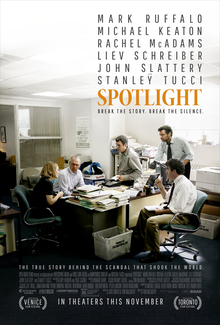



Subject and structure
The movie adapts the Globe's multi-part exposé that later received public recognition, including a Pulitzer Prize for Public Service. It presents the reporters' step-by-step investigation: building sources, verifying allegations, confronting institutional resistance and navigating legal and ethical constraints. The tone is restrained and procedural, aiming to show how routine newsroom work can reveal systemic problems rather than relying on a single heroic figure.
Principal cast
- Mark Ruffalo as one of the central reporters
- Michael Keaton portraying the Spotlight team leader
- Rachel McAdams as a key investigative reporter
- John Slattery in an ensemble supporting role
- Stanley Tucci contributing a major supporting turn
- Liev Schreiber, Billy Crudup and Richard Jenkins in supporting roles
- Len Cariou appears as a high-ranking church official
The film depicts institutional figures involved in the story, including Cardinal Bernard Francis Law, while emphasizing the journalists' methods and the ethical dilemmas they face when confronting powerful institutions.
Release, reception and awards
Released in November 2015, the film achieved both critical acclaim and commercial success. It earned awards recognition during the 2015–2016 season and won the Academy Award for Best Picture. Reviewers praised the ensemble performances, the film's careful pacing and its commitment to depicting investigative work with realism. The movie also generated renewed public attention to the real-world issues it dramatizes and to the role of local journalism in holding institutions accountable.
Beyond box office and trophies, the film is often cited as an example of how popular cinema can spotlight complex social problems without exploiting victims' experiences. It has been used in discussions about journalistic ethics, institutional accountability and the long-term effects of investigative reporting on communities, institutions and public policy.
Related articles
Author
AlegsaOnline.com Spotlight (2015 film) Leandro Alegsa
URL: https://en.alegsaonline.com/art/92823
Sources
- hollywoodreporter.com : "Mark Ruffalo, Michael Keaton in Talks for Catholic Priest Sex Abuse Scandal Film"
- 3blmedia.com : "Participant Media's "Spotlight" Starring Mark Ruffalo, Michael Keaton, Rachel Mcadams, Liev Schreiber And Stanley Tucci Goes To Camera In Boston Before Lensing In Toronto"
- bostonglobe.com : "A distinguished history of digging up the truth"
- pulitzer.org : "The Pulitzer Prizes | Citation"
- thewrap.com : "Mark Ruffalo, Michael Keaton, Rachel McAdams in Talks to Star in Catholic Church Sex Scandal Drama (Exclusive)"