
Sommerland (municipality in Steinburg, Schleswig-Holstein, Germany)
Sommerland is a small municipality in the district of Steinburg in Schleswig-Holstein, northern Germany. This article summarizes its location, administration, landscape, economy and community life.
Overview
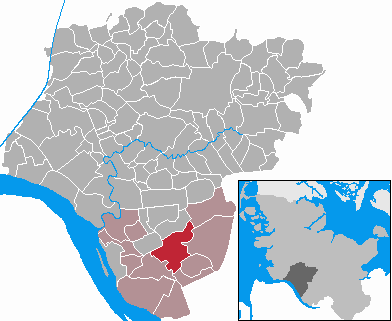
Sommerland is a municipality in the district of Steinburg, located within the northern German state of Schleswig-Holstein. As a local administrative unit it forms part of the federal system of Germany and is identified as a small rural community with local municipal responsibilities. General information about the municipality is often published on regional portals and the municipality’s own pages at Sommerland-related resources.
Image gallery
3 Images

Geography and setting
The settlement lies in the lowlands of northern Germany, a landscape characterized by fields, meadows and small patches of woodland. The surrounding countryside supports agriculture and provides a quiet residential environment. Its location in Steinburg places it within reach of larger towns and transport corridors that connect to the wider region of Schleswig-Holstein and beyond.
History and development
Like many communities in Schleswig-Holstein, Sommerland developed from rural roots. The broader region has a long history shaped by German and Danish influences, agrarian traditions and gradual modernization in the 19th and 20th centuries. Local development typically followed improvements in roads, utilities and public services that linked small villages to district centres.
Administration and services
Sommerland is governed by a municipal council and mayor or similar local officials who handle planning, local roads, and basic services. Small municipalities in this area frequently cooperate with neighbouring communities or belong to a collective municipal association (an Amt) to provide administrative and social services more efficiently.
Economy, transport and community life
The local economy is commonly based on agriculture, small businesses and local services. Residents often commute to nearby towns for work, education and specialized services. Community life centers on local clubs, seasonal events and shared facilities such as a community hall, volunteer fire brigade and sports grounds.
Notable features and distinctions
Sommerland’s modest scale is typical of many northern German municipalities: it offers rural living, local governance and close ties among neighbours. Its placement in Steinburg and Schleswig-Holstein gives it the cultural and administrative context of northern Germany, reflected in regional traditions, landscapes and infrastructure links to larger urban centres.
Related articles
Author
AlegsaOnline.com Sommerland (municipality in Steinburg, Schleswig-Holstein, Germany) Leandro Alegsa
URL: https://en.alegsaonline.com/art/91790