
Socorro County, New Mexico: geography, history, and notable features
County in central New Mexico with Socorro as its seat; notable for the Rio Grande valley, scientific institutions, low population density, and mixed desert and mountain landscapes.
Overview
Socorro County lies in central New Mexico and is centered on the city of Socorro, the county seat. As recorded at the 2010 census (census data), the population was 17,866, reflecting a sparsely settled region where small towns and large ranches are common. The county mixes arid river valley, high desert and mountain terrain and serves as a crossroads of agriculture, mining, education and scientific research.
Image gallery
10 Images




Geography and environment
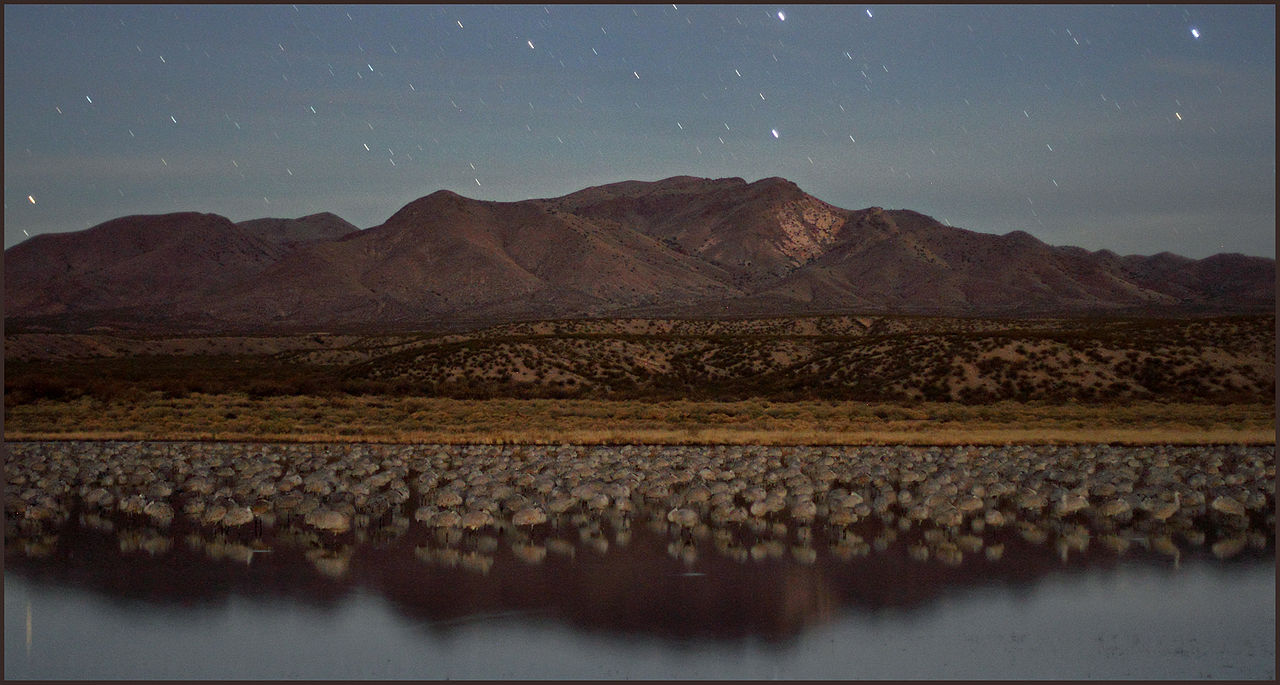
Socorro County follows a stretch of the Rio Grande and includes riparian corridors, volcanic features and surrounding ranges that rise from the valley floor. The landscape supports native grasses, cottonwood bosque along waterways and juniper-piñon woodlands at higher elevations. Climate is typically semi-arid with hot summers and cool winters, and elevation changes produce local variation in temperature and precipitation.
History and development
The county's communities trace roots to Indigenous peoples and Spanish colonial settlements; the name "Socorro" comes from the Spanish word for aid or succor, applied by early colonists. Over time the area developed through ranching, small-scale mining and transportation routes along the Rio Grande. Growth has been modest compared with New Mexico's urban centers, preserving a rural character.
Economy, institutions and culture
Economic activity blends agriculture and ranching with resource extraction, plus public- and private-sector research. The city of Socorro hosts a technical university and facilities that attract students and researchers. The county supports cultural traditions rooted in Hispanic, Indigenous and frontier histories, with community events, local museums and historic sites reflecting that heritage.
Notable places and uses
- Scientific and astronomical installations in the region contribute to research and education, and draw visitors interested in radio astronomy.
- Protected areas and wildlife management sites provide habitat for migratory birds and native species, offering recreation and study opportunities.
- Small towns and scenic drives across volcanic and mountain scenery make the county a destination for outdoor recreation and heritage tourism.
For more detailed government, demographic and visitor information, consult county resources and regional guides linked from official pages (state overview and other local portals). Additional historical and statistical material can be found through census and archival references (population data, county records).
Related articles
Author
AlegsaOnline.com Socorro County, New Mexico: geography, history, and notable features Leandro Alegsa
URL: https://en.alegsaonline.com/art/91485
Sources
- quickfacts.census.gov : "State & County QuickFacts"
- naco.org : "Find a County"