
Snowdrop (Galanthus): description, cultivation, and cultural significance
Snowdrops (Galanthus) are small bulbous plants that bloom in late winter or early spring. Known for their white, drooping flowers, they have horticultural, ecological and cultural importance worldwide.
Overview
The snowdrop is a small, bulbous plant of the genus Galanthus. These hardy perennials are among the first to flower as winter wanes, often pushing through late snow. There are about 20 species in the genus, together with numerous cultivated varieties selected for flower shape, markings and flowering time.
Image gallery
10 Images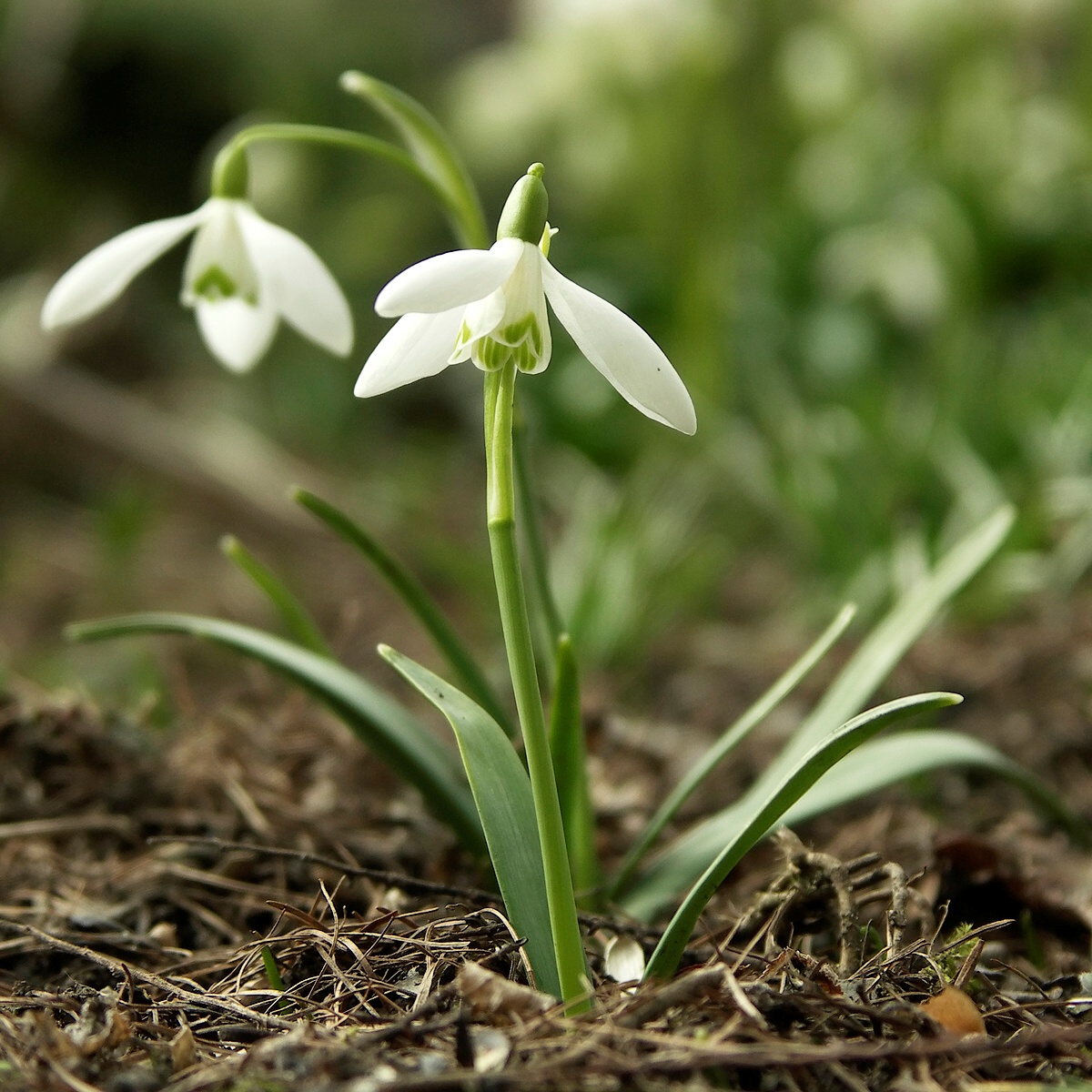


Description and biology
Snowdrops form from underground bulbs and produce two narrow, often bluish-green leaves and a solitary pendant flower on a short stem. The floral structure typically includes three outer, longer tepals and three shorter inner tepals, the latter frequently bearing green markings near the tip. The small, white, bell-like blooms are adapted for early pollinators and are a familiar sign of seasonal change. See an example of the flower form here: bell-shaped flower.
Habitat, distribution and cultivation
Native to Europe and parts of the Middle East, snowdrops grow naturally in woodlands, meadows and damp grasslands. Gardeners plant bulbs in autumn for late winter or early spring blooms; they do well in partial shade and humus-rich, well-drained soil. Snowdrops naturalize readily and can be propagated by dividing bulbs after flowering or by seed, though seed-grown plants take several years to bloom.
Uses, chemistry and breeding
Beyond ornamental use, some Galanthus species have been a historical source of the compound galantamine, a molecule later developed for medical use. Horticultural interest has produced many named cultivars prized by collectors for variations in inner tepal markings, bloom timing and size. Enthusiasts sometimes practice "Galanthomania," a keen collecting and breeding culture dating back to the 19th century.
Cultural notes and conservation
Snowdrops are symbols of hope and the end of winter in many cultures and are featured in festivals and early-season garden displays. Because wild bulbs can be over-collected and some species have limited ranges, conservation measures exist in parts of their native range to protect vulnerable populations. Responsible cultivation from reputable nurseries helps preserve wild populations for the future.
- Key features: bulbous, early flowering, white drooping blooms.
- Main cultivation tip: plant bulbs in autumn; prefer shade and humus-rich soil.
- Notable fact: source of galantamine used in neurological medicine.
Related articles
Author
AlegsaOnline.com Snowdrop (Galanthus): description, cultivation, and cultural significance Leandro Alegsa
URL: https://en.alegsaonline.com/art/91351