
Sieve (particle separation device)
A sieve is a device that separates particles by size using a perforated surface or mesh. It ranges from simple kitchen sifters to standardized laboratory and industrial screens used across many fields.
Overview
A sieve is a physical device that separates materials based on particle size by permitting smaller pieces to pass through openings while retaining larger ones. The simplest form is a flat or bowl-shaped screen with holes or a wire mesh; more complex machines use multiple stacked screens, vibration, or centrifugal force to sort particles into size fractions. Sieving is a mechanical, size-exclusion process and one of the oldest methods for classifying granular materials.
Image gallery
5 Images



Design and main components
Typical sieves share a few common elements: a frame to hold the screen, the screen or mesh with defined aperture size, and sometimes a cover, pan or receiving tray. Screens may be metal, synthetic fiber, or woven wire and come in standardized grades to ensure repeatable separation. Operation can be manual (shaking or tapping) or mechanical (sieving machines, shakers, rotary sifters) and is done either dry or with wet suspension to prevent particle agglomeration.
Common types and characteristics
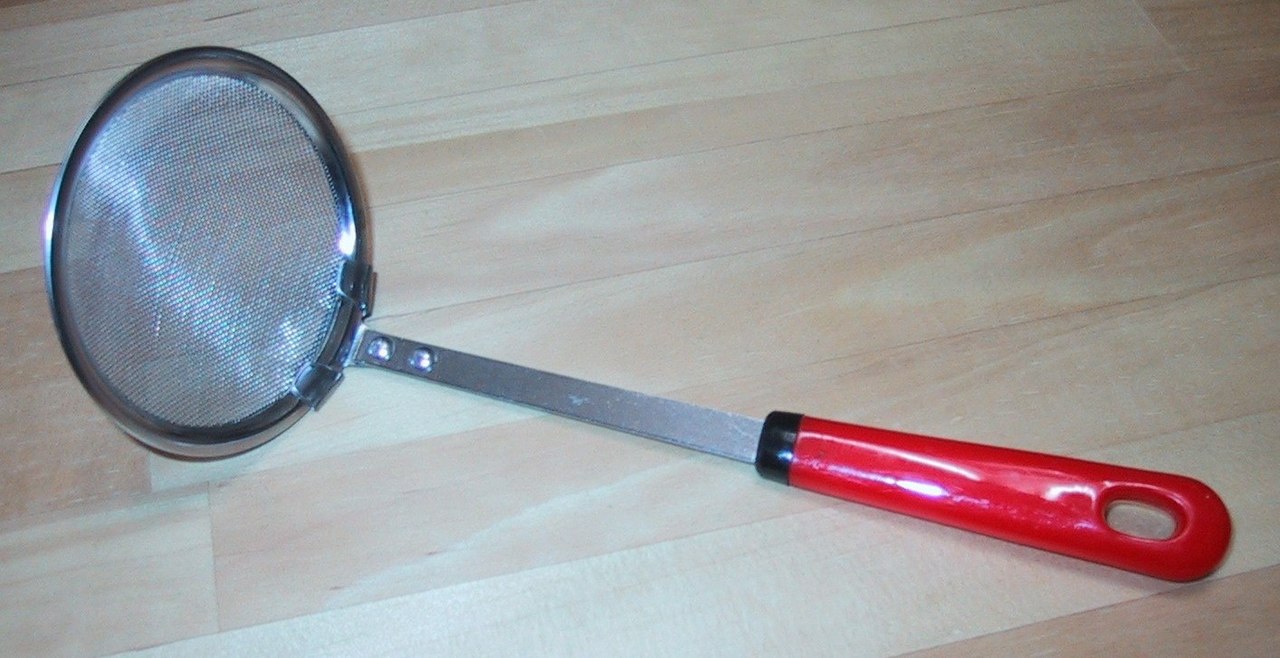
- Hand sieves and kitchen sifters: used for flour, powdered sugar, and other culinary ingredients.
- Laboratory test sieves: calibrated for particle-size analysis and quality control in research and industry.
- Vibratory and rotary sieves: provide continuous or high-throughput separation for processing plants.
- Stacked sieve sets: multiple meshes in descending aperture size allow classification into size ranges in one run.
History and development
Sieving dates back to ancient agriculture and milling, where coarse separation of grain and chaff was essential. Over centuries the simple woven-basket strainer evolved into metal screens and then into standardized laboratory sieves and industrial machines during the industrial revolution. Modern developments emphasize precision, reproducibility and automated handling for sectors such as pharmaceuticals and materials science.
Applications and importance
Sieves are used widely: in kitchens for refining ingredients, in construction to grade sand and aggregates, in mining to separate ore sizes, in pharmaceuticals and chemicals for quality control, and in environmental labs for soil and sediment analysis. A standard laboratory sieve analysis yields a particle-size distribution that guides processing, formulation and compliance with specifications. For basic technical information about particle size and separation, consult related resources.
Limitations and distinctions
Sieving is effective when particles are free-flowing and roughly comparable in shape. It is less effective for very fine dust, sticky or fibrous materials that clog apertures, and for distinguishing particles of similar size but different density. Alternatives or complements include filtration (which can trap finer particles), cyclone separation, sedimentation, and centrifugation. Practical concerns include mesh wear, blinding (clogging) and the need for calibration to standardized mesh sizes to ensure reproducible results.
Related articles
Author
AlegsaOnline.com Sieve (particle separation device) Leandro Alegsa
URL: https://en.alegsaonline.com/art/90291